
*Disclaimer: Amnesty International USA is a non-partisan, 501(c)(3) non-profit and does not endorse or oppose candidates or systems of government.
As we approach the 2026 midterm elections, statements and actions by the Trump administration and government officials have raised concerns about access to the ballot and the ability of voters across the U.S. to participate in elections safely and without intimidation.
The Trump administration’s actions include efforts to restrict access to mail-in voting, which can be discriminatory towards those with disabilities, the elderly, and others who may otherwise be unable to vote in-person. They also include the revival of the federal government’s error-prone federal voter database, which could be used to wrongfully purge voters based on their identity or beliefs. At the same time, statements from President Trump and government officials have threatened the presence of ICE agents or armed federal personnel at or near polling places, which can intimidate and deter voters.
The actions and statements of the administration have raised serious human rights concerns for the upcoming elections. Eligible voters must have the meaningful opportunity to participate in elections without discriminatory and arbitrary barriers, intimidation by armed forces, or fear of harm when seeking to exercise their rights.
Voting is a Human Right
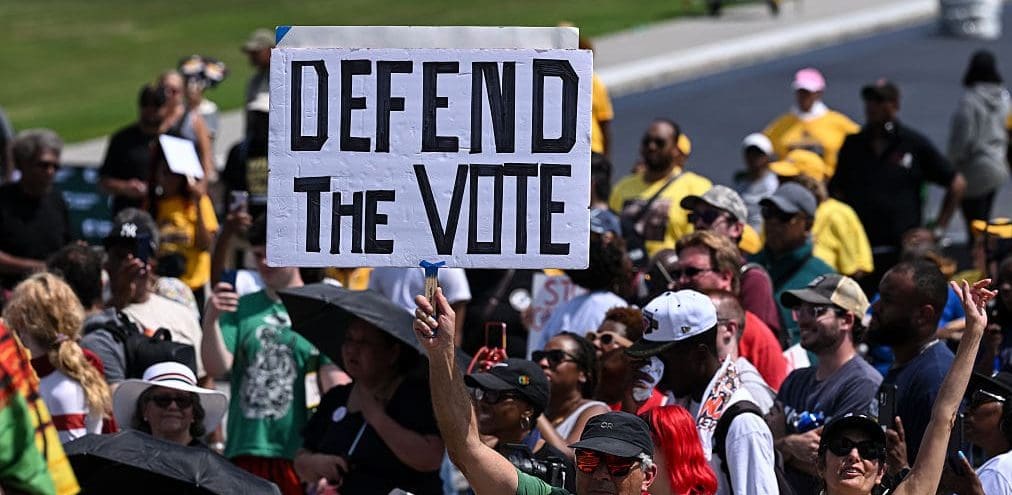
The right to vote is a human right, and every eligible voter should be able to exercise that right freely, safely, and without discrimination or unnecessary obstacles.
Voting rights and the right to genuine elections are enshrined in the Universal Declaration of Human Rights and in international human rights law. International human rights norms and treaties outline that:
- Elections should reflect the choice and will of the people and ultimately ensure the accountability of elected officials.
- All eligible adults must be able to both exercise their right to vote and run for office.
- Elections should be universal, secret, and genuine. Central to achieving this is ensuring that elections take place periodically, give people real choices, and take place without discrimination or arbitrary restrictions.
3 Ways to Protect Your Voting Rights
1. Tell your state officials to keep guns, ICE, and the military away from our polling places.
Federal law already prohibits certain federal troops from being deployed at polling places except in the extraordinary circumstance of repelling armed enemies. But statements by President Trump and administration officials have raised concerns about the potential presence of armed federal personnel at or near polling places during the November elections. The administration has even threatened to send ICE agents to polling places, which could intimidate eligible voters and chill participation. Voters should be able to cast their ballots without fear of encountering guns, federal agents, or other forms of intimidation.
2. Tell Congress to do its job and protect the right to vote.
Congress has a critical role to play in protecting the right to vote and upholding the separation of powers. The Trump administration is seeking to restrict who can vote, how votes are cast and counted, and who has authority over election administration. Congress must protect voter rights and reject the SAVE Act, which would limit access to voting by requiring unnecessary and burdensome identity documentation, and by conducting oversight against the executive branch if it attempts to assert federal control over elections.
3. VOTE!
Voting is a human right, and we actively encourage all eligible voters to exercise their rights during the 2026 midterm elections. Check your voter registration, learn about what’s on the ballot, and find your local polls at Vote.org. Learn whether you need an ID to vote and what kind of ID is accepted at VoteRiders.org.
We can defend the right to vote together by speaking out and ensuring that every eligible voter can participate freely, safely, and without intimidation or discrimination. Learn how to get more involved.