
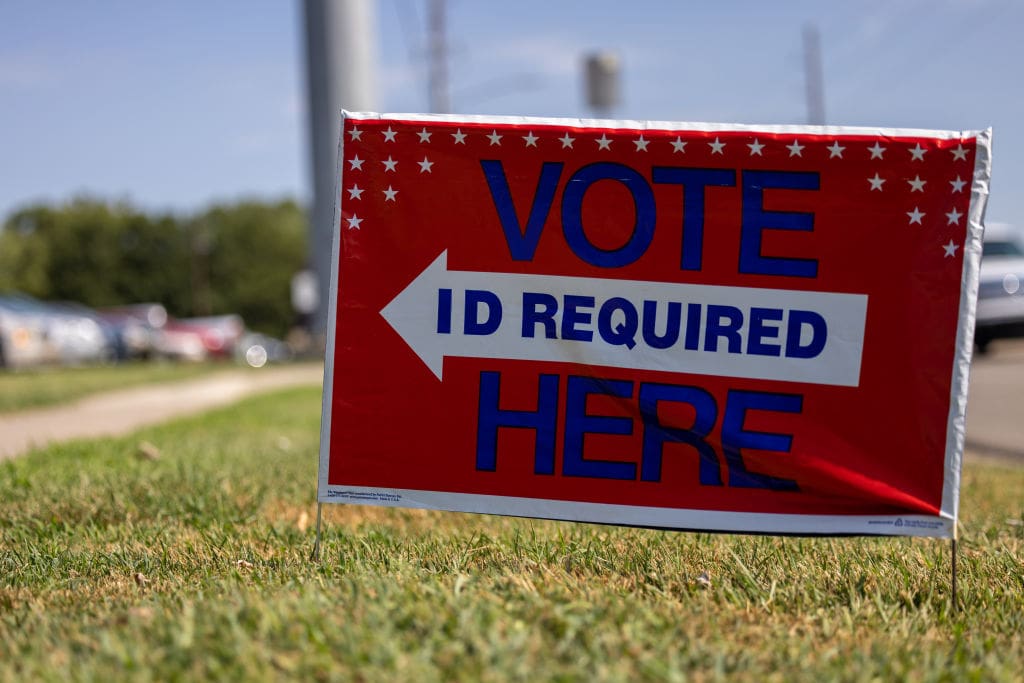
Members of Congress must oppose the SAVE Act, which would discriminate against citizens who lack equal access to proposed identification requirements.
The Safeguard American Voter Eligibility (SAVE) Act (H.R. 22) would require all Americans to prove their citizenship with documentation unavailable to millions. SAVE would require all American citizens registering to vote or updating their registration information to present documentary proof of citizenship in person, such as a passport or birth certificate. Government-issued driver’s licenses and REAL IDs, as well as military or tribal IDs, would not meet the documentation requirement to vote.
The SAVE Act’s stated goal is to make sure only U.S. citizens vote in federal elections. That is already the law, and it is already being enforced. Noncitizen voting has been a federal crime since 1996. Multiple in-depth studies have shown that non-citizen voting is virtually non-existent.
International human rights law, particularly the rights protected under Article 21 of the Universal Declaration of Human Rights and Article 25 of the International Covenant on Civil and Political Rights, guarantees that every citizen shall have the right and the opportunity to vote in genuine periodic elections without discrimination. Governments should work to expand meaningful participation in electoral processes and must not impose discriminatory barriers to political participation.
The SAVE Act would make it more difficult for all people to register to vote or update their voting registration but would have a disproportionate impact on people living on low income, people living in rural areas, Indigenous people, people with disabilities, and women.
An estimated 47-52% of Americans do not have passports. Birth certificates can be difficult to obtain; obtaining a passport or a birth certificate copy both come with fees. Americans in rural areas would likely have to travel long distances both to obtain the additional documentation required and then to register as a voter or update their voter registration. The Center for American Progress analyzed the 30 largest counties by area in the Western United States and found that voters there would need to drive an average of 260 miles to reach an election office.
An estimated 84% of women who marry change their surname, meaning as many as 69 million American women do not have a birth certificate with their legal name on it and thereby could not use their birth certificate to prove citizenship. This would also negatively impact others who had changed their names from birth for any reason.