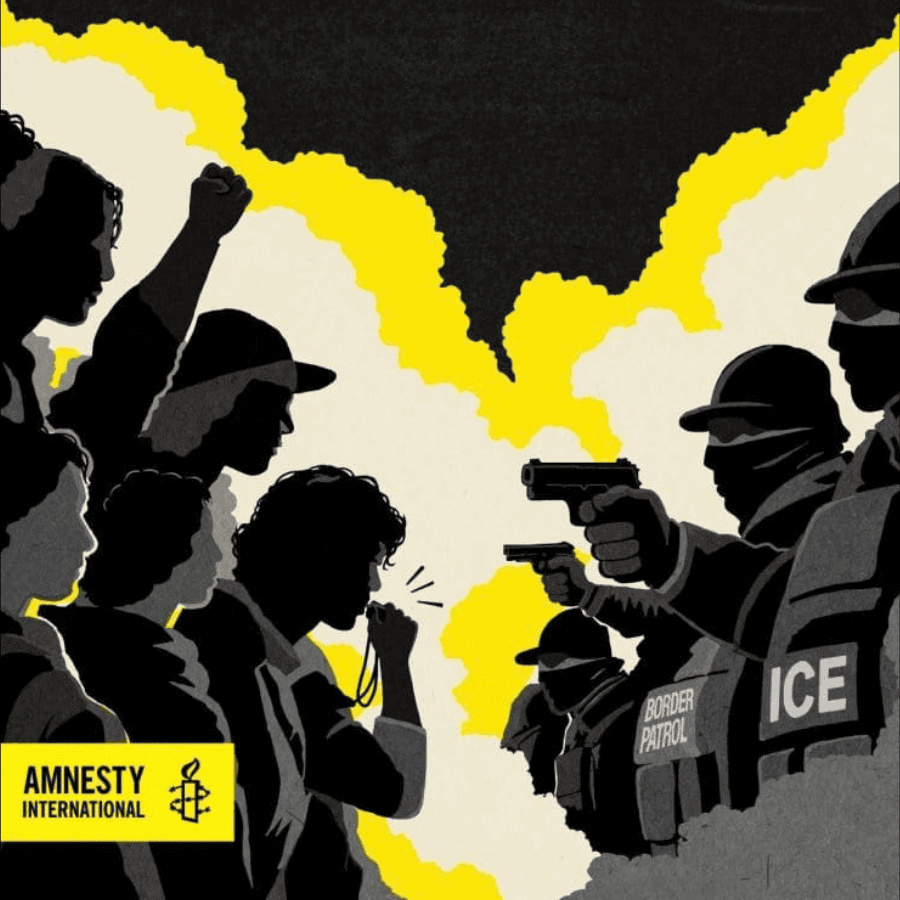
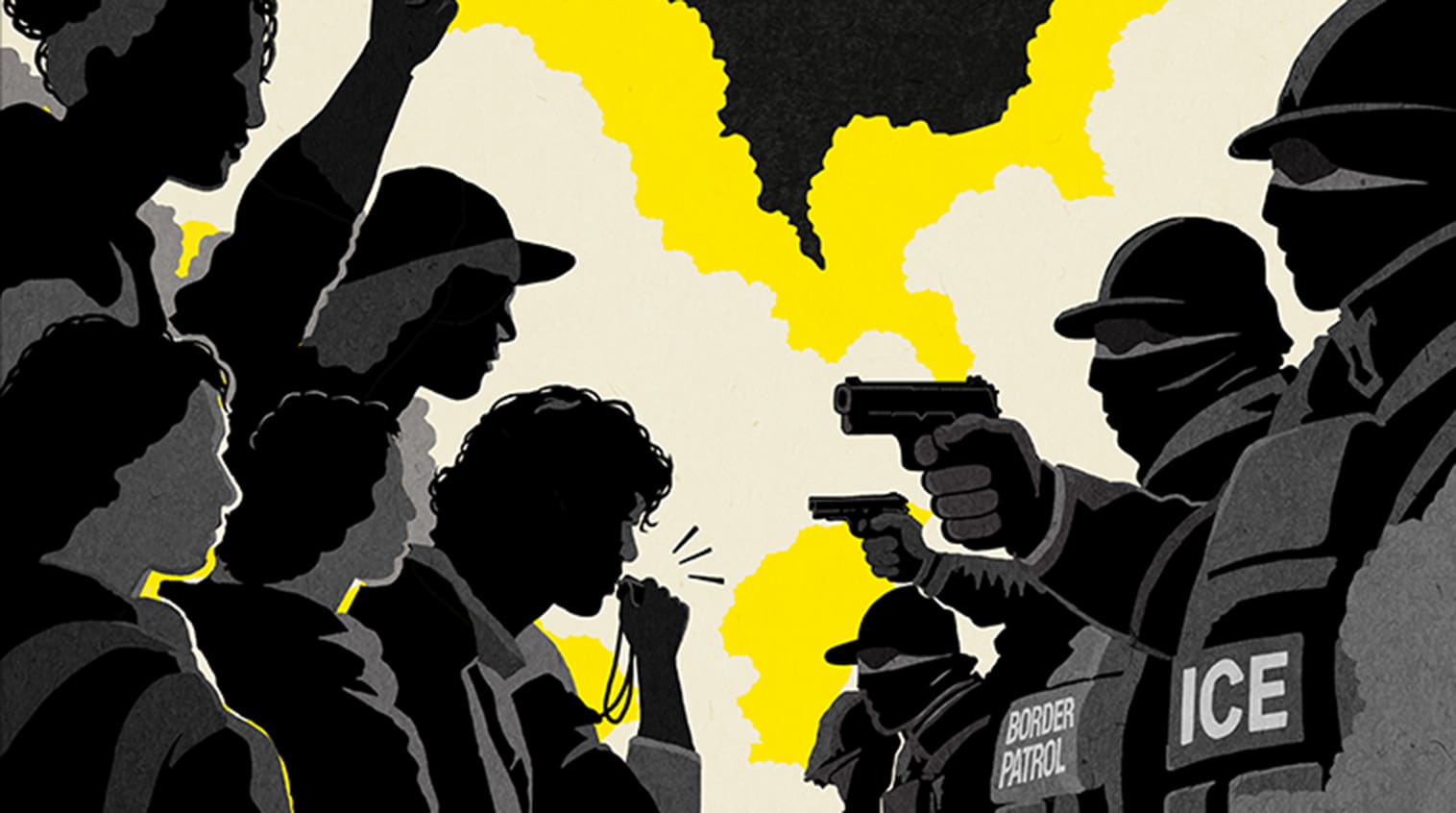
Amnesty International has documented that, since taking office on January 20, 2025, the Trump administration has subjected migrants, asylum seekers and refugees to a wide range of human rights violations.
The administration is implementing a mass detention and deportation system, fuelled by racist, xenophobic and false narratives and white supremacist theories, whose objective is to detain and deport as many migrants, asylum seekers and refugees from the United States as possible.
This system is being implemented through a series of laws, directives and practices that have
- Stripped individuals of regular immigration status
- Expanded federal agents’ ability to detain people
- Severely curtailed due process protections
- Made release from immigration detention increasingly difficult, and
- Facilitated the removal of people from the United States, often without due process
This report determines that the Trump administration’s legal framework, operational practices and public rhetoric demonstrate a coherent state policy directed at the mass detention and deportation of migrants, asylum seekers and refugees, which is being implemented in deliberately cruel and harmful ways intended to instill fear within migrant, asylum seeker and refugee communities.
Militarized federal immigration enforcement operations
This report examines human rights violations committed by U.S. Immigration and Customs Enforcement (ICE), U.S. Customs and Border Protection (CBP) and other federal agencies during four such immigration enforcement operations:
- Washington, D.C.
Federal Takeover: August 2025 to present - Chicago, Illinois
Operation Midway Blitz: September to December 2025 - New Orleans, Louisiana
Operation Catahoula Crunch: December 2025 to February 2026 - Minneapolis-St. Paul, Minnesota
Operation Metro Surge & Operation PARRIS: December 2025 to February 2026

Amnesty International documented a wide range of human rights violations committed by ICE, Border Patrol and other federal agents during the immigration enforcement operations in Chicago, Minneapolis-St. Paul, New Orleans and surrounding areas, and the Washington, D.C., metropolitan area (DMV), including:
- Racial discrimination
- Arbitrary and discriminatory arrests and detentions
- Harassment
- Intimidation
- Unlawful use of force, including lethal force, which in some cases may amount to extrajudicial executions
- Repression of peaceful protests
- Unlawful use of less lethal force
- Unlawful surveillance
- Cruel, inhumane and degrading detention conditions that may violate the prohibition on torture
- Unlawful incommunicado detention
- Possible acts of enforced disappearance
Racially discriminatory immigration enforcement operations
Masked and heavily armed ICE, Border Patrol and other federal agents, often wearing no visible identification and traveling in unmarked vehicles, targeted individuals they perceived to be migrants based on their race, skin color, national origin or ethnicity, and their intersection with other characteristics such as language and accent, as well as occupations, workplaces and locations that federal agents associated with racialized migrant communities.
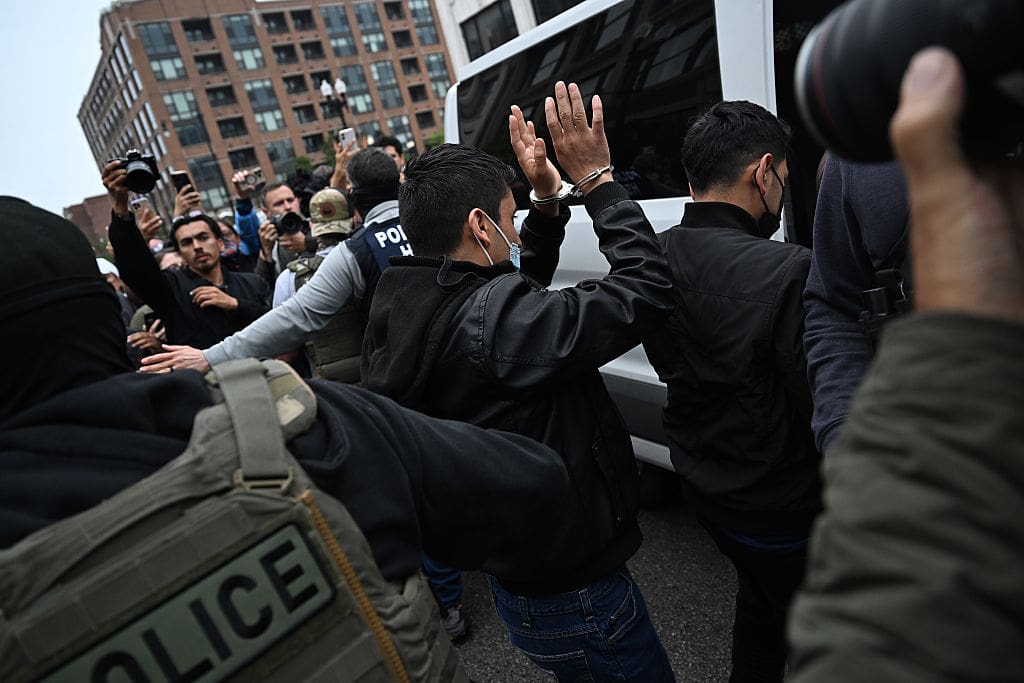
Agents also often ignored individuals attempting to prove their regular immigration status and detained them anyway. Immigration enforcement was concentrated in neighborhoods, workplaces and other locations that federal agents associated with migrant and racialized communities, including construction sites, restaurants, hardware-store parking lots and areas where day laborers gathered. Racialized U.S. citizens, people with regular immigration status, asylum seekers, refugees and Indigenous Peoples were also stopped and detained.
Harassment, intimidation, degrading treatment and unjustified use of force
Federal agents used excessive force and other violent actions while arresting people perceived to be migrants, including:
- Breaking down the doors of homes without warrants and with guns drawn,
- Conducting military-style raids in the middle of the night accompanied by Black Hawk helicopters,
- Driving recklessly and boxing in individuals’ vehicles that they were attempting to detain,
- Smashing vehicle windows without justification,
- Physically throwing people who were not resisting onto the ground, and
- Injuring individuals in the course of arresting them.
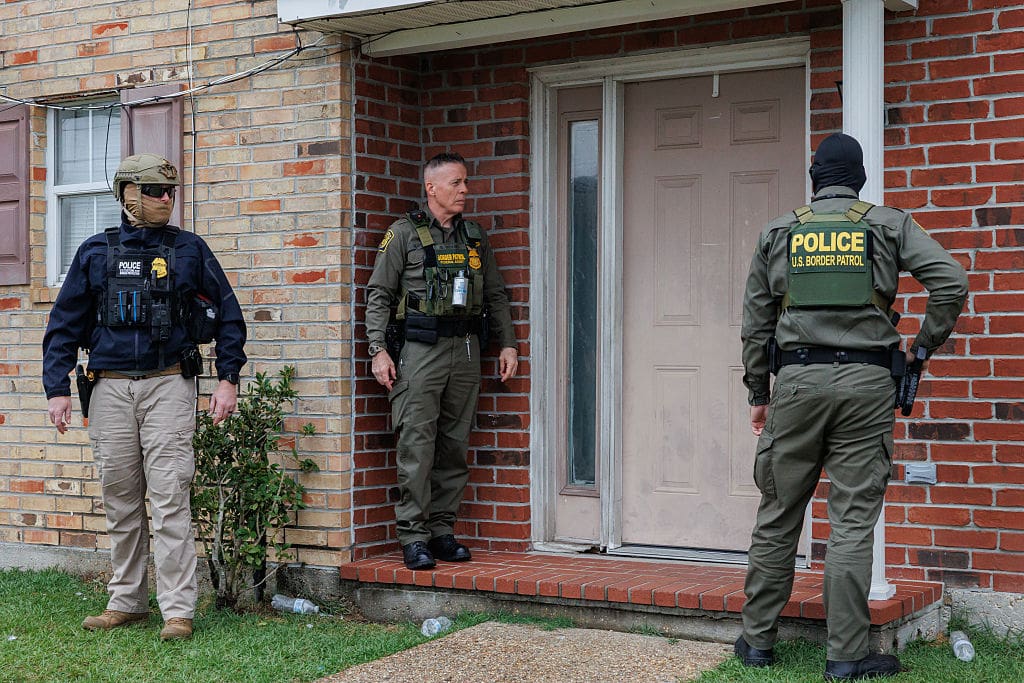
Agents also used excessive force against rapid responders, people observing immigration enforcement operations and protesters, and engaged in other violent conduct, including driving dangerously, smashing vehicle windows without justification, pointing firearms at people, and pushing and tackling people to the ground who were not resisting. Federal agents also arrested a number of people who were observing ICE and Border Patrol activity, often on the grounds that they were allegedly impeding or obstructing their operations.
Use of lethal force and unlawful killings by federal agents
Federal agents used lethal force against seven people in Chicago, Minneapolis-St. Paul and Washington, DC, during the immigration enforcement operations examined in this report.
Under international human rights law and standards, law enforcement officials may use lethal force only when strictly necessary to protect life against an imminent threat of death or serious injury.
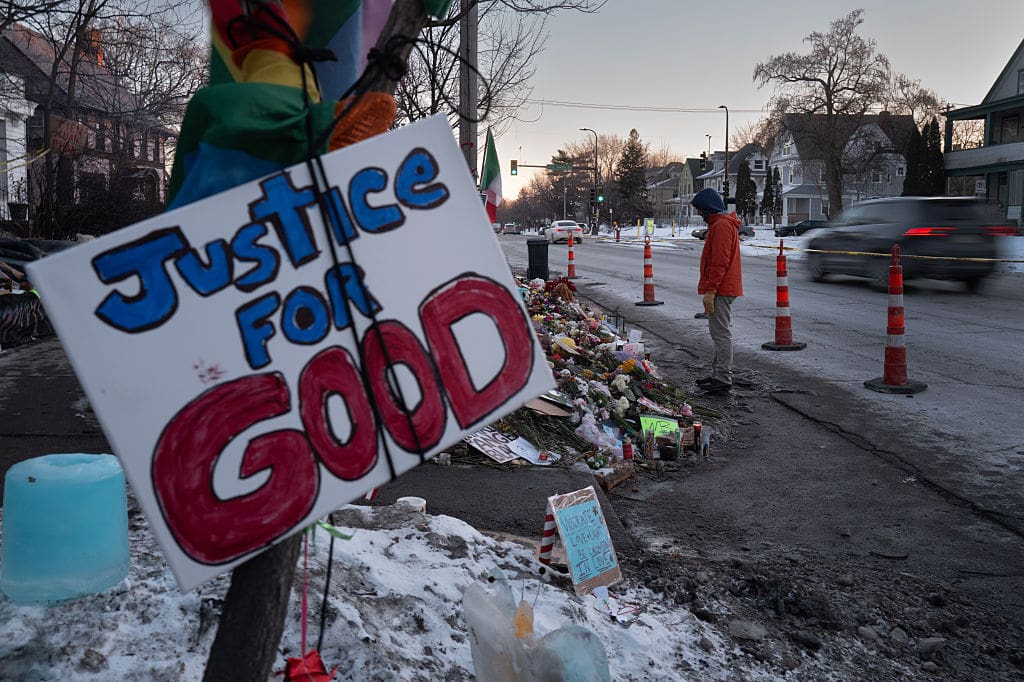
Amnesty International also documented serious concerns regarding the official accounts provided following several shootings. In some cases, statements by DHS and senior government officials seeking to justify agents’ actions were contradicted by video evidence, witness testimony or subsequent investigations. The report further documents failures to promptly, impartially, independently and effectively investigate uses of lethal force and to ensure accountability.
HELP ABOLISH ICE!
After thorough investigations, we’ve concluded that there is no way to adequately reform ICE. It must be completely dismantled.
Repression of protests and use of less lethal weapons
In Chicago and Minneapolis-St. Paul, Amnesty International documented numerous incidents of ICE and Border Patrol unlawfully and unnecessarily using less lethal weapons, including tear gas, pepper spray and other chemical irritants, against rapid responders, observers, protesters and other community members.
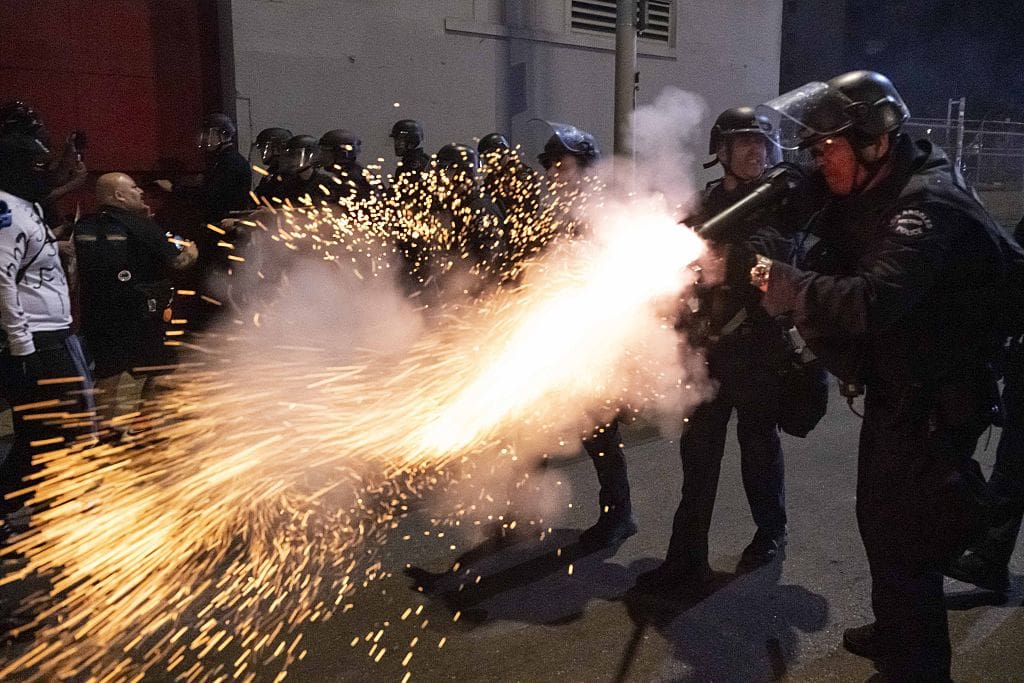
These incidents demonstrate a pattern in which less lethal weapons were used not to respond to an imminent threat of violence, but to intimidate and disperse – without warning – individuals exercising their rights to freedom of peaceful assembly, expression and association. Amnesty International concludes that their use violated international human rights law and standards governing the use of force, as well as DHS’s own policies governing the use of force.
Unlawful surveillance and facial recognition technology
Across all four locations, Amnesty International documented the use of facial recognition technology, including the mobile phone application Mobile Fortify, by ICE and Border Patrol against people they perceived to be migrants whom they were attempting to detain, as well as rapid responders, people involved in mutual aid, and protesters.
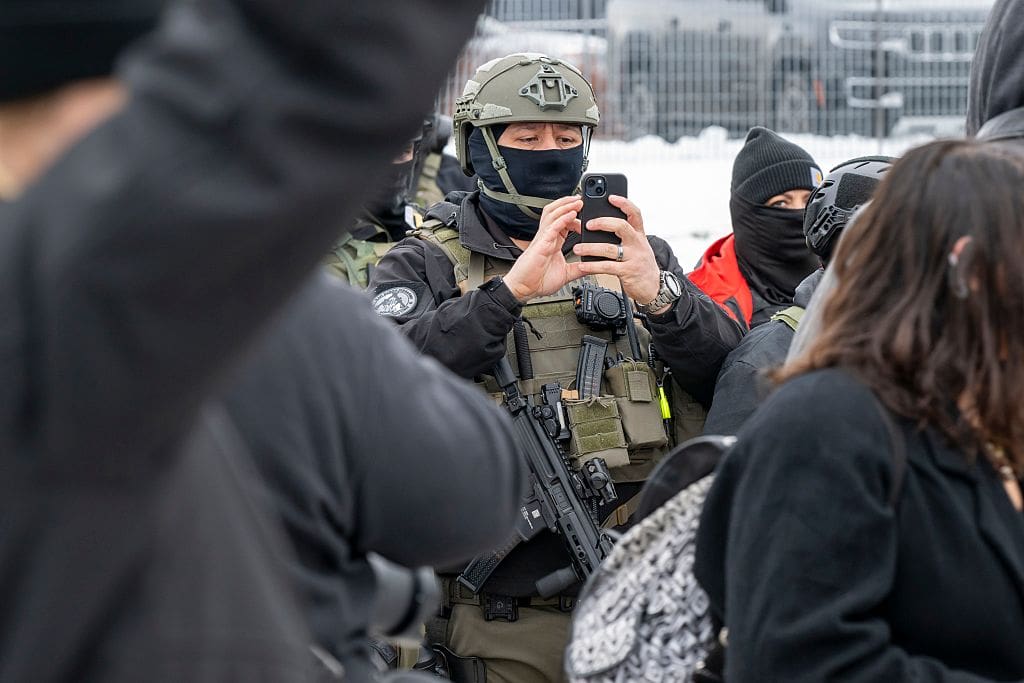
The organization further documented that federal agents photographed and filmed community members who were observing their actions, delivering mutual aid or protesting. On multiple occasions, rapid responders attempting to monitor ICE or Border Patrol operations by following federal vehicles would be “driven home,” a tactic in which federal agents, as a form of intimidation, intentionally drove to the rapid responder’s residence while the rapid responder was following them.
Cruel and inhumane detention conditions and denial of due process
At the three locations, individuals were held in overcrowded and unsanitary conditions, healthcare services were non-existent, and access to legal representatives was severely restricted. Amnesty International concludes that this treatment constitutes cruel, inhuman, or degrading treatment. Further, the unnecessary and prolonged detention of people in inhumane conditions in facilities not even equipped for overnight detention, combined with coercion to accept “voluntary” departure, may amount to torture.

Amnesty International also documented that detained individuals were denied access to their lawyers and families, that lawyers were prevented from contacting their clients, and that ICE sometimes refused to confirm whether individuals were in its custody or disclose their whereabouts, which constitutes unlawful incommunicado detention and possible acts of enforced disappearance.
System of impunity and other institutional failures within ICE
Amnesty International finds that the human rights violations documented in this report cannot be attributed solely to individual ICE agent misconduct, inadequate training or isolated failures of oversight. ICE agents operated within an institutional environment—openly supported and expanded by the Trump administration—in which violent and racially discriminatory immigration enforcement practices were encouraged by senior government officials, including President Trump.
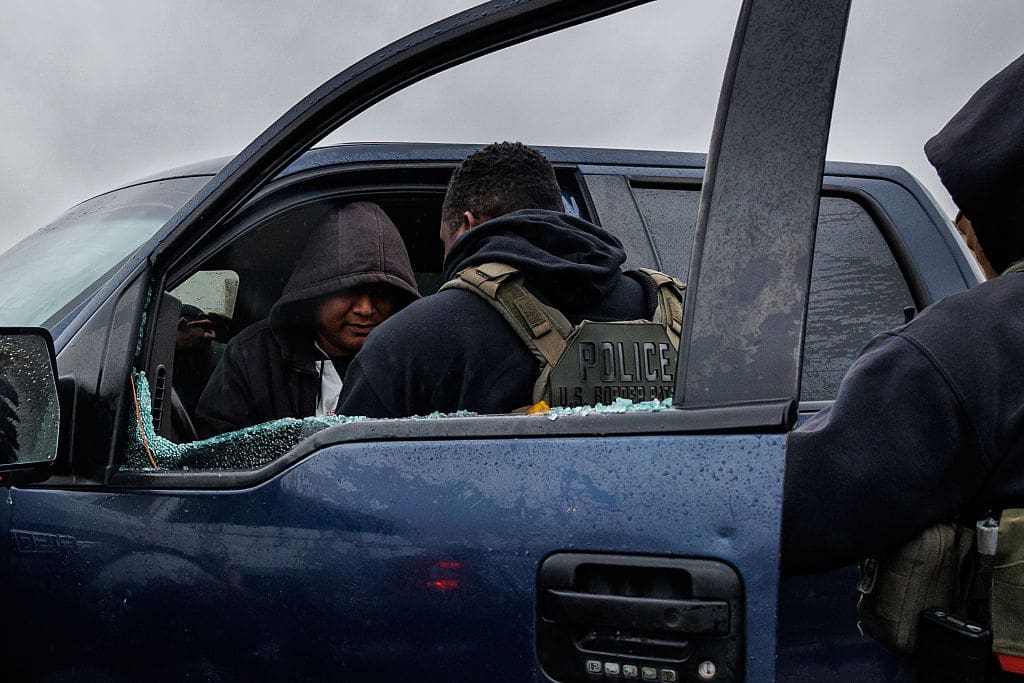
Within this institutional environment, the racial discrimination, arbitrary and discriminatory arrests and detentions, harassment, intimidation, unlawful use of force, including lethal force, repression of peaceful protests, unlawful use of less-lethal force, unlawful surveillance, cruel, inhumane and degrading detention conditions that may violate the prohibition on torture, and unlawful incommunicado detention and possible acts of enforced disappearance, as well as many other serious human rights violations documented throughout this report, were not isolated incidents, but formed part of the deliberate manner in which the Trump administration’s mass detention and deportation policy was intended to be, and is being, implemented.
Amnesty International concludes that fundamental institutional dismantling of ICE, rather than piecemeal reform, is a necessary step to bring the United States’ immigration enforcement system into compliance with its international human rights obligations.
Entire communities living in fear
Migrants, asylum seekers, refugees and other racialized individuals remained inside their homes for weeks or months because they feared that leaving could expose them to detention. Neighborhoods became unusually quiet as people withdrew from public life and sheltered inside their homes. Some people gradually resumed leaving their homes as the intensity of the operations decreased, but for others the fear persisted for months, with some individuals continuing to avoid public spaces despite having regular immigration status.

As a result of the immigration enforcement operations, people stopped going to work, children missed school, people delayed or avoided medical care, congregants stopped attending places of worship, and people feared travelling to immigration appointments and court hearings.
Children were among those most profoundly impacted by the operations, experiencing the consequences in numerous ways, including being:
- Approached by federal agents and asked to identify people
- Used as bait
- Witnessing the arrests of parents and caregivers
- Separated from family members
- Left in the backseats of cars when their parents were detained
- Forced to assume new caregiving responsibilities
- Displaced from their homes, and
- Living with the constant fear that their loved ones would be detained.
The cumulative effect was not only the deprivation of individual rights, but the profound disruption of community life itself. Moreover, the operations have had profound and long-lasting psychological impacts on migrants, refugees, asylum seekers, their families and the wider community.
Communities resisting and protecting one another
Alongside the scale of the violations documented, the four locations examined in this report demonstrate the extraordinary resistance and resilience of migrant, asylum seeker and refugee communities, and those who mobilized to defend them.
Across the four cities, community members rapidly established intricate rapid response and mutual aid networks. They:
- Operated ICE hotlines
- Developed hyper-local rapid response networks to monitor and document the activities of ICE, Border Patrol and other federal agents
- Organized neighborhood patrols
- Delivered “Know Your Rights” (KYR) and constitutional observer trainings
- Used whistles and other alert systems to warn communities about immigration enforcement activity
- Delivered food and essential supplies to families afraid to leave their homes
- Organized rides and walking school buses
- Provided rent assistance and family safety planning
- Expanded access to legal assistance
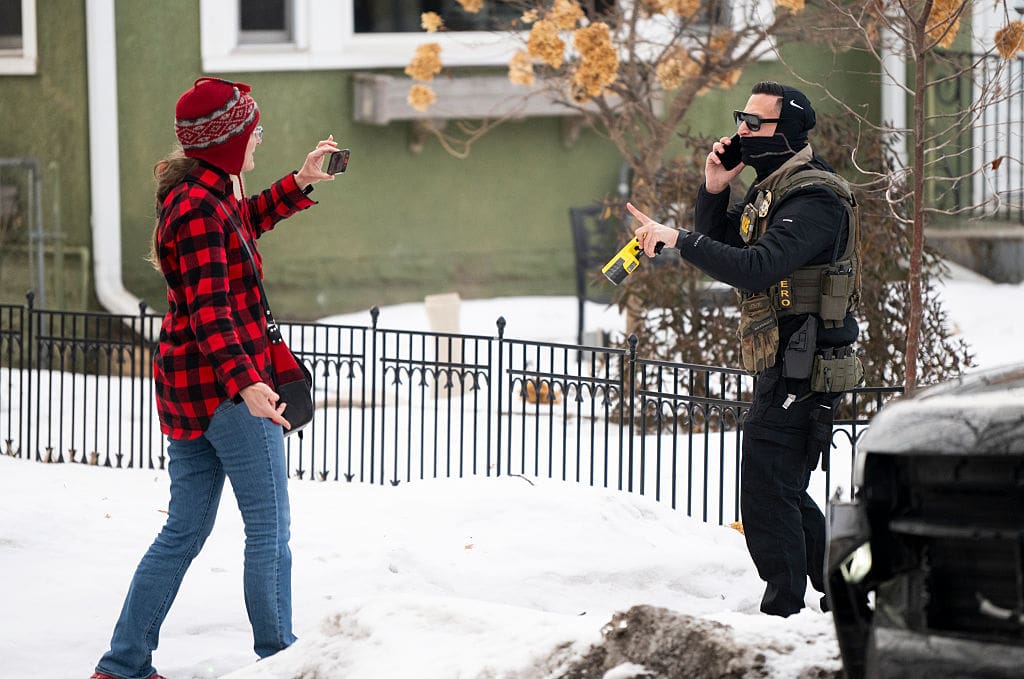
Their work also demonstrated the importance of community documentation for accountability. Rapid responders and community members filmed immigration enforcement operations and, in several of the most serious incidents documented in this report, video evidence proved critical in establishing what had occurred and challenging official government accounts.
Key recommendations
Taking into consideration Amnesty International’s independent findings, the experiences and perspectives of migrants, asylum seekers and refugees, community groups and organizations, and the United States’ human rights obligations under international law, Amnesty International makes a series of recommendations to the government of the United States.
The organization calls on the Government of the United States to:
- Protect the rights to peaceful assembly, expression and association
- End its cruel and racist policies of mass immigration detention and deportation
- End racially discriminatory immigration enforcement
- Stop the criminalization of migration
- Ensure prompt, effective, independent and impartial investigations into human rights violations committed by federal agents and hold those responsible to account
- End unlawful surveillance and the use of facial recognition technology for identification
- Protect the rights to peaceful assembly, expression and association
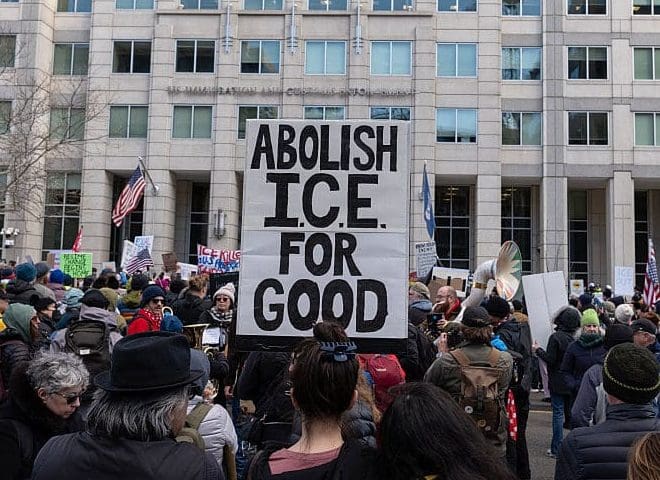
In order to create an immigration enforcement system that complies with international human rights law and standards, Amnesty International calls on the Government of the United States to immediately abolish U.S. Immigration and Customs Enforcement (ICE).