
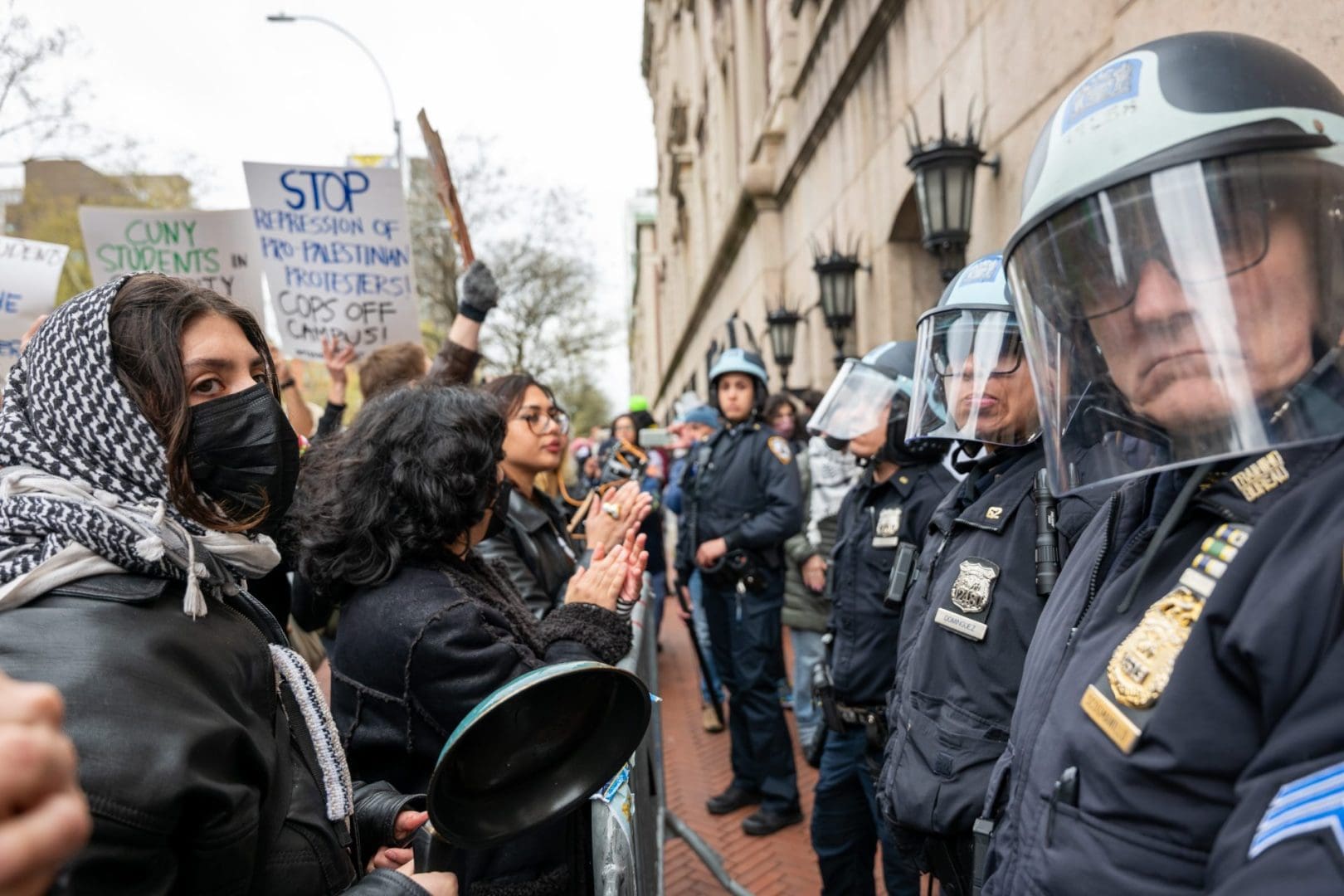
Over the last three years, there have been widespread attacks on free speech and association on college campuses, particularly against students, faculty, and staff protesting Israel’s war on Gaza and the U.S. government’s political, economic, and military support of the war.
The American Civil Liberties Union (ACLU) and Amnesty International USA (AIUSA) authored this report based on a two-year investigation that covered events at 46 public and 34 private university and college campuses nationwide, located in 28 states and the District of Columbia. Based on our research of the policies and practices of dozens of U.S. universities and colleges and the impact of those responses on student protesters and the broader academic community, this report documents the heavy-handed and excessive responses by some university and college administrators and police to campus protests concerning Israel’s assault on Gaza following the Hamas-led attacks in southern Israel on October 7, 2023. It also documents suppression and retaliation against pro-Palestine speech and expression on campus that began in late 2023 and continues today.

University and law enforcement responses to student protests
Colleges and universities violated basic free speech, association, and assembly rights and caused serious harm when they summoned campus police and local law enforcement, resulting in arrests and unlawful and unnecessary use of force.
Universities’ responses to campus-related Palestine advocacy and pro-Palestinian demonstrations have been more punitive in comparison with their historical responses to other comparable demonstrations over decades. Colleges and universities have imposed sweeping restrictions on student speech, initiated disciplinary actions against students, and imposed severe punishments, including expulsions and suspensions.
By doing so, these universities directly or indirectly have made it easier for the Trump administration to crack down on student activism, causing long-term damage to higher education.

Crackdowns on pro-Palestine speech and university student protest sites
This report also documents the Trump administration’s widespread, McCarthyite censorship and retaliation campaign deployed against pro-Palestine advocates on university and college campuses, and against universities that were sites of pro-Palestine student activism.
The administration has abused civil rights laws to suppress criticism of Israel, withhold federal research grants from universities due to their refusal to conform to the government’s preferred ideological approach, and coerce universities into accepting broad-ranging agreements to restore federal funding in exchange for making institutional changes in programs, curricula, admissions, and hiring, curtailing the free speech rights of students and faculty.
Download the Report
Campaign to detain and deport students and scholars advocating for Palestinian rights
The Trump administration has also targeted noncitizen students and scholars for arrest, detention, and deportation based on their political views and in direct retaliation for their advocacy for Palestinian rights. The Trump administration has attempted to pressure university officials to target non-U.S. citizen students, faculty, and staff for their political speech and protest activity, in violation of the First Amendment.
The administration’s actions violate foundational academic freedom principles, First Amendment rights, and the rights to freedom of peaceful assembly, expression, and association enshrined in international law. This report also details how these actions have profoundly chilled student speech and advocacy, resulting in a steep decline in protests and a less visible protest movement on campuses across the country. Fears of punishment, retribution, or deportation have deterred students and faculty from criticizing Israel or advocating for Palestinian rights.

Case studies and analysis
Findings are based on desk research, analysis of college and university policies and records, reports and other documents and statements by U.S. government agencies and executive officials, court records, case law, published investigative journalism, survey questionnaire responses from students who participated in multiple protests at 41 college campuses around the country, interviews, and fact-finding conducted during a two-year investigation.
This report also contains detailed case studies of six universities: Columbia University, City College of New York, Tulane University, the University of California, Los Angeles (UCLA), the University of Michigan, and the University of Texas at Austin.
Read “Student Speech Under Attack: Suppression of Pro-Palestine Speech and Dissent on Campus.”