
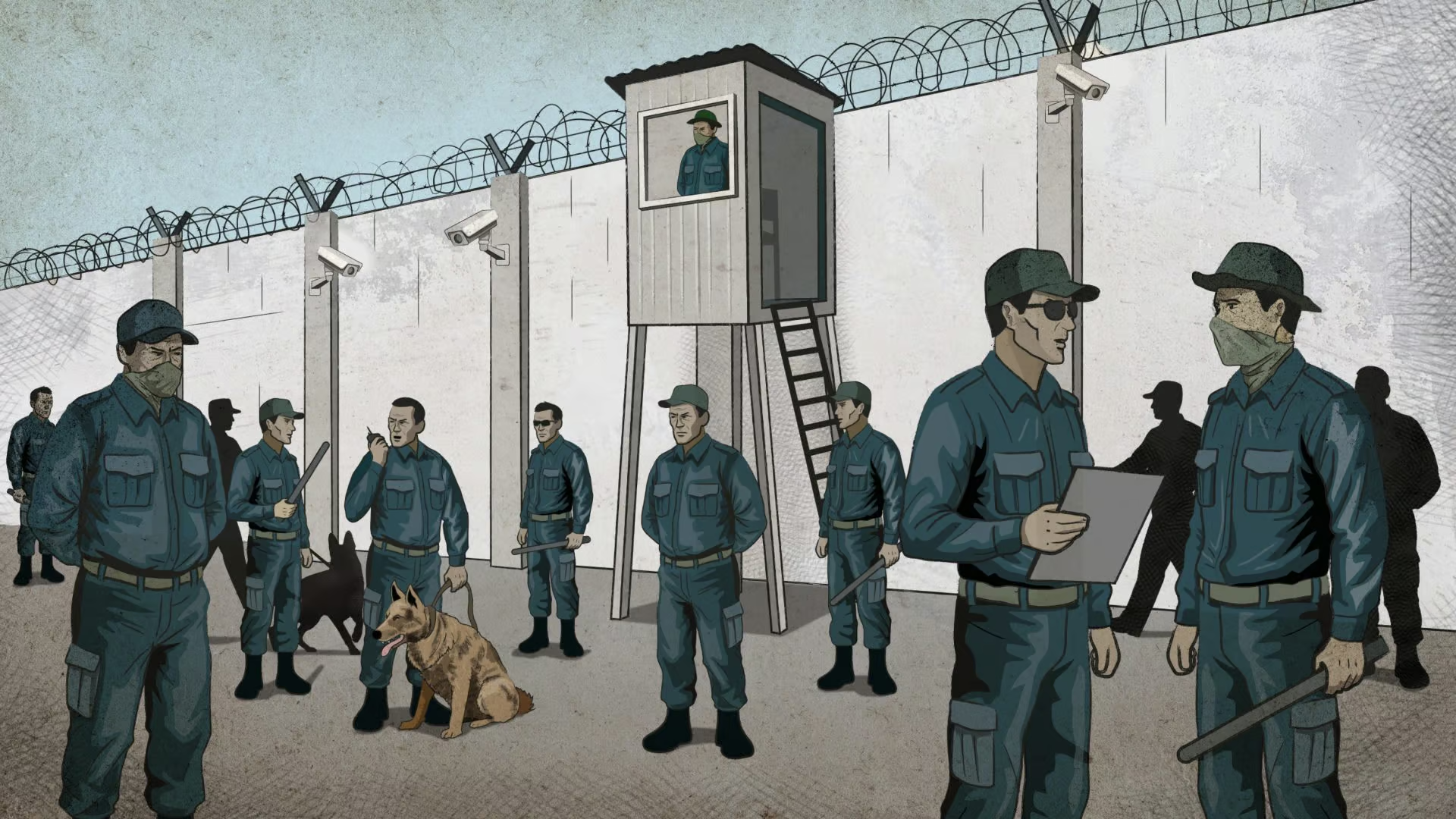
Amnesty International’s new report shows how private security companies were central to the operation of Cambodia’s scamming compounds and the serious human rights abuses committed within them.
Drawing on research across 86 compounds, interviews with more than 150 survivors, site visits, social media analysis and other evidence, Amnesty International found that guards were not merely protecting premises but playing key roles in confining trafficked people, preventing escape, enforcing forced labor, and, in some cases, directly participating in torture and other ill-treatment.
The report identifies five security companies linked to at least 23 scamming compounds and documents evidence connecting some of these companies to politically connected business actors, military personnel and police officers.
The report further finds links between serving members of the Cambodian military and police and at least 22 scamming compounds, raising concerns about official complicity and the failure of authorities to effectively dismantle the industry despite repeated crackdowns.
Amnesty International concludes that security companies, individual guards, company executives and relevant state actors should be investigated for their possible role in trafficking, torture, deprivation of liberty, enslavement and other crimes.
It calls on the Cambodian government to investigate security companies and state officials linked to the compounds, hold those responsible accountable, provide remedies to victims and survivors and address the wider networks of protection and support that enabled the scamming industry to flourish.
Read “Official Business: Security Companies and Authorities at Scamming Compounds in Cambodia.”