
• Government failed to protect residents of Abiemnom from attack
• Both authorities and UNMISS had prior knowledge of an imminent attack
• “The killing and destruction demand investigation,” Tigere Chagutah
South Sudanese authorities not only failed to protect residents of Abiemnom town from being massacred despite prior knowledge of a likely attack, but they have also failed to investigate and ensure accountability for those responsible, and justice and redress for victims and their families, Amnesty International said today in a new report.
The organization also found that the United Nations Mission in South Sudan (UNMISS) knew that an attack was imminent but failed to take all preventive measures available to it, raising serious questions about the peacekeeping mission’s performance.
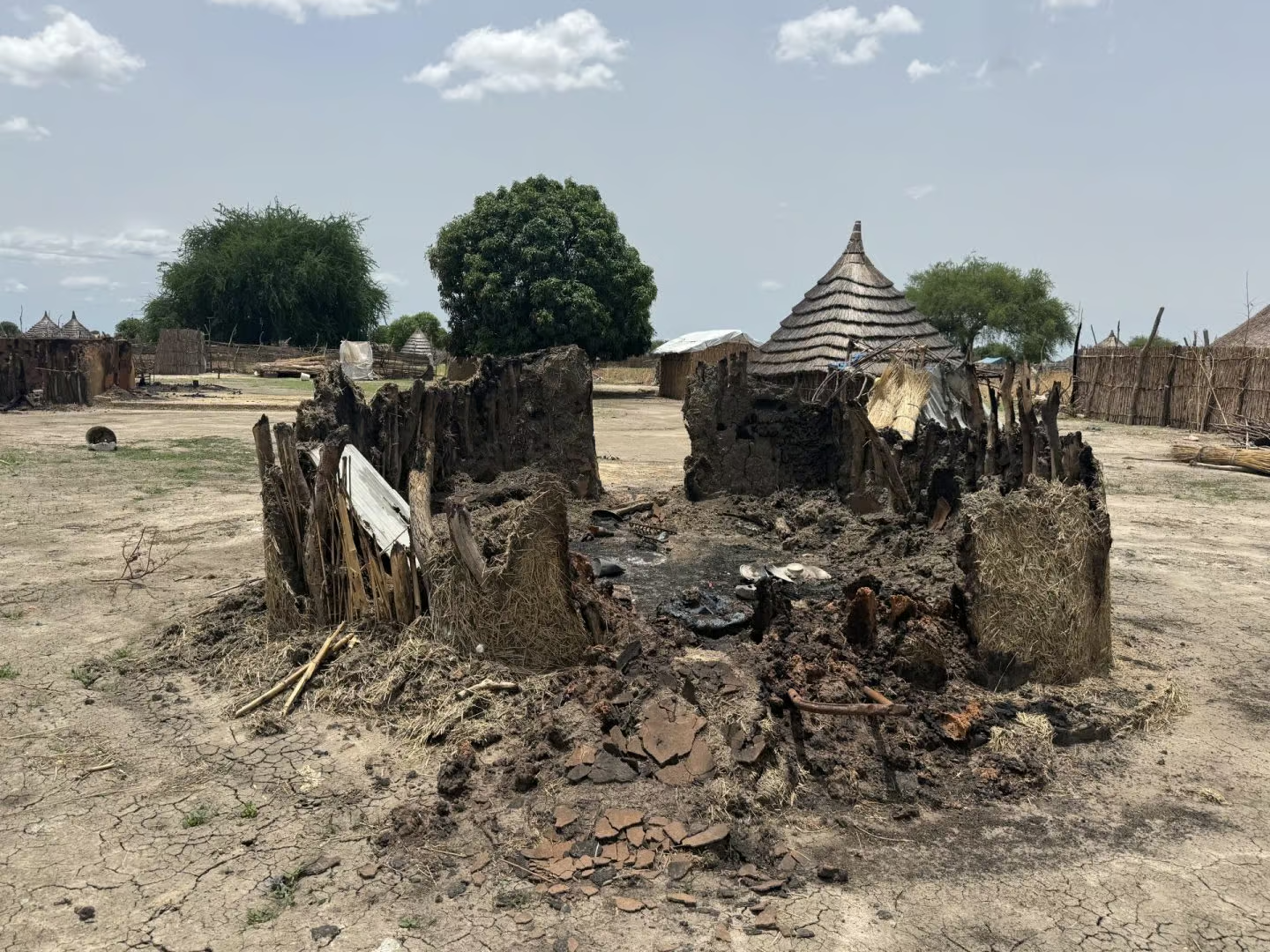
The report, The Abiemnom Massacre: Inaction and Impunity in South Sudan, documents how a group of between 1,000-and 1,500-armed Nuer men from Unity State’s Mayom County killed over 200 people, including children, and injured many more during a four-hour assault on Abiemnom town in the early morning of March 1. The attackers also destroyed scores of homes and property in the town, close to Sudan’s southern border.
“This is one of South Sudan’s largest documented massacres since 2020. The attackers overran Abiemnom and within hours, more than 200 people were killed. The community was left insufficiently protected despite prior intelligence that an attack was imminent,” said Tigere Chagutah, Amnesty International’s Regional Director for East and Southern Africa. “The killing and destruction in Abiemnom demand an urgent, independent, impartial and transparent investigation. The perpetrators must be held accountable.”
Eighty-two people were interviewed for this research. Between March and April 2026, Amnesty International interviewed 76 survivors and witnesses during visits to Abiemnom, Abyei and Juba, as well as medical personnel, community leaders and other sources. Six additional interviews with religious leaders, medical professionals, and analysts were conducted remotely between March and July 2026. Researchers also reviewed satellite imagery and verified videos and photographs from the attack.
Early warnings
Investigations by Amnesty International found that both the South Sudan authorities and UNMISS knew two weeks in advance that an attack was likely. Media reports quoted the Minister of Information of Unity State acknowledging that state authorities were aware of the potential threat, while community members and survivors told Amnesty International that there had been warnings that men from Mayom County were mobilizing weapons and fighters before the attack.
According to the information received by Amnesty International, the massacre may have been triggered by the unresolved killings of several young men from Mayom County in Abiemnom County and fueled by impunity for a prior attack.
UNMISS acknowledged that tensions had been high since mid-February, and that when violence escalated 48 hours prior to the attack, around 1,000 people sought protection at its Temporary Operation Base (TOB) on the edge of Abiemnom town. UNMISS’s temporary deployment of an additional 40 personnel from the Formed Police Unit to strengthen its protection efforts and boost community confidence after the attack raises serious questions about its failure to send these reinforcements before the attack happened.
“Given these warnings, as well as a similar deadly attack on Abiemnom in April 2025, both the government and UNMISS had sufficient information and time to take more effective preventive action. Their failure to take stronger action cost lives. It is incomprehensible how the government’s failure to protect residents is treated as business as usual more than half a year since these deadly attacks,” said Tigere Chagutah.
“They saw their mother being killed”
Amnesty International found that the attackers shot town residents, killing and injuring them in their homes, courtyards or as they tried to flee or to hide. Witnesses told researchers that some of those killed were shot at close range after being captured or injured. Survivors recounted how government security forces and armed residents attempted to repel the attackers but were overwhelmed.
South Sudanese authorities reported a death toll of at least 213 people, including 130 town residents, 76 members of the security forces and seven foreign nationals. Most of the bodies were buried in two mass graves dug next to each other on the outskirts of the town.
Twenty-year-old Adut* described how the attackers entered her home where her family and neighbors were hiding after a nearby home was set on fire. She said: “They pulled my cousin Kuol* from under the bed and shot him in the head and killed him on the spot.”
Nyandeng, a 47-year-old mother of seven, survived the massacre; her daughter-in-law did not. She said: “They shot my daughter-in-law, in the back of the head, killing her. She was holding her youngest child and I was holding the other boy. They saw their mother being killed.”
Children were also victims. Akuol, a 28-year-old mother of two, told Amnesty International that her 10-year-old daughter, Ayen* was shot and killed as Akuol* was trying to flee from the fighting with Ayen* and her other young daughter.
Seven of the killings documented by Amnesty International took place outside the rear gates of the UNMISS TOB close to the airstrip, on the eastern edge of the town because many residents ran to the base hoping that the UNMISS peacekeepers would protect them. Some of these deaths took place right outside the gate, others several yards from the gate.
A local town leader told Amnesty International: “In the morning, [town residents] trying to run to UNMISS found the Nuer groups standing there and [shooting at them].”
Amnesty International documented how the attackers burned down homes, the market, looted property and ransacked part of the local hospital. A midwife who fled the hospital before the attackers reached it and another medical professional who was present said the attackers had stolen medical supplies and mattresses from the hospital. Satellite imagery reviewed by Amnesty International showed that over 230 structures were razed by fire.
Amnesty International documented how the entire population of Abiemnom fled in the wake of the attack and the town remained completely empty. When researchers visited on March 28, 2026, only a handful of residents were in the town, some of whom were tending to their farms but living at displacement sites away from the town.
At the end of March, survivors told Amnesty International that they did not feel safe returning to Abiemnom without the reassurance of safety and protection from the authorities.
Amnesty International sent two letters to the South Sudanese authorities requesting information and responses to the report’s preliminary findings but had received no response at the time of publication. Two requests for information sent to UNMISS and other relevant UN offices also went unanswered.
Separately, UNMISS responded to Amnesty International’s request for comment on its findings regarding the mission’s performance, outlining the steps it took before, during, and after the March 2026 attack on Abiemnom. UNMISS’ response is reflected in the report.
Justice and accountability
Amnesty International calls on South Sudanese authorities to conduct a prompt, independent, impartial and effective investigation into the massacre and to make its findings public. Those suspected of criminal responsibility must be brought to justice in fair trials that meet international standards.
The organization is also urging the authorities to establish a credible parliamentary inquiry and guarantee that survivors and victims’ families have access to reparations, including medical, psychosocial and livelihood support.
Amnesty International further calls on UNMISS to conduct an independent review of its response before, during and after the attack and to publish its findings.
“Behind every statistic is a story of devastation, death and destruction,” said Tigere Chagutah. “Abiemnom’s survivors deserve truth, justice and assurances that such a tragedy will never happen again. The authorities must act now to end the cycle of impunity that continues to fuel violence and suffering in South Sudan by holding those responsible criminally accountable.”
Contact: [email protected]