
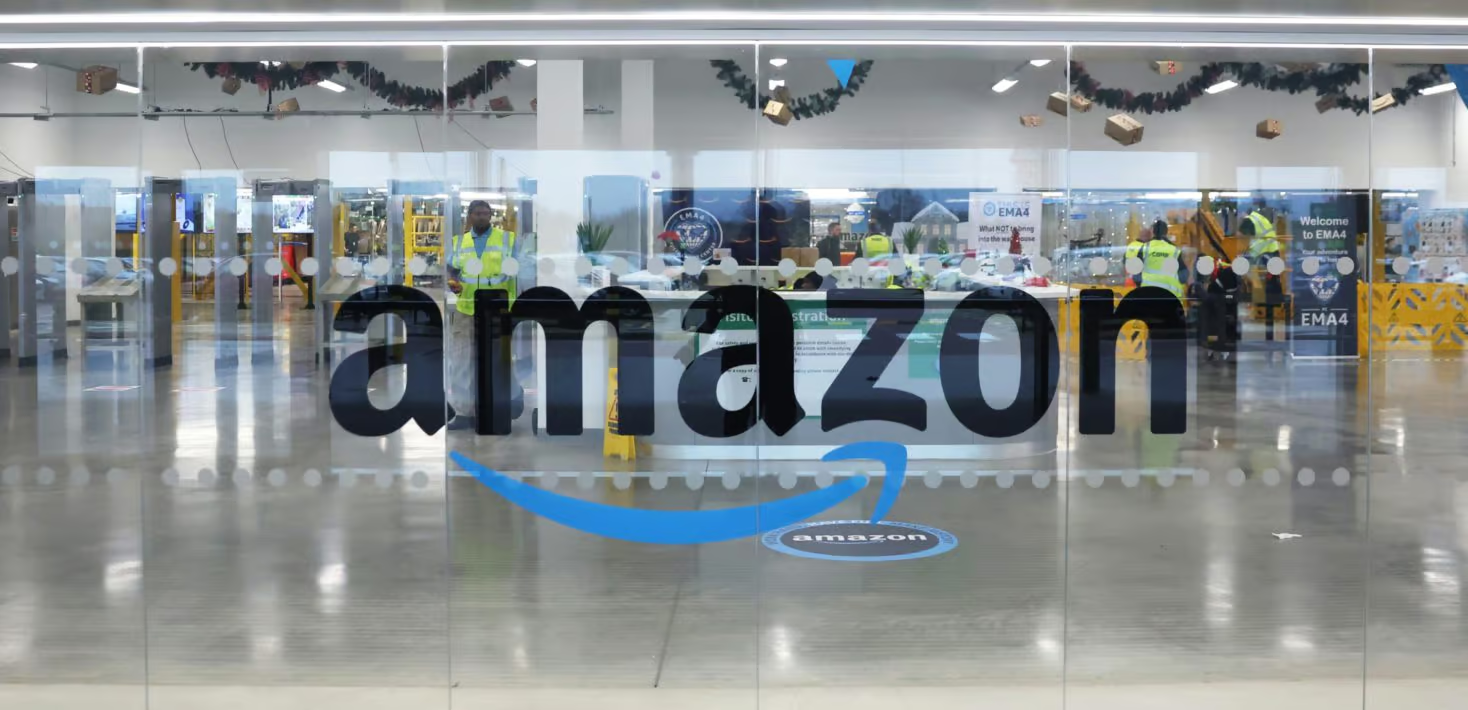
Migrant workers hired to work in Amazon’s operations in Saudi Arabia continue to face abuses from the third-party labor supply companies that employ them. They are also subjected to harsh working conditions in Amazon’s warehouses and the risk of the company ending their assignment at will, despite Amazon’s attempts to improve other aspects of their recruitment and living conditions, Amnesty International said in a new briefing today.
Amazon in Saudi Arabia: Why migrant workers remain at risk of exploitation documented some important improvements, including reduced recruitment-fee abuses, better accommodation standards and improved access to grievance mechanisms. Following Amnesty International’s 2023 investigation, Amazon also reimbursed more than USD 2.45 million to 1,180 workers in Saudi Arabia. Nevertheless, migrant workers remain vulnerable to exploitation under Amazon’s hiring model.
“Three years on, workers are still describing some of the same abuses and vulnerabilities. Despite steps taken by Amazon to improve some conditions for workers and reimburse illegal recruitment costs, its outsourcing of the recruitment and employment of migrant workers for its warehouses continues to leave such workers dependent on labor supply companies for their income, legal status and ability to change jobs or leave the country,” said Marta Schaaf, Program Director for Climate, Economic Social Justice and Corporate Accountability at Amnesty International.
“When workers are no longer needed by Amazon, they can be left without work or pay for weeks or months, yet unable to return home or move freely to other jobs. Such experiences reflect deeper problems in the way migrant workers are employed through labor supply companies within Saudi Arabia’s kafala system.”
This briefing draws on follow-up research conducted by Amnesty International between September 2025 and March 2026, including interviews with 24 migrant workers from India and Nepal who, at the time of interviews were currently or had recently been employed by three labor supply companies to work in one Amazon warehouse in Riyadh. Amnesty International has shared details of the investigation with Amazon and the Saudi Arabian government. Amazon’s responses can be accessed here. At the time of publication, the government had not responded.
Amazon workers remain trapped by kafala
Despite reforms to Saudi Arabia’s kafala sponsorship system, the experiences of contracted workers demonstrate that Amazon’s labor suppliers continue to exercise significant control over their employment, job mobility and freedom of movement.
Similar to Amnesty International’s previous findings, many workers said recruiters had misled them into believing they would be employed directly by Amazon on two-year contracts, only to discover shortly before departure that they would in fact be employed by third-party labor suppliers, something that many said they would not have agreed to had they known from the outset.
Almost all interviewed workers said that Amazon could end their assignment at the warehouse at any time, a process which many referred to as being “fired” or “terminated.” Workers then remained tied to the labor supplier sponsoring their visa, leaving them in profoundly insecure situations and vulnerable to exploitation.
Prakash, from Nepal, said: “[Amazon] can expel us from work anytime they want. It’s unclear when they will kick us out from work – today or tomorrow. We’re temporary workers.”
Interviewees said that after placements at Amazon ended, labor supply companies often left workers without another job and with little or no pay for weeks or months while they awaited reassignment, forcing some to borrow money or rely on friends.
Ayaan described the hardship he faced when his supply company stopped paying him while he waited to return home to India after being “fired” from Amazon, just a year into his contract: “Those three months were very difficult for me. I didn’t have enough money in my pocket. Some of my colleagues provided food for me. I couldn’t eat as much as I wanted.”
Some workers described how labor supply companies restricted workers’ ability to change employer at these times or pressured them into lower-paid jobs rather than facilitating their return home. Seeing this happen to colleagues left many in constant fear of having their Amazon assignments ended.
Arun said he was “terminated” from Amazon after taking leave when a close relative died, despite his labor supply company approving his days off. He said the labor supply company refused to process his exit visa unless he paid the equivalent of two months’ salary, despite not providing him alternative work. “They don’t let workers go home without completing two years of contract,” he said, “How could I have money to pay them?”
In response, Amazon said it had strengthened oversight of labor suppliers through audits and grievance mechanisms, and requires them, when a worker’s placement at Amazon ends, to pay outstanding wages and entitlements, explore onward job placement, facilitate transfers to new employers, and cover repatriation costs where this is not feasible. The company also acknowledged the potential risks Saudi Arabia’s exit and re-entry system pose to migrant workers but stressed that the system is determined by the government, and that Amazon has limited means of monitoring contracted workers’ conditions once they leave its operations. Amazon said it nevertheless requires labor suppliers to facilitate workers’ mobility, including processing requests to leave the country in a timely manner, and takes action where suppliers fail to meet its standards.
Grueling working conditions and fear to report grievances
Amnesty International’s research found that many of the harsh working conditions documented in its 2023 investigation in Amazon warehouses persist. Workers described intense pressure to meet productivity targets, constant monitoring and a persistent fear of warnings or dismissal if they failed to meet performance expectations. Deepak, who had worked as a picker for more than a year, reported managers would threaten to fire him for not meeting targets: “The manager shouts at you – “why you don’t meet your target?” … I will give you feedback. I will terminate you.”
While workers reported having access to Amazon’s MyVoice grievance system, some remained reluctant to use it, fearing retaliation from labor suppliers if they were identified as the source of a complaint. Workers also noted that they lost access to the system once they left Amazon’s facilities, making it harder to complain about subsequent issues with their employers.
In response, Amazon highlighted its health and safety systems, worker education initiatives and anti-retaliation policy, as well as a separate reporting channel that is accessible to workers who have left Amazon.
Addressing root causes
While Amazon’s actions in response to Amnesty International’s 2023 report demonstrate that it can use its leverage to improve conditions for workers employed through labor supply companies, these interventions have not gone far enough to address the structural risks inherent in using an outsourced business model in the context of the kafala system. While Amazon cannot dismantle the kafala system, it can address how its own business model operates within it. As long as contracted workers remain dependent on labor supply companies for their employment and immigration status, they remain at heightened risk of exploitation, particularly when their placements at Amazon end.
“Workers told Amnesty International that they lived with uncertainty and fear both inside and outside Amazon’s warehouses. On the top of the insecurity and abuse many faced at the hands of the labor supply companies employing them, workers reported intense productivity pressure, grueling shifts and threats of being removed from their Amazon assignment if they failed to meet demanding targets,” said Marta Schaaf.
“To tackle these abuses, Amazon should move away from its reliance on third-party labor supply companies and directly employ workers, while addressing workers’ concerns inside its warehouses. In the meantime, it should implement safeguards so that workers are not left without income when Amazon no longer needs their services, ensuring that any labor supply companies it relies on either continue paying them or promptly facilitate transfer to suitable alternative employers. Ultimately, Saudi authorities must fully dismantle the kafala sponsorship system, ending the control employers exercise over migrant workers’ lives.”
Contact: [email protected]