
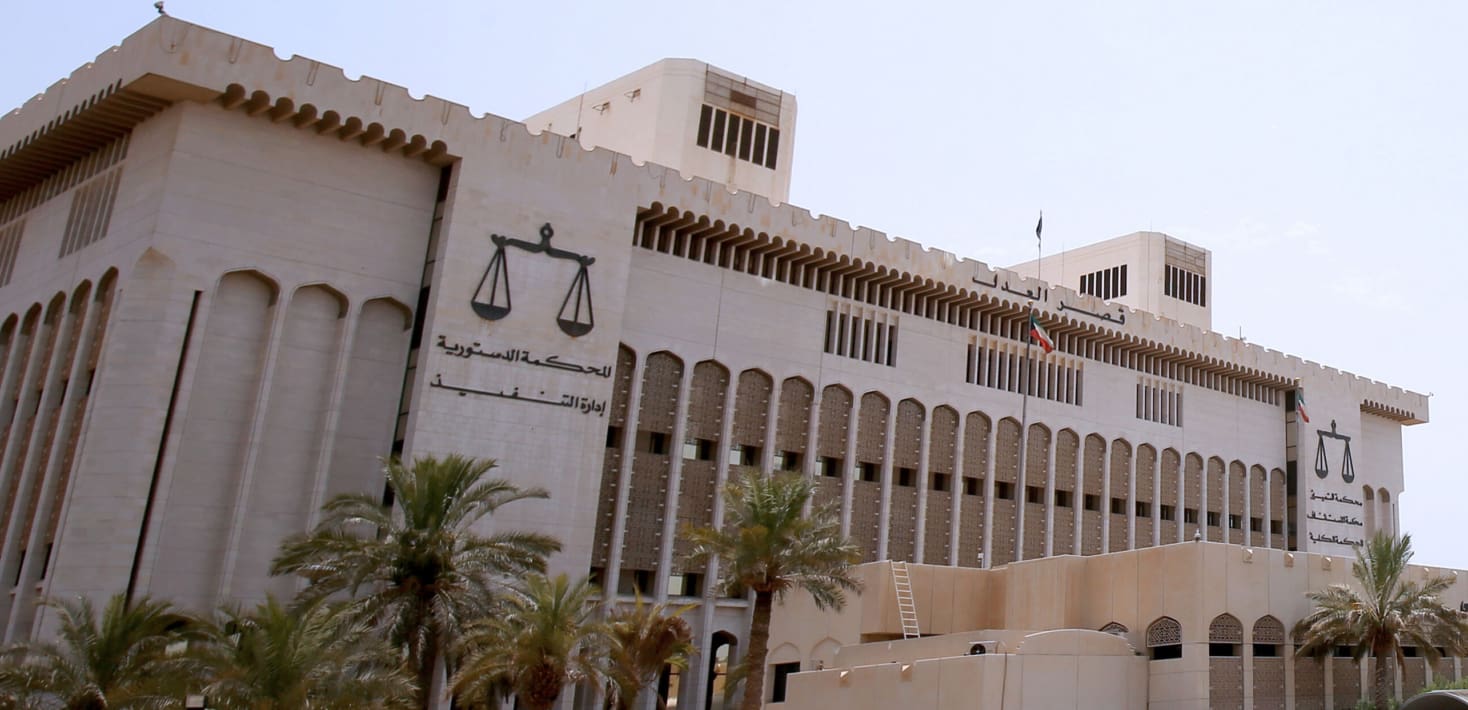
A counterterrorism law enacted in Kuwait in the wake of Iranian strikes on the Gulf, following the unlawful US-Israeli attacks on Iran, contains overly broad and vague provisions that threaten the rights to freedom of expression, peaceful assembly, association and movement, while significantly expanding the scope of the death penalty, Amnesty International said today.
On March 15, 2026, the Emir of Kuwait issued Decree-Law No. 47 of 2026 on Combating Terrorism Crimes, which adopts an overly broad and vague definition of ‘terrorist’ acts. The counterterrorism law forms part of a sweeping package of legal and judicial measures introduced in March 2026 shortly after the Iran war began in the name of “countering terrorism”. Measures include the establishment of a specialized prosecution branch and specially designated courts for terrorism-related charges, as well as significantly expanding the scope of the death penalty for “terrorist acts.”
“National security must not be used as a justification to trample on rights and expand state powers, and responding to any legitimate threats must be pursued in a manner consistent with international law. Kuwaiti authorities introduced counterterrorism legislation that expands the scope of the death penalty and permits punitive and arbitrary restrictions on freedom of movement and association for people who have not been convicted of a crime. The new law further grants authorities dangerous discretion to arrest, prosecute and sentence people for engaging in conduct that is protected under international human rights law, including expression and assembly,” said Mahmoud Shalaby, Regional Researcher at Amnesty International.
“While the introduction of these measures came during a crisis, amid Iranian retaliatory attacks on Kuwait, under international law, states may only derogate from certain obligations in extremely limited circumstances, after formal notification, and certain rights cannot be derogated from under any circumstances, including the right to life and the principle of legality. Kuwaiti authorities must urgently amend the new law to ensure that counterterrorism measures comply with their international human rights obligations. They should also immediately establish a moratorium on the use of the death penalty,” said Mahmoud Shalaby.
Amnesty International reviewed Decree-Law No. 47 of 2026 on Combating Terrorism Crimes, Law No. 106 of 2013 on Anti-Money Laundering and Combating the Financing of Terrorism, Decree-Law No. 51 of 2026 on Designating Criminal Circuits to Hear Cases Concerning Crimes against External and Internal State Security and Terrorist Crimes, and the Kuwaiti Penal Code. The organization also spoke to two individuals in relation to arrests under the new counterterrorism law, who requested anonymity given well-justified fears of reprisals, amid a wider crackdown on freedom of expression since the US-Israeli unlawful attacks on Iran on February 28, 2026 and Iran’s retaliatory attacks on Gulf states.
Mandatory death penalty for ‘terrorist’ acts
Under the new law, any person who has committed an offence under Kuwaiti law that is punishable by life imprisonment will now face the mandatory death penalty if the offence is classified as a “terrorist act.” This includes, for instance, “terrorist acts” such as spreading “false information” at a time of war where it undermines national security or public order and is committed as “a result of espionage with hostile states,” as well as attacks on ships at sea with the intent to seize them or their cargo, or to harm people on board.
The expansion of the scope of the death penalty, its mandatory imposition and use for offences that do not meet the threshold of “most serious crimes” involving intentional killing violate Kuwait’s obligations as a state party to the International Covenant on Civil and Political Rights.
Amnesty International opposes the death penalty unconditionally, in all cases and under any circumstances. Kuwait continues to impose the death penalty for a range of offences, including offences that do not meet the international law threshold of “most serious crimes”. In 2025, Kuwait issued a new law that expanded the circumstances in which drug-related offences are punishable by death.
Overly broad and vague definition of “terrorist’ act
Prior to the enactment of the 2026 law, Kuwait’s Law No. 106 of 2013 on Anti-Money Laundering and Combating the Financing of Terrorism defined a “terrorist act” as acts or attempted acts intended to cause death or serious bodily injury, as well as offences falling within the scope of nine international legal instruments.
The 2026 counterterrorism law provides a definition that is significantly broader and vaguer, contrary to the principle of legal certainty. The law defines a “terrorist act” as any act or threat that “causes damage to national resources, private or public property, public facilities, land, sea, or air transportation, or cybersecurity … aimed at spreading terror among people, endangering the safety and security of society, or compelling a public authority or a regional or international organization to perform or refrain from performing any act.”
This definition risks enabling the criminalization of acts protected under international human rights law. These could include participation in peaceful protests and strikes disrupting transportation or engaging in other forms of peaceful dissent, some of which may result in “damage to public resources” or minor property damage.
This low threshold, which does not require serious violence against persons, taken with the inclusion of acts aimed at “compelling a public authority… to perform or refrain from performing any act”, risks criminalizing advocacy campaigns and peaceful protests intended to influence government policy or decision-making.
The UN Special Rapporteur on the promotion and protection of human rights and fundamental freedoms while countering terrorism has stated that definitions of terrorism should not extend beyond acts causing death, serious injury or threats to life. The UN expert has also cautioned that where definitions of terrorism do, they should expressly exclude advocacy, protest, dissent and industrial action (collective labor action) that do not result in death or serious injury.
Punishment without criminal conviction
Under the new law, people can be considered as presenting a “terrorism danger” if their conduct “poses a serious threat of committing a terrorist act”, by “disseminating, endorsing, or glorifying ideas that incite the commission of terrorist acts”. Terms such as “endorsing” and “glorifying” are not defined in the law and are inherently vague, creating a significant risk that they will be used to criminalize peaceful dissent.
People can also be deemed as posing a “terrorism danger” if they have habitual association with individuals or organizations involved in inciting, facilitating, or committing terrorist acts. The law does not specify which authority has the power to make the “terrorism danger” determination. This raises concerns regarding due process and creates a risk of arbitrariness.
Under the law, people considered to pose a “terrorism danger” may be instructed by the Public Prosecution to take part in a rehabilitation program at a government-run center, which, according to the law, includes “rehabilitative activities covering cognitive, psychological, social, behavioral, health, vocational, and religious aspects”.
If these people do not comply with the instruction without an “acceptable excuse”, the Public Prosecution must request a court order compelling the person to participate. The court can then order the person take part in the rehabilitation program, as well as impose additional restrictions, including police monitoring, bans on entering specified places, and prohibitions on contacting specified persons or entities.
Even though the law stipulates that a person who does not comply with the Public Prosecutor’s instruction must be heard by a court before being compelled to join a rehabilitation programme, and that these decisions are subject to appeal, the imposition of such restrictive measures in the absence of a criminal conviction violates the right to the presumption of innocence and undermines due process guarantees. The measures themselves also interfere with the rights to freedom of movement, association, privacy and family life, and may adversely affect other rights, including the right to work.
There is no publicly available information on how many people have been affected by these measures.
Establishment of a new terrorism prosecution branch and designated courts
Two weeks after the adoption of the new law, Kuwaiti authorities created a new prosecution branch and designated courts with sole jurisdiction over terrorism cases. In proceedings before these bodies, authorities have already violated fair trial guarantees.
On March 30, 2026, Kuwait’s Public Prosecutor established the Public Prosecution for State Security Crimes, Terrorism, and Terrorist Financing, with exclusive jurisdiction over terrorism offences and other state security crimes. Prosecutors questioned at least one defendant facing charges under the 2026 counterterrorism law more than once without his lawyer present. Prosecutors also denied his lawyer access to case files until the case was referred to trial.
On the same day, Kuwait’s Council of Ministers issued a decree-law designating specific first-instance courts to hear cases involving internal and external state security offences and terrorism-related crimes. Since these courts were established, authorities have repeatedly denied defendants tried before their family visits. These courts have also conducted hearings behind closed doors, with families not permitted to attend.
The decree-law also designated specific appellate courts to review judgments issued by these first-instance courts, with the appellate courts’ rulings final, effectively eliminating one level of judicial review. Under Kuwaiti law, criminal and civil litigation involves three levels, namely: first- instance courts, appellate courts, and the Court of Cassation.
The decree-law required both appellate courts and first-instance courts to determine cases on an “expedited basis.”
Background
The unlawful US-Israeli attacks against Iran on February 28, 2026 led to retaliatory attacks by the Iranian authorities and allied armed groups against Kuwait, including against civilian infrastructure. By July 30, at least eight people had been reported killed in Kuwait.
In June, Amnesty International reported on Gulf states’ sweeping war-related crackdown on expression. In Kuwait and Bahrain, authorities also stripped citizens of their nationality, including in reprisal for expression.
Contact: [email protected]