
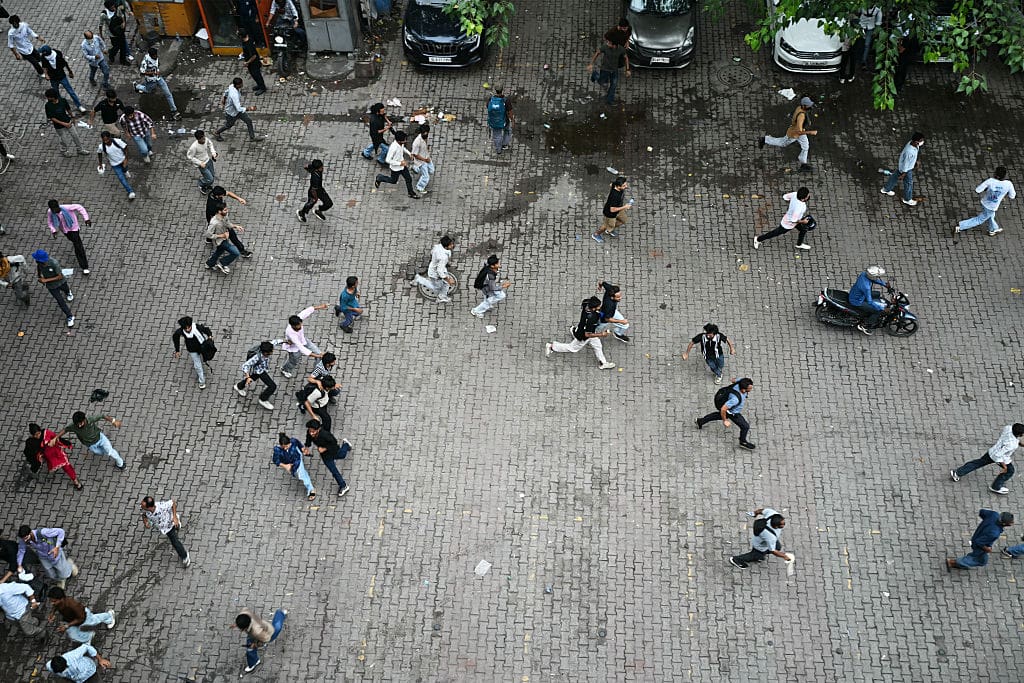
Responding to the crackdown on protestors in New Delhi demanding accountability in the Indian education system, Aakar Patel, Amnesty International India’s Chair of Board, said,
“The images and reports emerging from the protest at Jantar Mantar show how peaceful dissent is being suppressed in India. The police reportedly used unnecessary and excessive force against peaceful protesters and installed barricades to prevent them from reaching parliament. Authorities also suspended metro services and mobile internet, further restricting the exercise of the right to peaceful assembly.
“The role of the authorities is to protect and facilitate peaceful protests, not to suppress them. The right to freedom of peaceful assembly is recognized under international human rights law and the Indian constitution.
“The Delhi Police’s actions raise serious questions about whether their response met the requirements of legality, necessity, and proportionality under international human rights standards. We call on the Delhi Police to exercise restraint and immediately cease the use of unlawful force against peaceful protesters. Authorities must ensure that all allegations of unlawful conduct, including the reported excessive use of batons, tear gas, and stone-throwing by police personnel, are promptly, independently, and impartially investigated.”
Background
The protesters, led by the Cockroach Janta Party (CJP), a youth-led movement, are demanding accountability over alleged examination paper leaks that affected millions of students.
While on hunger strike in support of the protest, activist Sonam Wangchuk was forcefully shifted by the Delhi police to a hospital on July 18. He was on his 21st day of hunger strike when he was admitted to hospital against his wishes.
On July 20, protesters marched to the Parliament of India to demand the resignation of Union education minister, Dharmendra Pradhan.
Social media users have shared videos and accounts alleging that Delhi Police threw stones at protesters, used excessive force by beating demonstrators with batons, and fired tear gas grenades at peaceful protesters.
In May 2026, allegations of a question paper leak in the NEET-UG examination (India’s medical school entrance test) led the testing agency to cancel the exam results, requiring more than two million students to retake the test. The decision sparked widespread protests, and local media reported that several students died by suicide amid the intense stress and uncertainty.
The protesters are also seeking INR 1 crore ($104,050) in compensation for each of the families of students who died by suicide allegedly following examination related distress linked to the leaks.
Contact: [email protected]