
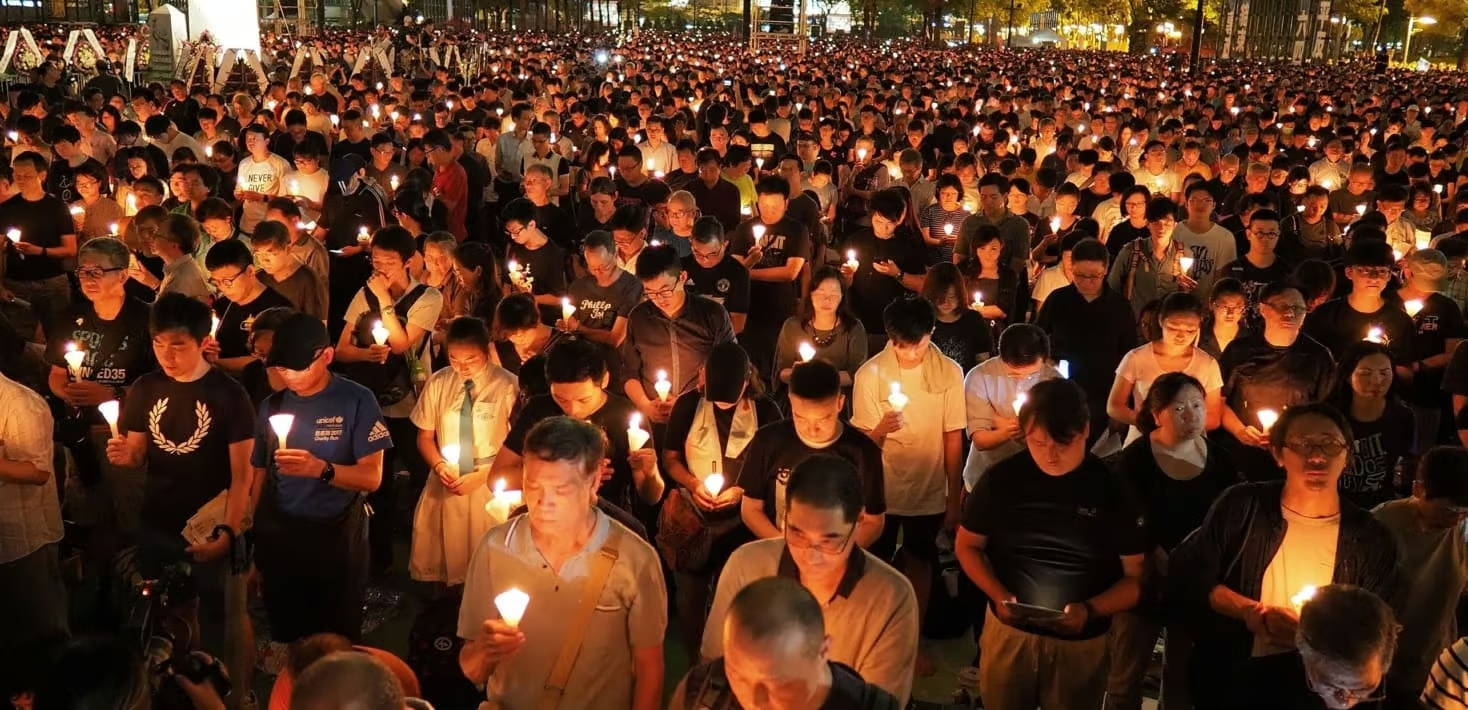
Responding to the convictions of activists who organized Tiananmen vigils in Hong Kong, Amnesty International Hong Kong Overseas spokesperson Fernando Cheung said:
“This dismaying verdict underlines how Hong Kong’s National Security Law is being used to punish people for peacefully remembering one of the darkest chapters in recent Chinese history.
“For decades, Hong Kong was the only place on Chinese soil where large-scale public remembrance of the Tiananmen crackdown could take place. Today’s decision marks another grim milestone in the government’s deliberate campaign to erase that legacy and silence those who seek truth, justice and accountability.
Amnesty International’s Deputy Regional Director Sarah Brooks said:
“Chow Hang-tung and Lee Cheuk-yan have not committed any recognizable crime; they have been convicted solely for their role in organizing peaceful commemorations of the people killed by the Chinese authorities on June 4, 1989.
“The Hong Kong authorities should quash these convictions and end the ongoing persecution of people seeking to keep the memory of Tiananmen alive.
“Chow Hang-tung and Lee Cheuk-yan are prisoners of conscience who should never have been prosecuted in the first place. They must be released immediately and unconditionally.”
Background
Hong Kong’s High Court today convicted Tiananmen activists Chow Hang-tung and Lee Cheuk-yan of “inciting subversion of state power” under the city’s National Security Law. Chow and Lee, along with Albert Ho Chun-yan, who previously pleaded guilty to the same charge, will be sentenced at a later date and face up to 10 years’ imprisonment.
Chow and Lee were among seven members of the Hong Kong Alliance in Support of Patriotic Democratic Movements of China (Hong Kong Alliance) charged with different offences under the Beijing-imposed law in September 2021. Both have been held in pre-trial detention ever since, having been repeatedly denied bail. They have been designated prisoners of conscience by Amnesty International.
Amnesty International has repeatedly raised concerns that the National Security Law, enacted in June 2020, is being used to target civil society groups, journalists, political activists and academics for actions that are fully protected under international human rights law.
The Tiananmen vigils commemorated the events of June 4, 1989, when Chinese troops opened fire on students and workers who had been peacefully protesting for political reforms in and around Beijing’s Tiananmen Square. Hundreds – possibly thousands – of people were killed. Tens of thousands more were arrested across China in the suppression that followed.
In the 37 years since the crackdown, all discussion of the incident has been heavily censored in China, and authorities have effectively erased it from their version of history.
From the beginning, commemorating the Tiananmen crackdown was forbidden in mainland China. But in Hong Kong, crowds reaching hundreds of thousands of people would gather annually in centrally located Victoria Park to peacefully remember those killed. The vigil participants regularly called on the Chinese authorities to reveal the truth about what happened and accept accountability for the atrocity; for thirty years, local government did not, in practice, interfere or object.
The last major vigil organized by the Hong Kong Alliance was held in 2019. The Hong Kong vigil was banned in 2020 and 2021, ostensibly on COVID-19 grounds. Since then, the National Security Law has effectively criminalized peaceful protest in the city – including Tiananmen commemorations.
Contact: [email protected]