
Ahead of the September 4 meeting between Austria, Denmark, Germany, Greece and the Netherlands to discuss progress on plans to deport people to so-called “return hubs” in countries outside Europe where they may never have set foot, likely be to centers or facilities funded by EU member states, Eve Geddie, Director of the European Institutions Office of Amnesty International, said:
“By their very design, and wherever they may be located, ‘return hubs’ carry a risk of grave human rights violations, including arbitrary detention, torture and ill-treatment, and forced onward returns to countries of origin. There is a real danger that these locations will, in practice, become cruel black holes for human rights to outsource or offshore detention and deportation. Any responsible government should reject these plans outright.
“We are particularly alarmed that discussions are reportedly zeroing in on two countries with appalling human rights records: Uganda and Rwanda – despite ongoing conflict and political instability in the Great Lakes Region.
“These negotiations, and the EU’s broader so-called ‘migration diplomacy’ approach, are based on deep power asymmetries reflecting an unabashed attempt by the EU to shirk its migration responsibilities and shift them on to countries in the Global South that are already doing far more than Europe to receive refugees and with fewer resources.
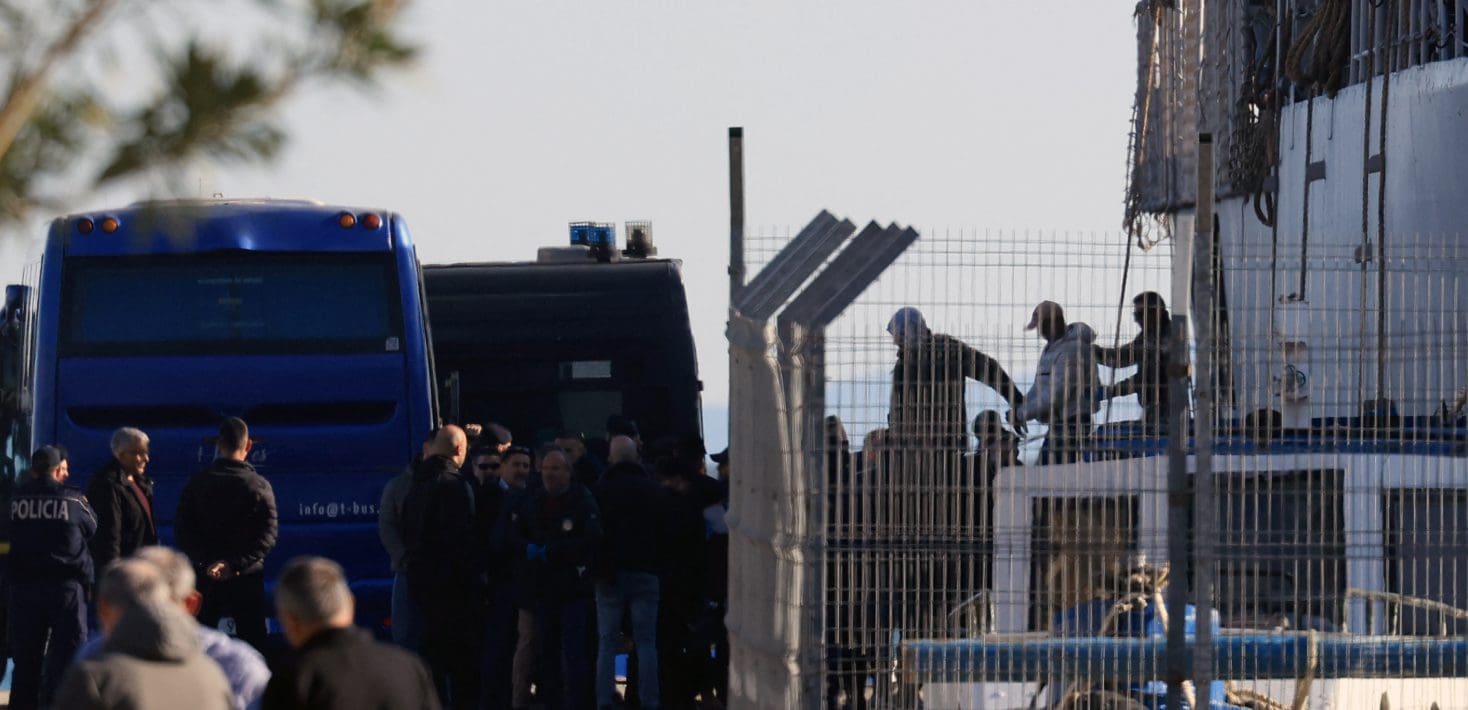
“From the Italy-Albania deal and governments’ past attempts to outsource or offshore their migration policies, we already know that ‘return hubs’ will disproportionately harm racialized people. Following the shameful chants to ‘send them back’ heard in the European Parliament in June, governments across the political spectrum are now dancing to this same xenophobic and racist tune – willing to pursue an agenda to increase deportations at seemingly any cost. Amnesty International will continue to expose the harms and illegalities of these policies – and to resist them.”
Background
Amnesty International has repeatedly warned that ‘return hubs’ cannot be implemented in a human rights-compliant manner, given the severe risk of rights violations, as with all past attempts to outsource migration responsibilities.
While specific details have yet to be disclosed, there is a real danger that “return hubs” will in practice become deportation and detention sites involving automatic – and therefore arbitrary and unlawful – detention; refoulement, including in return hubs or through onward deportations; torture, inhumane or degrading treatment or punishment; and restrictions on access to due process and effective remedies, among other abuses.
Negotiations between these five EU member states are reported to be particularly advanced with Uganda and Rwanda, despite the well-documented human rights violations in both countries. There have also been reports of a planned center in Uganda, which could become operational in 2027, that could accommodate up to 10,000 people.
The EU Return Regulation, which is yet to be formally adopted but will provide the legal basis for “return hubs” in EU law, states that these agreements may only be reached with countries where “international human rights standards and principles […] are respected.”
Amnesty International has long documented rights violations in Uganda, including repression, unlawful detention and deportations, and notably its extreme anti-LGBTQ+ law, which criminalizes consensual same-sex acts and carries the death penalty for the offence of ‘aggravated homosexuality’.
The Rwandan government and military control and closely support the M23 armed group in the Democratic Republic of the Congo, which has perpetrated serious abuses that may amount to war crimes. In its ruling in 2023, the UK Supreme Court found that Rwanda was not a safe third country for the UK to forcibly transfer people seeking asylum, given the country’s record of repression, restrictions on media and political freedoms, extrajudicial killings, arbitrary detention, ill-treatment and torture. In September 2025, the European Parliament called on the European Commission to review assistance, including financial aid, to Rwandan public institutions involved in arbitrary detentions, torture or unfair trials.
Contact: [email protected]