

“When workers raise their voices, they are ignored; when they try to organize, they are threatened and sacked; and finally, when workers protest, they are beaten, shot at and arrested.”
– A labor NGO worker in Bangladesh
The experiences described by the labor NGO worker quoted above are not anomalies. In fact, they reflect the daily reality of thousands of garment workers across South Asia. In honor of International Workers’ Day, also known as May Day, I lift up their voices, their struggles, and I ask for your solidarity with them.
The garment industry is a major driver of economic growth in South Asia, employing nearly 100 million workers and accounting for 80% of export earnings in countries like Bangladesh. Yet, despite its critical role in the region’s economies, the industry is rife with human rights abuses. From poverty-level wages to unsafe work conditions, gender-based violence, and harassment, the human rights of garment workers are violated every day. These labor abuses are especially pronounced in Bangladesh, India, Pakistan, and Sri Lanka, where governments and factory owners mutually reinforce anti-union policies that prevent workers from exercising their rights to freedom of association and securing dignified work.

JOIN THE FIGHT FOR GARMENT WORKERS’ RIGHTS
Sign the petition and call on the governments of Bangladesh, India, Pakistan and Sri Lanka to ensure garment workers’ rights to decent work and freedom of association.
Garment workers face barriers to organizing
The ability to unionize and bargain collectively is a hard-won right, the result of decades of labor activism, that enables workers to organize and secure fair working conditions. Numerous research studies have established a correlation between increased unionization and reduced earnings inequality. In fact, freedom of association is a right protected under the UN International Covenant on Civil and Political Rights (ICCPR), which states that “everyone shall have the right to freedom of association, including the right to form and join trade unions.” Thus, factories and governments in South Asia are violating internationally accepted human rights laws by systemically denying garment workers the right to collective bargaining. Repression of union rights is severe across South Asia. According to the 2023 International Trade Union Confederation Global Rights Index, Bangladesh is among the 10 worst countries for workers, while India and Pakistan offer no guaranteed rights, and workers in Sri Lanka face systematic labor rights violations.
Through its research, Amnesty International identified methods that governments in India, Pakistan, Bangladesh, and Sri Lanka use to break up unions, including union busting, factory-level retaliation against organizing, legal and structural barriers to striking, and the replacement of independent unions with pro-management bodies. These anti-union practices are further reinforced by the fact that factory employers are rarely held accountable. Workers across all four countries also face state violence and repression when protesting, while the lack of unions leaves them with few ways to safely raise concerns. In the end, workers are left facing intimidation, harassment, and retaliation without protection or recourse.
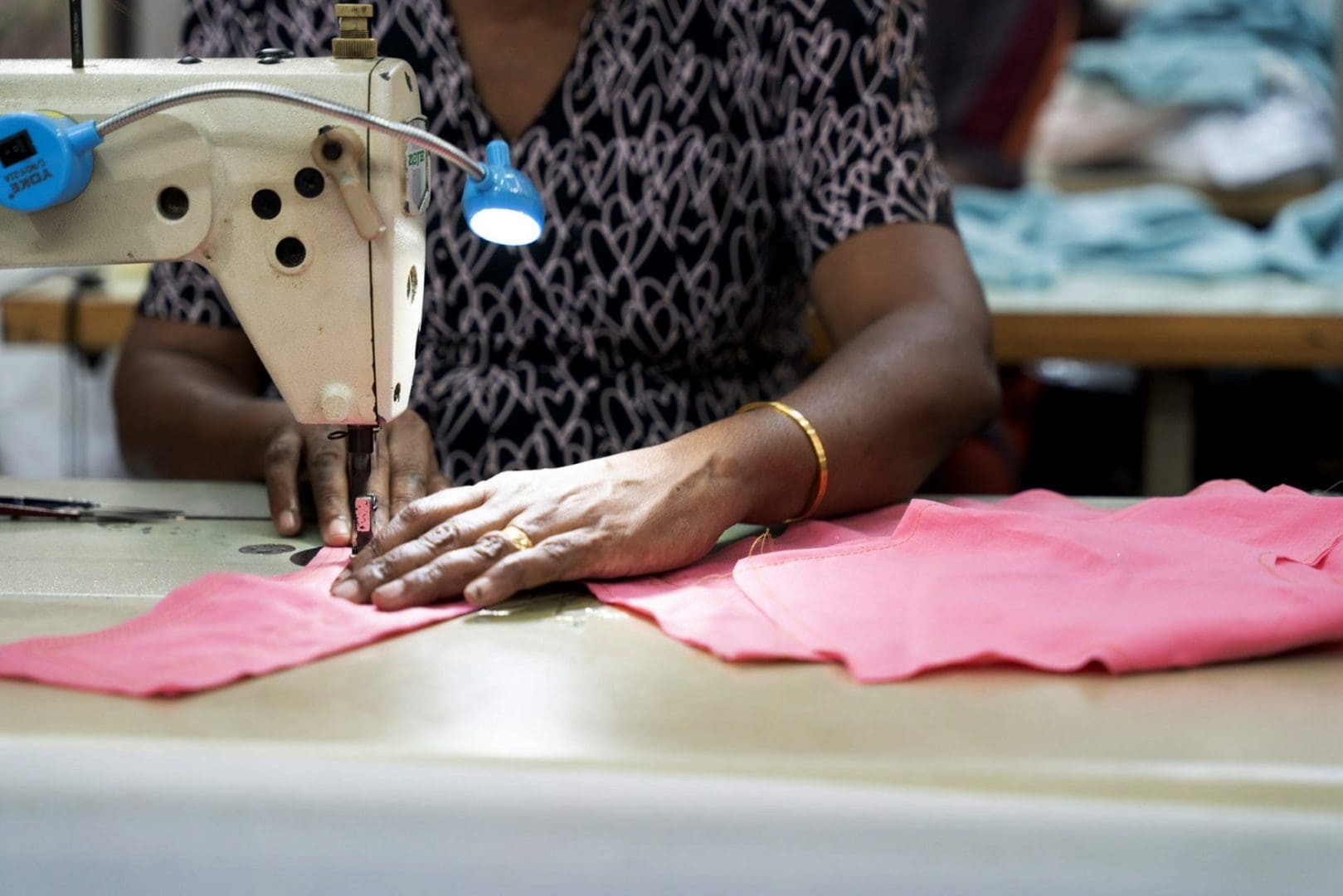
The right to freedom of association is one of the few tools workers can use to stand up against labor abuses and thus must be protected. As the UN Special Rapporteur on freedom of peaceful assembly and of association put it in a 2016 report, “Without assembly and association rights, workers have little leverage to change the conditions that entrench poverty, fuel inequality, and limit democracy.” If South Asian governments are to meet their human rights commitments, they must strengthen collective bargaining rights for their garment workers, which will give them greater self-agency and power.
Low wages and unsafe work environments shape garment workers’ daily reality
The working conditions of most garment workers are grim. In the race to produce large quantities of clothes at lower costs, global garment companies outsource their production to lower-income countries where laws around labor, social, and environmental protections are weak. Around 90% of India’s workforce are informally employed. Specific to garment workers, three-quarters of garment workers in Pakistan and over 30% of women garment workers in Sri Lanka are informally employed. This widespread informality means that large swaths of the garment sector workforce in South Asia are left vulnerable to labor exploitation, including poverty wages, unpaid overtime work, and a lack of paid sick leave or vacation days. Since many garment workers are considered contract employees rather than full-time employees, the labor exploitation they face goes beyond their work in factories and bleeds into their futures. Their classification as contract workers means that they are denied pensions and other social benefits that they should be entitled to, given the often full-time nature of their work.
Research also demonstrates that governments in all four countries fail to ensure a living wage for their workers. The lack of a guaranteed living wage forces garment workers to work longer hours just to survive, often leaving them in poverty with limited access to adequate food and housing. This frequently means working long hours during the week and on weekends in unsafe and unhealthy environments, putting them at risk of disease, injury, and even death. Long and physically demanding factory work has serious health consequences, including respiratory and musculoskeletal problems.

The safety risks garment workers face go beyond daily conditions to the buildings themselves, where thousands are packed in and basic safety checks are often ignored. The 2013 Rana Plaza collapse is a stark example of profits being prioritized over worker safety, as management forced ununionized workers to continue working despite warnings about cracks and other hazards, ultimately leading to the deaths of over 1,100 garment workers.
Without the ability to join or form unions, South Asian garment workers are left vulnerable, unable to push back against unsafe and unfair conditions, and forced to show up to work to earn a living while putting their lives at risk.
Women on the front lines of labor exploitation
“Women are in this job because they are seen as cheap and disposable.”
— Zehra Khan, Home-Based Women Worker’s Federation
The garment industry is a women-dominated field. Globally, women comprise between 60% and 80% of the global garment workforce. In South Asia, women constitute around 70% of workers in Sri Lanka, 60% of workers in Bangladesh and India, and about 28% in Pakistan. Most garment workers in South Asia are often young, migrant women who travel from rural villages or regions to cities in search of better economic opportunities to support their families.
While the garment industry provides a pathway for women to enter the labor market, especially crucial for those without access to formal education, it is also a place where women regularly face exploitation and violence. Verbal, physical, and sexual abuse is widespread, with studies showing that over three-quarters of workers experience such abuse, yet many do not report it due to stigma and fear of retaliation.

These challenges are worsened by precarious employment, systemic gender and social discrimination, and intersecting identities based on race, caste, migration status, or religion, all of which discourage women from speaking up. As women are ignored, threatened, or punished for organizing, abuse continues with little accountability.
“The main problem is of course freedom of association. The fact that workers don’t have a voice […] They are weak because they cannot organize. Part of this reason is because the majority of garment workers are young women from rural areas, they don’t know labour laws, they don’t know about their rights, they don’t know about the role of unions. They’re very isolated.”
– Anton Marcus, Free Trade Zone & General Service Employees Trade Union
Even though the workforce is predominantly female, factory management is largely male-dominated. Thus, women workers are often dismissed when raising concerns. They also struggle to access leadership roles or have their voices heard. Exclusion, threats, and gender norms make it difficult for women to address gender-specific issues like harassment and sexual abuse. At the same time, stigma, fear, and retaliation further hinder organizing and leave women at high risk of exploitation.
“Freedom of association is the key to unlocking change in the industry.”
— Khalid Mahmood, Labour Education
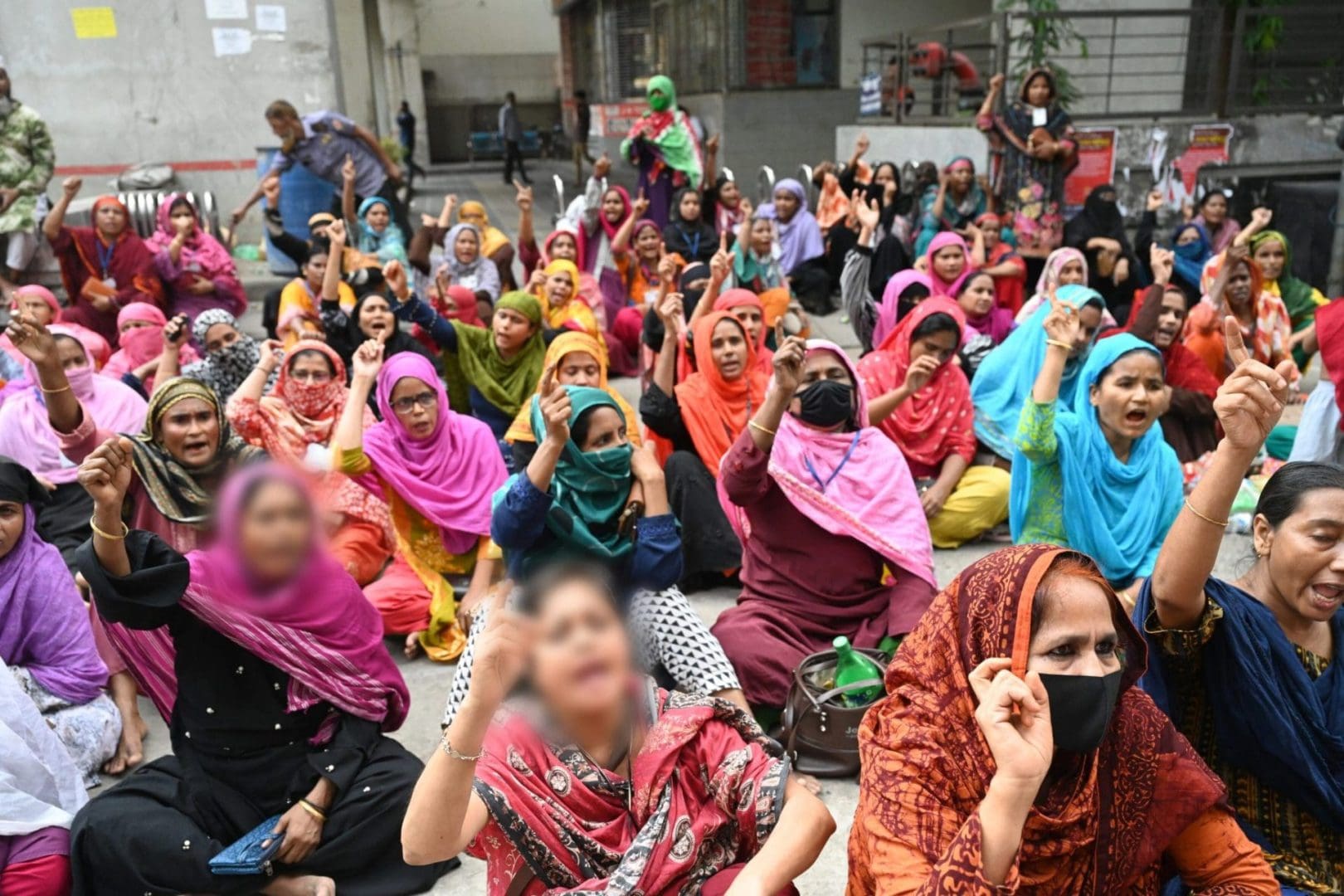
Data shows that as restrictions on women’s ability to unionize increase, factories see rising levels of gender-based violence and harassment, along with more unpaid wages and severance. Protecting human rights in the garment industry means protecting women from gender-based discrimination. When women are able to organize, they can advocate for themselves and step into decision-making roles that drive lasting, positive change for other women in the garment sector.
Standing up for garment workers means ensuring that millions of people, many of them women, can work in safe conditions, earn fair wages, and live with dignity rather than being trapped in cycles of exploitation and poverty.
EMPOWER WOMEN GARMENT WORKERS
Sign the petition and call on the governments of Bangladesh, India, Pakistan and Sri Lanka to ensure fair work and protect workers’ right to organize.
Read our reports “Stitched Up: Denial of Freedom of Association for Garment Workers in Bangladesh, India, Pakistan and Sri Lanka” and “Abandoned by Fashion: The Urgent Need for Fashion Brands to Champion Workers’ Rights; Brand Responses to Amnesty International Survey” to better understand the human rights issues facing garment workers in South Asia, what needs to change, and how you can take action.