
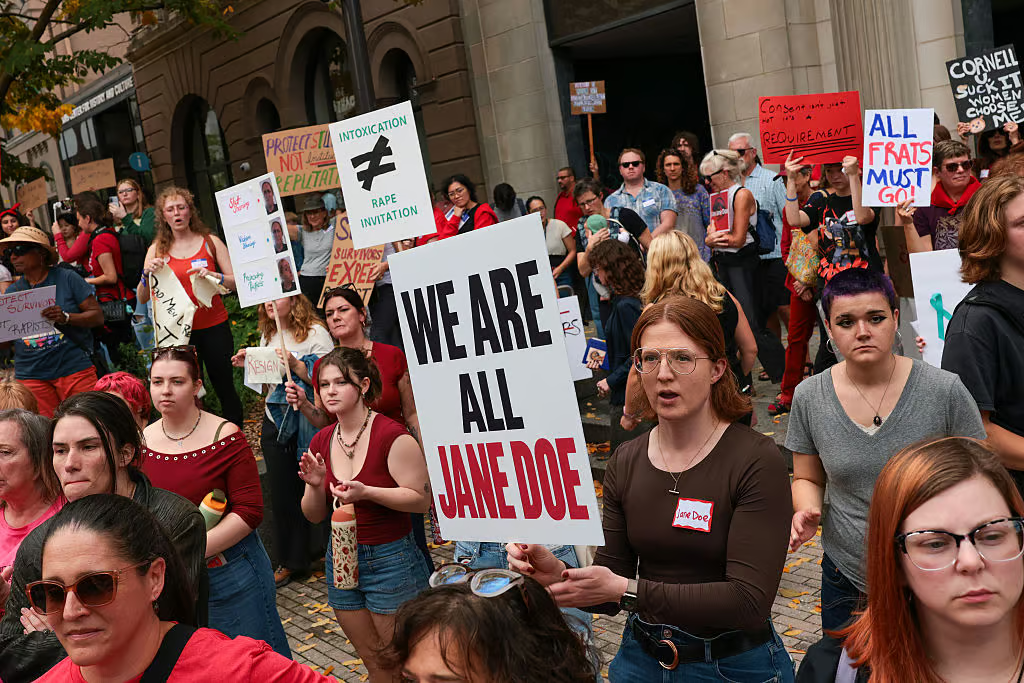
On November 1st, 2013, I filed a lawsuit in my personal capacity against my then-university alongside four other brave survivors of campus sexual assault, alleging deliberate indifference to our reports of sexual harassment, sexual assault, and a hostile environment towards women and survivors on campus. This was one lawsuit, in addition to Title IX and Clery Act complaints, that formed part of a wave of survivors taking similar action and speaking truth to power by calling out their universities nationwide for sweeping reports of sexual violence under the rug.
Cornell is just the tip of the iceberg
Twelve years after that lawsuit was settled, I write this in the wake of international headlines about Jane Doe filing a lawsuit against Cornell University for being deliberately indifferent to allegations that she was drugged and sexually assaulted by seven members of a fraternity —while over 50 men in a group chat were notified and did nothing to intervene. Following an internal university Title IX investigation, some of these students faced suspension or expulsion, but others involved were disciplined with writing “reflection papers.” The stories from Cornell are gutting and enraging, but not surprising for so many sexual assault survivors who know what institutional betrayal feels like in our bones. Cornell is just one example of universities that keep trapping generations of students in the same exhausting cycle of administrative indifference.
Campus-wide outrage and intense online condemnation are moving people to take a stand. People are speaking out and refusing to let these stories be buried. It’s right to be angry about what you’re reading; you should be.
Living a life free from sexual violence is a human right.
When schools treat safety as an administrative variable rather than a basic obligation, they turn campus failure into a human rights crisis.
I know from first-hand experience how taking on an institution as an individual forces a survivor to spend all their energy fighting for basic safety instead of just getting an education. It also adds an entirely separate layer of trauma to an already devastating situation. We cannot keep asking survivors to carry the heavy burden of fixing these systems while they are trying to heal.
So, how do we hold universities accountable right now? How can we make sure we won’t be here again in the next decade or the decade after that? When will sexual violence on university campuses stop being part of the college experience?
We need your voice in making sure this collective outrage forces permanent structural and cultural change on college campuses and beyond before the cycle resets.
Take Action Today
If you are ready to turn your outrage into impact and make sure this history stops repeating itself over the next decades, here is how you can get involved right now:
- Learn more about Title IX and how schools handle gender-based violence using this toolkit from Advocates for Youth. This is also a great resource for organizing around gender-based violence!
- If you’re on or near a college campus, join (or plan!) a rally for Take Back the Night on November 1
If you or someone you know needs support, here are three hotlines:
- RAINN’s National Sexual Assault Hotline (call, text, or chat online)
- StrongHearts Native Helpline for Indigenous survivors
- Teen Dating Abuse Helpline: (866) 331-9474