
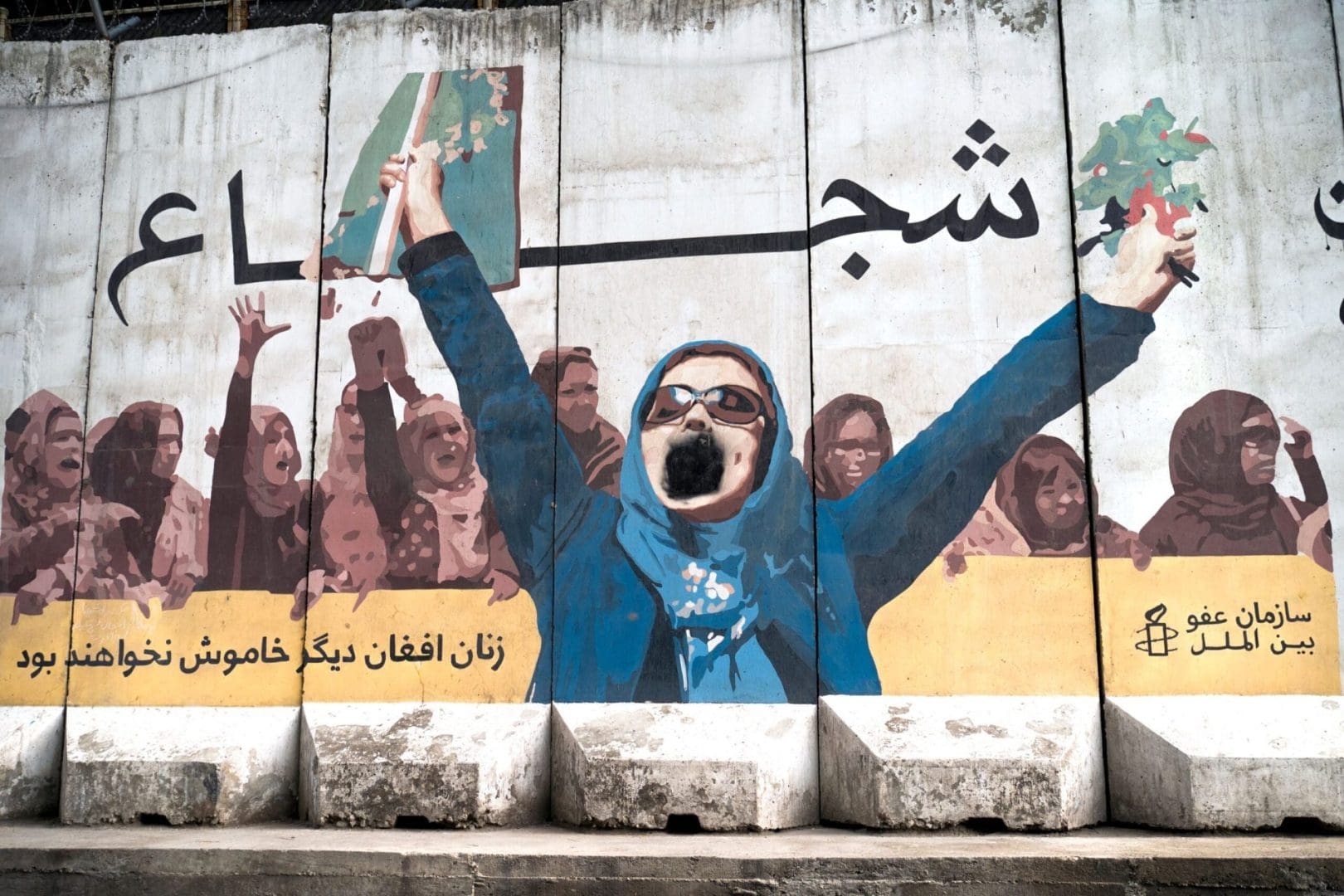
Five years after returning to power in Afghanistan, the Taliban continues to commit grave abuses against women and girls, without any accountability.
The sheer scale of discrimination against the 21.7 million women and girls in Afghanistan is staggering. The Taliban has created a system of domination based solely on gender, effectively controlling every aspect of a woman’s life. Women and girls are barred from seeking employment and pursuing education beyond grade six. In public, the Taliban forbids women’s voices from being heard. Meanwhile, male relatives are compelled to police women in private, as men may be held responsible if the women and girls in their families do not comply with Taliban decrees.
For years, the international community failed to deliver a proportionate response to this oppression. The failure of the United States is particularly troubling, given a long-standing, bipartisan recognition of its responsibility to the Afghan people. Today, as we mark five years since the Taliban’s takeover, we urge the U.S. government to lead international efforts to protect Afghan women and girls and hold the Taliban accountable. Rather than become resigned to the reality in Afghanistan, the U.S. government and broader international community should take the following actions:
1. Stop Normalizing Taliban’s Repression
Many governments have opened diplomatic and economic channels with the de facto Taliban authorities. The European Commission, for example, recently invited Taliban authorities to Brussels to discuss the deportation of Afghan refugees and asylum seekers. Such engagements, if they disregard the ongoing human rights violations, risk normalizing Taliban’s repression and tacitly tolerating its crimes under international law. Forcibly returning Afghans would also violate the principle of non-refoulement under international refugee and human rights law.
The risk of normalization sends a chilling message to women and girls in Afghanistan: their human rights would come second to the diplomatic and economic interests of global governments. More broadly, it could set a dangerous precedent, signaling to oppressive regimes that they can commit similar abuses with impunity.
The Taliban is the de facto authority in Afghanistan and carries obligations under international human rights law. Any engagement or diplomatic relationship with the Taliban must be principled, rights-based, and aimed at ending ongoing human rights violations. We must ensure that the international community does not engage with the Taliban in a way that legitimizes or normalizes their systematic oppression against women and girls.
2. Establish a Clear and Principled Foreign Policy on Afghanistan
The current U.S. administration’s policy on Afghanistan is still “under review,” creating an unacceptable degree of uncertainty on an issue that should be a priority. The Trump administration should define a foreign policy towards Afghanistan that centers human rights, including the rights of women and girls.
More importantly, the U.S. government must guarantee that the women of Afghanistan—both inside and outside of the country—have a meaningful role in shaping discussions about their country’s future. Leveraging its role in international institutions, the United States should ensure that Afghan women can participate in diplomatic negotiations, international conferences, or policy consultations where such deliberations and decisions take place. It is also critical that the United States use its power within the UN Security Council to ensure that the UN promotes a political dialogue for Afghanistan that centers the voices of women, youth, ethno-religious minorities, and all those who have been repressed under Taliban rule.
There are efforts underway, led by Afghan women, to build mechanisms that strengthen the international legal framework and hold the Taliban accountable for their human rights abuses. The United States should fully support these efforts.
3. Provide Legal Safety and Certainty for Afghan Allies
Afghan allies are trapped between two realities. In the United States, many face prolonged legal uncertainty and the threat of deportation, while in Afghanistan, they face persecution and retaliation by the Taliban. The U.S. government must provide safety and legal certainty to Afghans who face persecution under Taliban rule—both those already in the U.S. and those stranded abroad awaiting protection.
Congress should pass the bipartisan Afghan Adjustment Act, creating a pathway to permanent status for eligible Afghans in the U.S. and strengthening protection pathways for at-risk Afghan allies. Congress should also support and pass the bipartisan Afghanistan TPS Act to protect eligible Afghan nationals already in the U.S. from deportation. The U.S. must keep its commitments to those who supported its mission and ensure that no Afghan allies are returned to persecution.
Finally, U.S. refugee and asylum policy must recognize gender-based persecution, including the Taliban’s systematic subjugation of Afghan women and girls, as a basis for protection.
Five years into Taliban rule, we must ensure that Afghanistan’s women and girls are not ignored but instead have the resources, legal tools, and international support to defend their rights and have agency over their futures. As a global community, we must protect human rights, justice, and the rules-based international order against the attacks they increasingly face. We must use collective action and people power to apply public pressure and demand our elected officials show political courage in holding the Taliban accountable.
As activists, lawyers, journalists, students, artists and global citizens, we stand strong with the Afghan women and girls fighting against a system of totalizing oppression. And we remind our government of its obligation to do the same.
What can I do to support women and girls in Afghanistan?
Call your representatives and ask them to support legislation that protects Afghan women and girls, including the following bills:
About the Author: The U.S. Policy Advocates for Afghan Women and Girls Working Group is a coalition of fifteen civil society organizations, calling for the United States government to commit to its legal obligations and have a foreign policy towards Afghanistan that is based in human rights, particularly the rights of women and girls.