
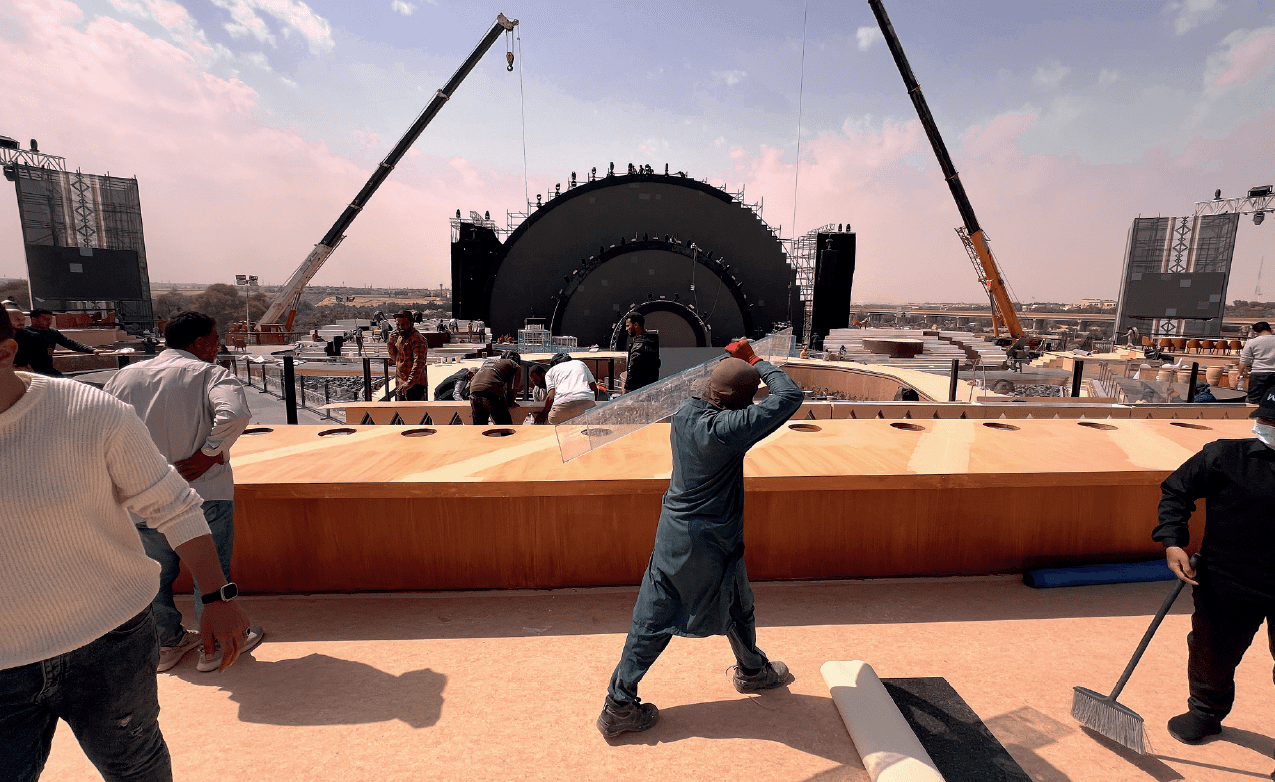
For more than a decade, tens of thousands of migrant workers, many in low-wage jobs, have labored in Riyadh’s searing heat and dust, carving tunnels, laying tracks, and providing administrative and other support to consortiums of Saudi and international companies.
Their labor – often unseen but indispensable–culminated in the opening of the Riyadh Metro in January 2025: 176 kilometers of track, 85 stations, and billions of dollars’ worth of infrastructure. Hailed as the “backbone” of the capital’s public transport system, the metro is set to carry millions of passengers each year and will be a cornerstone of Saudi Arabia’s preparations for the 2034 FIFA Men’s World Cup and other major international events.
This report tells the story of the working and living conditions of some of those migrant workers, and the state’s failure to protect them from serious abuses.
It is based primarily on interviews conducted remotely by Amnesty International with 38 men from Bangladesh, India and Nepal who worked on the Riyadh Metro project between 2014 and 2025, with most employed there until at least late 2023. It also draws on an analysis of the relevant national and international laws governing migrant workers in Saudi Arabia, and previous reporting from Amnesty International and other civil society organizations.
Those interviewed were employed across a total of 11 companies – both Saudi- and internationally-headquartered – including some of the main contractors on the project, as well as certain subcontractors and labor supply companies. These companies are not named in this report, which focuses primarily on Saudi Arabia’s state obligations.
As Saudi Arabia pushes ahead with more high-profile mega-projects and prepares to host the World Cup in 2034, this report should serve as an urgent warning of the need for stronger safeguards and accountability for the millions of migrant workers on whom these projects and events depend. Without decisive action, workers remain exposed to serious exploitation, and companies to reputational, legal, and financial consequences if they are found to be linked, directly or indirectly, to labor abuses.