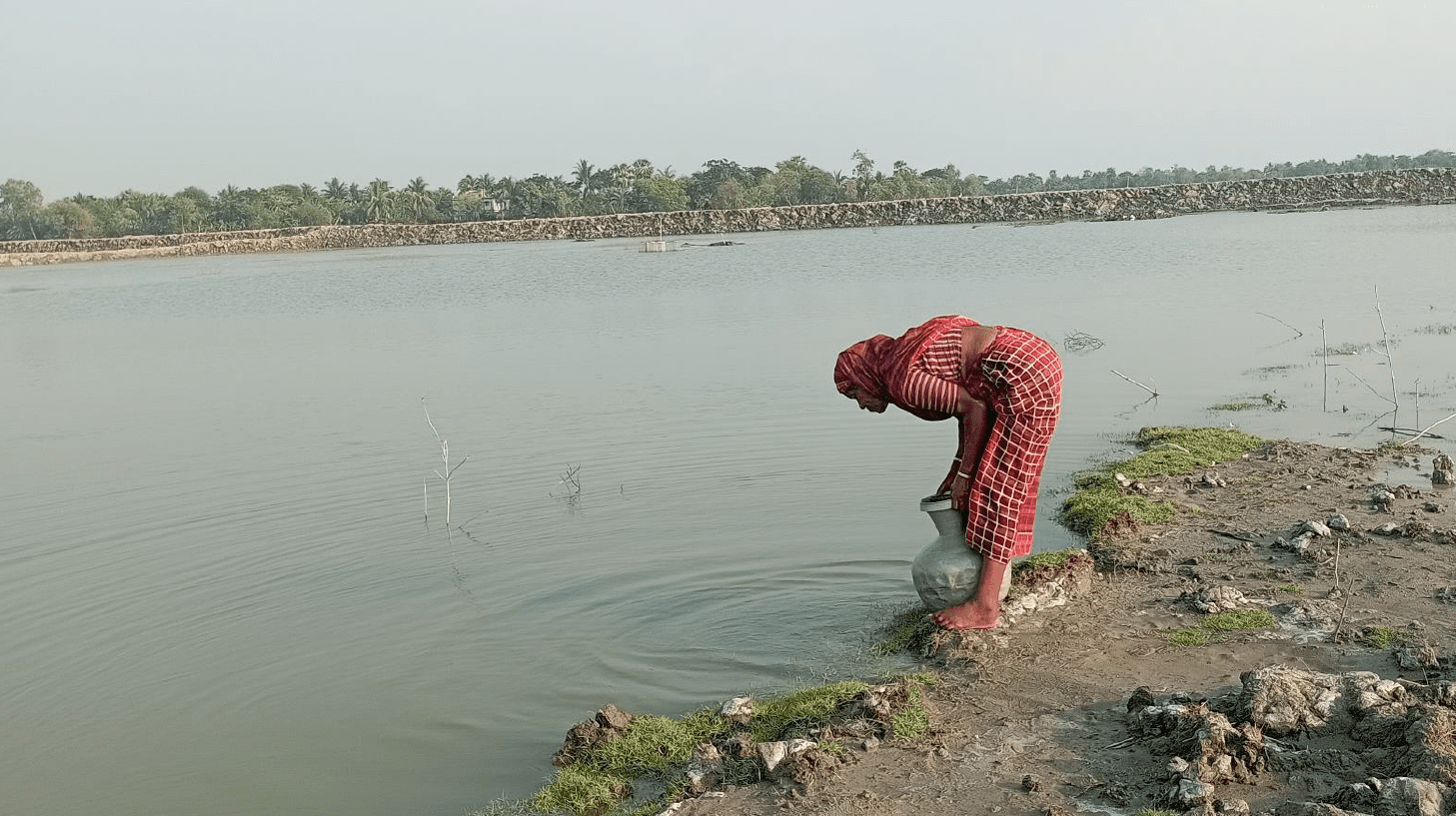
This briefing explores how the climate crisis intensifies barriers to the realization of the rights to water and sanitation for Dalit sanitation workers in Khulna and Satkhira.
It focuses on Dalit women, who face compounded discrimination based on caste, gender and occupation, making them among the most affected, yet least visible, in climate and water, sanitation and hygiene (WASH) policy responses.
Bangladesh, home to more than 171 million people, is among the most climate-vulnerable countries in the world. Climate-induced disasters affect all communities in Bangladesh, but systematically excluded “low caste” groups, particularly Dalit sanitation workers, face disproportionate harm.
Building on Amnesty International’s 2022 report, Any Tidal Wave Can Drown Us, which documented the experiences of marginalized coastal communities, this briefing highlights how climate change acts as a multiplier of inequalities. Communities in Khulna and Satkhira face rising sea levels, cyclones, droughts and flooding, conditions that exacerbate existing discrimination and exclusion.
Between April and June 2025, Amnesty International returned to the Khulna Division (province) and the administrative districts Khulna and Satkhira to investigate how caste, gender and occupation intersect to exclude Dalit sanitation workers from access to water and sanitation amid climate change.
The research assessed the state’s compliance with the International Covenant on Economic, Social and Cultural Rights (ICESCR) to ensure marginalized groups’ right to water and sanitation and with the International Convention on the Elimination of Racial Discrimination (ICERD) to adopt proactive measures to eliminate structural discrimination and guarantee equal access to all human rights. The research adopted a community-focused and participatory approach to climate justice, reintegrating excluded voices into policy conversations and advocating for their meaningful participation in shaping climate-resilient futures.
Amnesty International interviewed 22 Dalit sanitation workers – mostly women – in Khulna and Satkhira to document their lived experiences amid climate change. Dalit women sanitation workers face heightened challenges around their descent-based identity, health, safety, dignity and privacy when access to water and sanitation is further restricted due to climate-induced disasters. Despite their essential contributions at the frontline of post-disaster recovery efforts, they continue to face systemic discrimination and are rarely included in water, sanitation and hygiene (WASH) or disaster risk mitigation frameworks.