
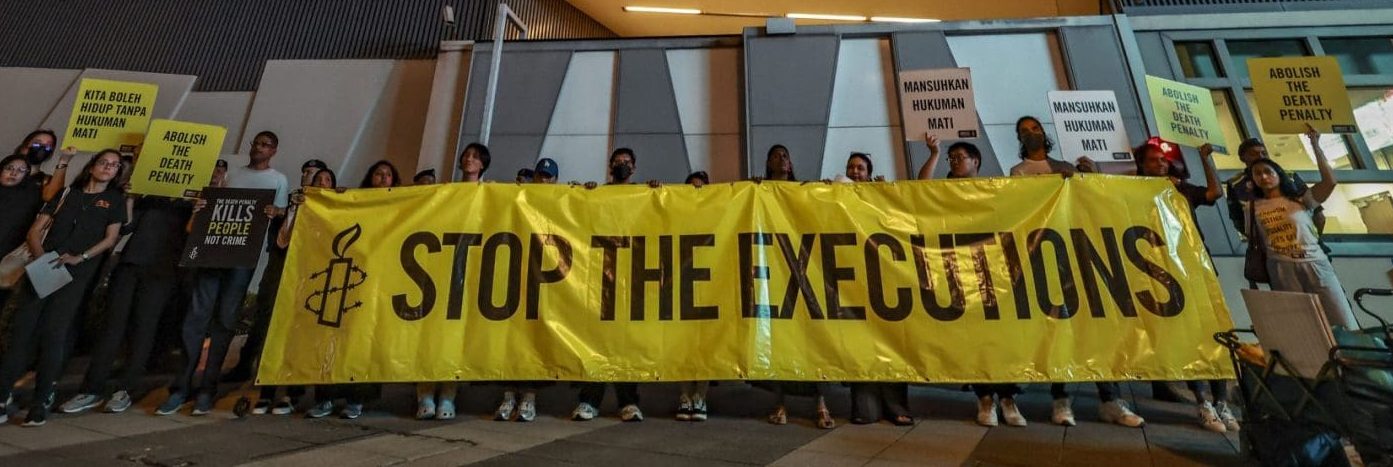
Amnesty International’s monitoring of the global use of the death penalty recorded 2,707 executions in 2025, an increase of 78% from 1,518 in 2024.
This figure does not include the thousands of executions that Amnesty believes continued to be carried out in China. The total number of executing countries was 17, which is in line with historical low trends recorded since 2018.
The rise in recorded executions was primarily linked to a spike in executions in Iran, where the total reached 2,159, more than doubling the 2024 figure of at least 972. This was the highest number recorded in Iran since 1981. The authorities in Saudi Arabia topped the country’s record-high figure of 2024, carrying out at least 356 executions, among a sustained use of the death penalty for drug-related offenses.
Compared to 2024, significant increases in executions were also recorded in Egypt, Kuwait, Singapore and USA, while a substantial decrease in Iraq and Somalia. The use of state secrecy and other restrictive practices in China, North Korea and Vietnam, among other states, continued to impair accurate assessments of the use of the death penalty.
Amnesty International recorded that close to half of all known executions (1,257) were for drug-related offenses, which do not meet the threshold of “most serious crimes” to which the death penalty must be restricted under international law and standards. Five countries—China, Iran, Kuwait, Saudi Arabia and Singapore—were known to have carried out executions for drug-related offenses in 2025. Amnesty International could not independently confirm a total figure for China or whether such executions took place in Vietnam.
However, some notable developments were documented. Gambia abolished the death penalty for murder and other offenses, while Vietnam abolished it for drug transportation and seven other crimes. Governor Kay Ivey of Alabama, USA, granted the first clemency to a Black person on death row—and only the second clemency in the state—since the death penalty was reinstated in 1976. The authorities of Lebanon and Nigeria introduced bills to abolish the death penalty, while the Constitutional Court of Kyrgyzstan declared attempts to reintroduce the death penalty in the country to be unconstitutional.
Amnesty International opposes the death penalty in all cases without exception.
Read “Amnesty International Global Report: Death Sentences and Executions 2025.”