
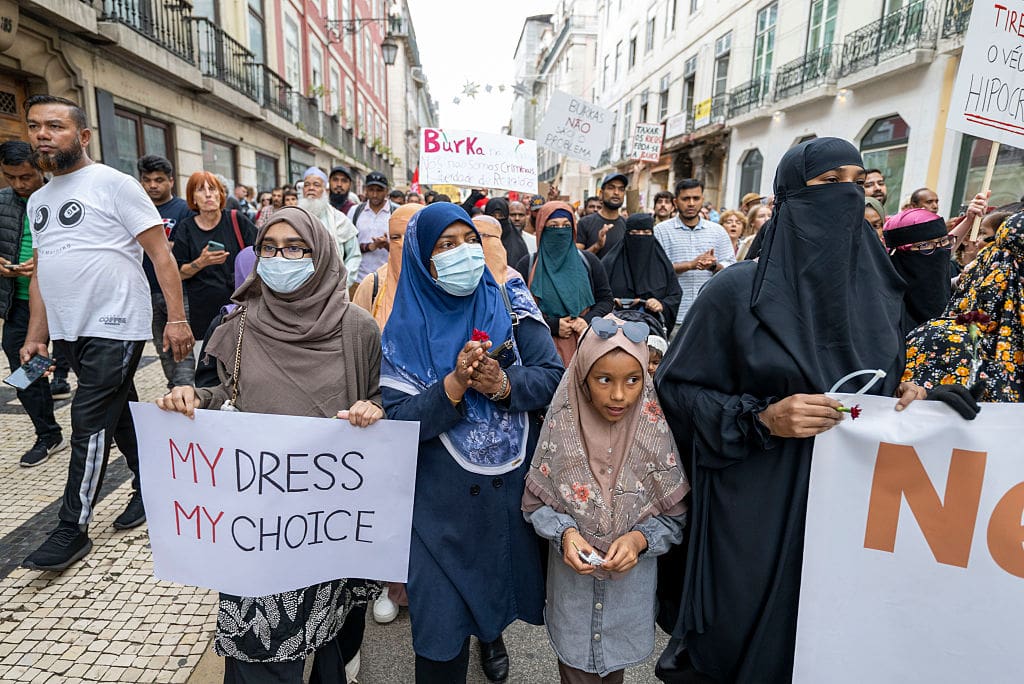
Following the Portuguese Parliament’s approval of a law banning face coverings in public spaces, the Executive Director of Amnesty International – Portugal, João Godinho Martins, said:
“This new law is discriminatory and is a threat to human rights. Despite having removed direct references to Islam, which were a part of previous versions of the text, this new law clearly violates the human rights of Muslim women who choose to cover their faces. It is a direct threat to their freedom of expression and freedom of religion. No one should dictate what a woman may or may not wear, and no woman should be penalized for practicing her faith, cultural identity or beliefs.
“Far from promoting women’s rights as claimed, this blanket ban is likely to have the opposite effect. Women who choose to wear full-face veils may face greater exclusion from public life, social isolation or increased difficulties in accessing education, employment and public services.
“The law also has implications for the right to privacy and the right to freedom of peaceful assembly, as it specifically prohibits the concealment of one’s face during demonstrations. This directly contradicts international law, which permits their use to ensure the possibility of participating anonymously and to prevent reprisals.
“By disproportionately restricting women’s freedom of religion, freedom of expression and personal autonomy, and posing a threat to the right to protest, this ban is not compatible with Portugal’s obligations under international human rights. Simultaneously, it seriously compromises several rights protected by the Portuguese constitution. We call on the President not to sign this legislation into law and for it to undergo a Constitutional review.”
Background
The Bill was passed today with a two thirds majority by the Portuguese parliament.
On October 17, 2025, Parliament approved a first version of the draft bill by the far-right Chega party to ban the wearing of burqas and other veils that conceal the face in public spaces, citing women’s rights and security concerns.
Portuguese law already provides for specific restrictions on the wearing of veils that fully cover the face in clearly defined high-risk locations, such as border controls. Individuals may also be required to reveal their faces when it is objectively necessary, for example, for identity verification.
Contact: [email protected]g