
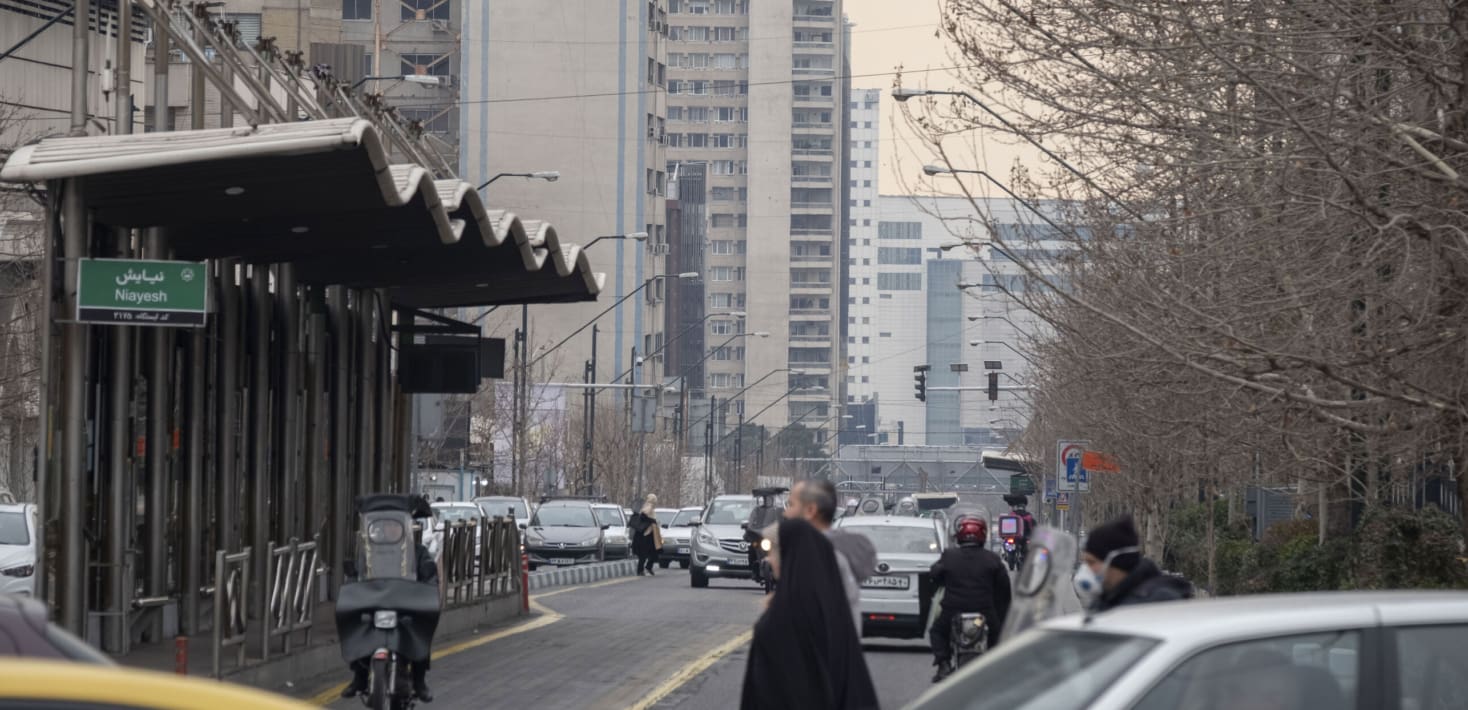
On the six-month anniversary of the January 2026 popular uprising in Iran when security forces carried out mass unlawful killings on an unprecedented scale to crush protests calling for dignity, freedom and an end to the Islamic Republic system, killing thousands of protesters and bystanders between January 8-9, 2026, Diana Eltahawy, Deputy Regional Director for the Middle East and North Africa at Amnesty International said:
“Six months after Iran’s security forces unlawfully killed thousands of men, women and children across the country over a two-day period, the international community’s failure to take meaningful action to pursue international justice is indefensible. It helps perpetuate the cycle of deadly repression in which survivors and victims’ families are denied justice, and future atrocities become all but inevitable.
“The world must not allow escalating cycles of crimes under international law against protesters to be erased or overshadowed by ongoing efforts to reach a lasting US‑Iran deal to end the war. The Iranian authorities have faced no consequences for repeatedly and unlawfully using intentional lethal force on a mass scale to crush and punish dissent. The international community’s failure to pursue international justice for these serious crimes has emboldened the Iranian authorities to threaten further mass killings by ‘trigger-ready’ security forces targeting protesters and dissidents they label as ‘enemies.’
“With no prospect of justice in Iran amid a systemic impunity crisis, avenues for international criminal justice must be pursued as an urgent and non-negotiable priority. Amnesty International renews its calls on the international community and UN member states to place Iran’s human rights and impunity crisis firmly high on their agenda, support the creation of an independent international justice mechanism for Iran and urge the UN Security Council to refer the situation in Iran to the International Criminal Court.”
Background
Protests erupted in Iran on December 28, 2025 after a sharp currency collapse amid soaring inflation, chronic state mismanagement of essential services, including access to water, and worsening living conditions. The protests began in Tehran and quickly spread nationwide, evolving into a popular uprising calling for an end to the repressive rule of the Islamic Republic system and demanding human rights, dignity, freedom and democracy.
The authorities responded by unleashing a brutal militarized crackdown to quash the uprising, involving the unlawful use of force and firearms on an unprecedented scale, amid systemic impunity and a prolonged internet shutdown.
On January 21, 2026, Iran’s Supreme Council of National Security issued a statement that 3,117 people were killed during the uprising. On January 16, 2026, the UN Special Rapporteur on Iran, Mai Sato, said in a media interview that more than 5,000 people had been killed by security forces.
In the aftermath, the authorities waged a coordinated clampdown across the country to prevent further dissent and to hide their crimes through mass arbitrary detentions, enforced disappearances, bans on gatherings, attacks to silence families of victims, and arbitrary executions of protesters and dissidents.
In the aftermath of the US-Israeli unlawful attacks on Iran on February 28, 2026, repression of dissent intensified further under the cover of what authorities called “wartime conditions.” This has included an escalation in politically motivated executions, with least 44 people executed between and many more at risk. On June 18, 2026, the USA and Iran signed a memorandum of understanding to end the war, committing to further talks to reach a final agreement within 60 days. The agreement failed to center human rights, justice, and reparations.
Contact: [email protected]