
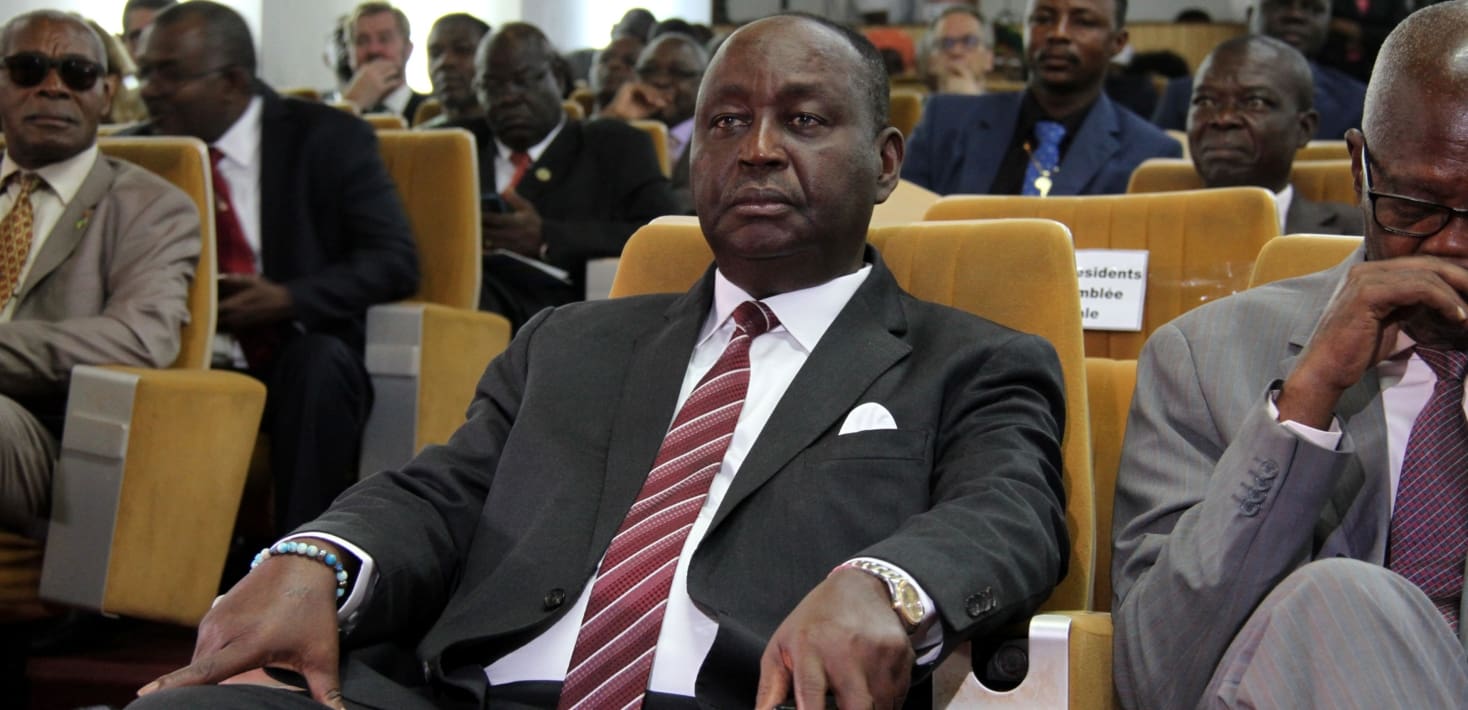
Reacting to the opening of the trial of former president François Bozizé and three co-defendants before the Special Criminal Court (SCC) in the Central African Republic, Marceau Sivieude, Amnesty International’s Regional Director for West and Central Africa said:
“The fact that François Bozizé is on trial for war crimes and crimes against humanity – including torture, murder, arbitrary detention and enforced disappearances – demonstrates a significant willingness of the SCC to fight against impunity and pursue justice for victims’ right to justice and reparations.
“However, trying Bozizé in absentia significantly tarnishes this trial process. It is essential that he is arrested, extradited and faces the court in person.
“The execution of arrest warrants ensures fair trials in which victims and survivors can confront the accused, and the accused have the opportunity to defend themselves. Crucially, it also means that those found guilty of the most egregious crimes face the consequences of their actions.
“Over 30 suspects subject to arrest warrants from the SCC are still at large in other cases. All should be arrested and brought before the competent court. The SCC can only fulfill its mandate if national authorities and all states, particularly those hosting suspects, fully cooperate.”
Background
On April 30, 2024, the Special Criminal Court issued an arrest warrant against François Bozizé on multiple counts of war crimes and crimes against humanity allegedly committed between February 2009 and March 2013 during his presidency, by the Presidential Guard and other internal security forces, in the civilian prison and at the military training center in Bossembélé. Bozizé is currently living in Guinea-Bissau.
Bozizé’s co-defendants, Eugène Ngaikosset, Vianney Semndiro, and Firmin Junior Danboy, who face charges including murder, enforced disappearance and torture, have been arrested in 2021 and 2022. They are held in detention at the SCC while attending trial.
The SCC, a UN-backed hybrid court set up to investigate, prosecute and judge the most serious crimes in the Central African Republic, has already convicted 10 people in absentia in previous trials.
In 2020 and 2021, Amnesty International analyzed the challenges facing the SCC. In recent months, it called for increased support for the court. The SCC faces serious financial challenges. With its current mandate running until 2028, significant questions remain about its future and the sustainability of its work.
Contact: [email protected]