
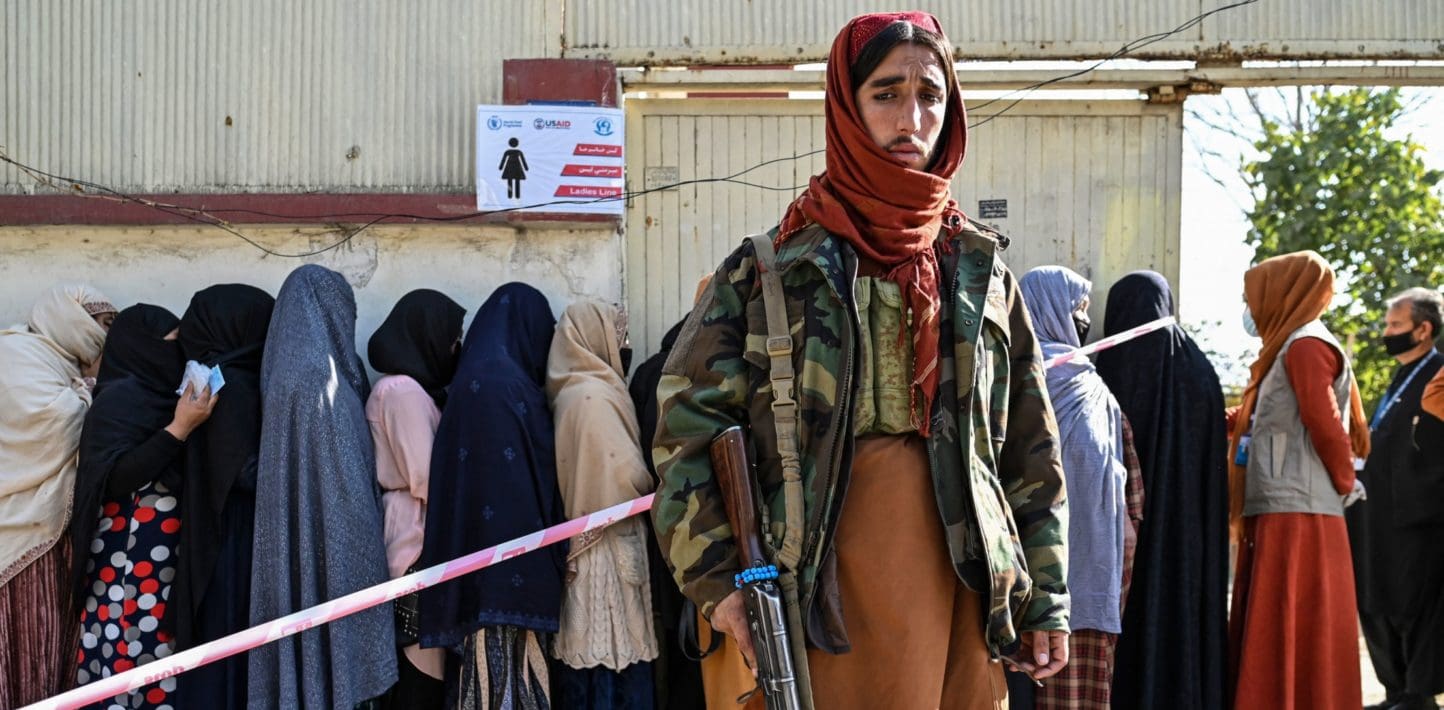
A new decree from the Taliban enabling child marriage is the latest salvo in an ongoing assault on the rights of women and girls in Afghanistan, Amnesty International said in a new legal analysis.
The Decree No. 18 “Code on Judicial Separation of Spouses”, published by the Taliban in an official gazette on May 14, 2026, codifies the circumstances under which women and girls may seek separation from marriages. It includes provisions that uphold marriages arranged during childhood and restrict women’s and girls’ ability to challenge or leave such unions.
“This code further compounds the already dismal situation for the rights of women and girls in Afghanistan. It effectively strips them of all autonomy by eliminating any notion of consent, granting male relatives control over marital arrangements, and providing minimal avenues to challenge forced unions. Its provisions collectively institutionalize and normalize child marriage,” said Isabelle Lassee, Amnesty International’s Deputy Regional Director for South Asia.
Prior to the publication of this code, there was no single codified Taliban law specifically governing spouse separation. Marital disputes and separation were instead handled through a combination of Taliban religious decrees, interpretations of Hanafi jurisprudence (from Shariah), and informal or highly discretionary court practices controlled by Taliban judges.
The code introduces deeply problematic standards of consent to marriage, including interpreting a girl’s silence after puberty as agreement to marriage. Such standards create an increased risk of coercion and intimidation, resulting in forced marriage. Child marriage is facilitated by the broad authority granted to fathers and grandfathers to arrange marriages of minors, while marriages arranged by extended relatives are also recognized as legally valid under certain conditions.
“The code reinforces a male guardianship system that centralizes authority over women’s personal lives, in violation of their status as independent rights-holders,” said Isabelle Lassee.
The decree is inconsistent with international human rights law, which guarantees protection from child and forced marriage, equality in marriage and requires clear, voluntary, and mutual consent.
Significant legal and procedural barriers are also imposed on girls seeking to contest their marriages, with challenges only permitted via court approval and after a girl has reached puberty. The decree reflects clear gender-based discrimination as men are not subjected to comparable barriers in dissolving a marriage. Men are generally able to divorce unilaterally without needing witnesses, judicial confirmation, or complex procedural requirements.
Amnesty International spoke with five experts on Afghan law about the code.
Najla Rahil, Deputy of the Independent Association of Defense Lawyers in Exile and Founder of the Women’s Identity Organization, said: “[This is] an openly misogynistic law that seriously violates the fundamental rights of women, especially those facing family-related difficulties… these regulations limit women’s freedom to choose a spouse, place decisions regarding marital suitability in the hands of men and create stringent obstacles in cases where a husband is absent or missing.”
A Defense Lawyer based in Afghanistan, who wished to remain anonymous, said: “The Taliban have once again demonstrated that their approach toward women and children is based on restricting freedoms, undermining fundamental rights, and reinforcing traditional patriarchal structures. These regulations reflect an effort to normalize and legitimize practices that limit the independence, autonomy, and human dignity of women and girls.”
Amnesty International is calling on the international community to take immediate action, through diplomatic pressure and principled engagement with the Taliban de-facto authorities, to demand the reversal of all draconian laws and regulations, reinstatement of a formal legal system, protection of human rights and the rule of law in Afghanistan.
Background
Prior to August 2021, Afghanistan’s civil code set the legal marriage age for girls at 16, while marriages involving girls under the age of 15 were criminalized under the 2009 Elimination of Violence Against Women (EVAW) law. Afghanistan also had legal and institutional mechanisms aimed at addressing violence and discrimination against women and girls, including family courts, specialized units within the Attorney General’s Office and Ministry of Interior, and a high-level commission tasked with addressing violence against women, child marriage, and family separation matters.
While these protections were often inconsistently implemented and significant barriers remained, they nonetheless provided women and girls with some legal avenues for protection and access to justice. Today, these laws and institutional structures have been dismantled by the Taliban and replaced with deeply discriminatory and repressive systems that further entrench gender inequality and restrict women’s rights and autonomy.
These measures form part of a broader pattern of escalating restrictions on women’s and girls’ rights, including barriers to education, employment, and participation in public life.
The legal and formal justice system in Afghanistan collapsed after the Taliban’s return to power and, in November 2022, the Taliban Supreme leader issued an obligatory order for full implementation of Shariah law in Afghanistan.
According to media reports referring to UN reports, since their return to power in August 2021, The Taliban have issued over 470 decrees, directives and orders out of which 79 have specifically targeted women and girls.
Contact: [email protected].