
China’s top legislature unanimously passed a national security law for Hong Kong on June 30, 2020 and the new law entered into force in the territory the same day, just before midnight. The Chinese authorities forced the law through without any accountability or transparency: it was passed just weeks after it was first announced, bypassing Hong Kong’s local legislature, and the text was kept secret from the public and allegedly even the Hong Kong government until after it was enacted.
The 2020 National Security Law (NSL) and other repressive laws were widely used to target people exercising their rights to freedom of expression, peaceful assembly and association. The UN Human Rights Committee urged the Hong Kong government to repeal the NSL and sedition provisions of the Crime Ordinance, and in the meantime to refrain from applying them.
There have been numerous crackdowns against pro-democracy activists, journalists, human rights defenders and others by the Hong Kong authorities. Many individuals were detained and/or sentenced to prison.
Amnesty International is insisting that Hong Kong authorities strictly adhere to their human rights obligations in implementing the NSL and that the international community hold them to account. The Hong Kong government should not sacrifice the freedoms that have distinguished the city from mainland China.
Amnesty International urges the Hong Kong police to adopt a less confrontational approach to demonstrations and facilitate the right to peaceful protest. Amnesty also calls for a thorough and independent investigation into unnecessary and excessive use of force by police at protests.
KEY ISSUES
In March 2024, Hong Kong’s Legislative Council (LegCo) unanimously voted to pass the Safeguarding National Security Ordinance (SNSO) under Article 23 of the Basic Law, Hong Kong’s mini-constitution.
This local law created new national security offences and increased penalties for existing offences. It also entrenched the local government’s sweeping powers of enforcement. The ordinance introduced mainland China’s broad and vague definitions of “national security” and “state secrets” which could potentially cover almost any conduct or information. The SNSO replaced a widely-used colonial-era sedition law, but expanded provisions that punish intention to cause “hatred or enmity amongst residents of different regions of China”, and that expressly cover acts or speech which do not incite violence. The maximum prison sentence for sedition was increased from two to seven years, or up to 10 years if involving collusion with external force.
Following the adoption of the SNSO, 15 people were arrested under its sedition provisions. Four were subsequently charged. In September 2024, three were convicted in separate trials for wearing a T-shirt and a mask printed with protest slogans; expressing political comments against the government on online platforms; and writing protest slogans on bus seats. They were sentenced to prison terms of between 10 and 14 months.
In June and December 2024 the authorities used new powers under the SNSO to cancel the passports of first six and then seven Hong Kong activists living overseas for whom arrest warrants had been issued in 2023. Another six activists living overseas were placed on a wanted list with a bounty of 1 million Hong Kong dollars (USD 128,500) each.
In May 2024, the Court of Appeal granted the government an interim injunction to ban the pro-democracy protest song “Glory to Hong Kong”. The decision, which overturned a lower court ruling, prohibits individuals from broadcasting, performing, distributing, disseminating, displaying or reproducing the song with an intent against national security, such as intention of sedition or to incite secession. Anyone breaching the injunction could be held liable for contempt of court and jailed. Following the decision, YouTube blocked users in Hong Kong from accessing 32 videos featuring the song.
Several people were charged with “insulting” the Chinese national anthem. In June 2024, three people were arrested under the National Anthem Ordinance for turning their backs while the anthem was played at a football match. In August 2024, another person was sentenced to eight weeks’ imprisonment for covering his ears and singing a song associated with the pro-democracy movement while the anthem was played at a volleyball match in 2023.
In May 2024, in a major case against 47 pro-democracy activists, the High Court found 14 people guilty of “conspiracy to commit subversion” under the NSL for organizing unofficial primaries for the 2020 Legislative Council elections that were ultimately postponed. Another 31 defendants had previously pleaded guilty to the same charges. In November 2024 the court handed down sentences to the 45 ranging from four years and three months to 10 years in prison. Two other defendants were acquitted, but the Department of Justice appealed against one of the acquittals.
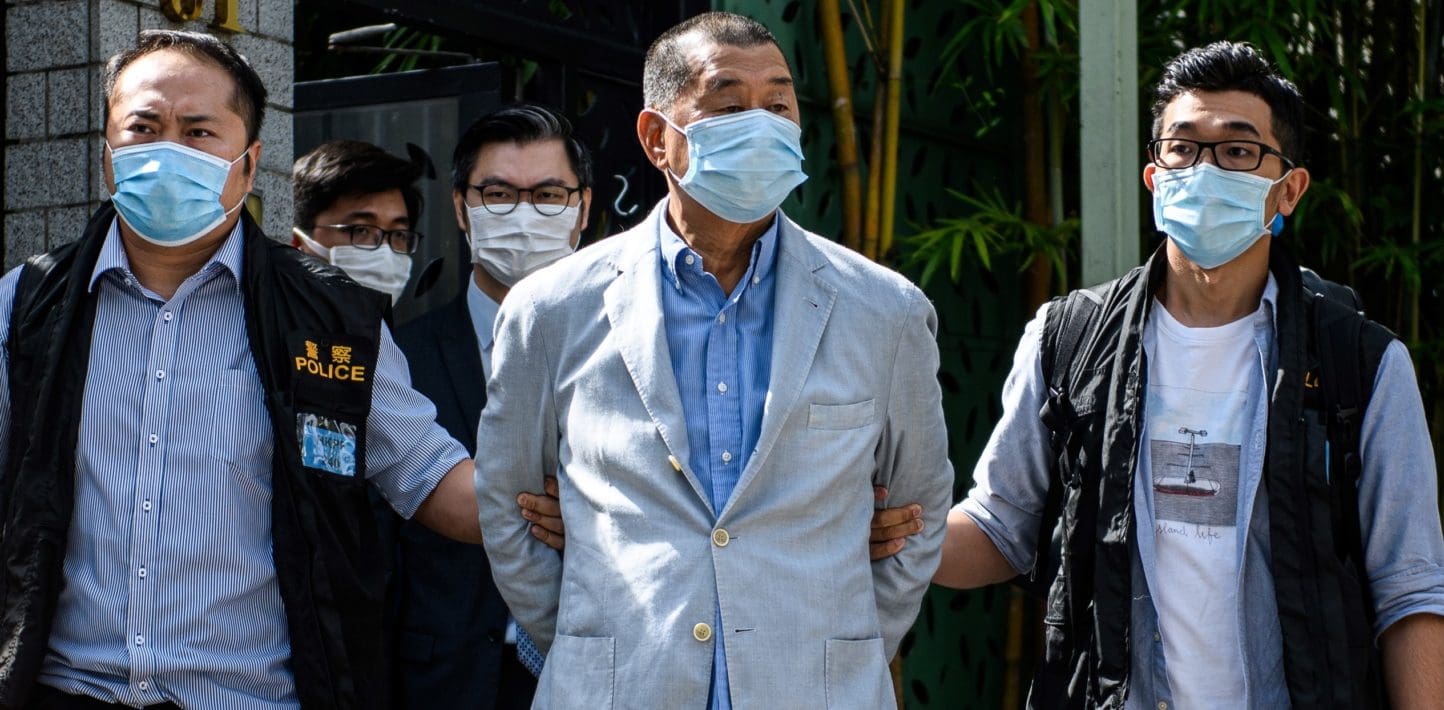
The trial of Jimmy Lai, the 77-year-old founder of the pro-democracy newspaper Apple Daily, on charges under the NSL of “colluding with foreign forces” continued and was still ongoing at the end of 2024. There were concerns about Jimmy Lai’s declining health after he was absent from a hearing in June 2024 while a trial monitor from Reporters Without Borders was barred from entering Hong Kong.
In August 2024 the Court of Final Appeal dismissed appeals by Jimmy Lai and six other activists against a previous conviction for taking part in an unauthorized assembly during the 2019 protests, for which Lai was sentenced to nine months’ imprisonment.

Free Jailed Hong Kong Activists
Petition for Chow Hang-tung and Lee Cheuk-yan

Government must investigate and allow freedom of expression following deadly fire

Briefing Paper on Hong Kong’s National Security Law
This briefing paper presents research analyzing patterns in arrests, bail decisions and prosecutions under the NSL and other national security legislation. The findings reveal how these laws have eroded key legal safeguards that once formed the foundation for the protection of human rights and the rule of law in Hong Kong. In particular, the research highlights two major concerns: the criminalization of the legitimate exercise of the right to freedom of expression and the low bail grant rates with prolonged pre-trial detention following arrests.
Relevant Links
- Solidarity Action for the people of Hong Kong: Virtual Lennon Wall
- Take Action: Join the fight for freedom in Hong Kong
- Take Action: Protect the memory of the Tiananmen Square crackdown
- Hong Kong: New powers for Chief Executive in ‘national security’ cases undermine fair trial rights
- Hong Kong: Activists’ unjust trial for peaceful Tiananmen commemoration resumes
- ‘In a world that forces us apart, we still choose each other’ – Valentine’s poem to Hong Kong activist Chow Hang-tung
- Urgent Action: Activists suffer under solitary confinement: Chow Hang-tung, Jimmy Lai, Owen Chow
- Hong Kong: Trial of Tiananmen activists a cynical attempt to erase historical memory
- Court Ruling on Hong Kong’s Discriminatory Prison Clothing Policy Marks a Setback for Gender Equality and Prisoners’ Rights
- Hong Kong: Prisons rife with violence and inhumane treatment, inmate testimony reveals
- Joint NGO World Human Rights Day Statement: Hong Kong Should Immediately Release Chow Hang-tung and Lee Cheuk-yan
- Hong Kong: Conviction of Jimmy Lai sounds death knell for press freedom
- China: Hong Kong bookseller Gui Minhai must be released after decade of cruel secrecy
- Hong Kong: Rejection of same-sex partnerships bill shows disdain for LGBTI rights
- Hong Kong: Appeal hearing in ‘HK 47’ case a pivotal chance to correct mass injustice
- Hong Kong: New charges against Joshua Wong designed to prolong his stay behind bars
- Hong Kong: National Security Law analysis shows vast majority unjustly arrested
- AI Report: Hong Kong: In the Name of National Security