
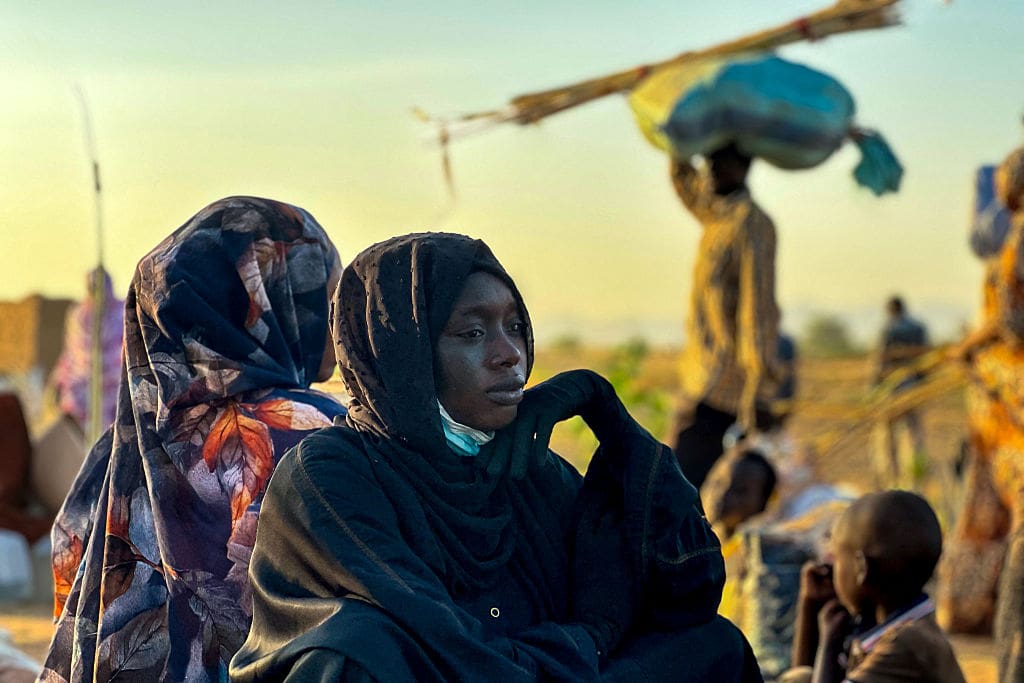
Three years after the war between the Rapid Support Forces (RSF) and the Sudanese Armed Forces (SAF) began in 2023, civilians are still suffering and paying a heavy price with their lives, bodies, and safety. They have been victims of both indiscriminate and deliberate attacks by the warring parties and their allied forces. Meanwhile, neither the warring parties committing mass atrocities including war crimes nor those fueling and fanning the war have been held accountable. Not only do we need to keep our eyes on Sudan, but we must also give our full focus to the Sudanese people as we mark three years of the start of the Sudan war on April 15.
World’s worst humanitarian and displacement crisis
Sudan is suffering the world’s worst humanitarian crisis, driven by three years of ongoing conflict and violence. The war is marked by stark contrasts: severe access restrictions and a sharp decline in life-saving aid and assistance- on the one hand, and an unrestricted, continuous flow of weapons on the other. An estimated 33.7 million people—two-thirds of Sudan’s population—need humanitarian aid. According to the World Health Organization (WHO), more than 20 million people require health support, while 21 million are in urgent need of food.
Sudan also faces the world’s largest displacement crisis. The United Nations High Commissioner for Refugees (UNHCR) March 2026 update reports that 11.6 million people have been forcibly displaced due to the conflict, while 4.5 million of them are refugees in neighboring countries. Many of these countries already hosted large refugee populations before this new crisis, and some—such as Chad, Ethiopia, and South Sudan—are internally unstable.
Human rights disaster
Sudan is experiencing one of the world’s worst human rights crises. Reports from the United Nations and several rights-based organizations, including Amnesty International, highlight that Sudanese civilians face not only a severe humanitarian crisis but also human rights disaster.
In April 2025, days before the two-year mark of the war, the Rapid Support Forces (RSF) deliberately killed civilians, took hostages, looted, and destroyed civilian infrastructure during a large-scale attack on Zamzam, the largest IDP camp in North Darfur State. They used explosive weapons and randomly fired their guns in populated residential areas, forcing around 400,000 people to flee the camp.
The violence did not stop there. A few months later, in October 2025, the RSF captured El Fasher, the capital of North Darfur, after laying siege to the city for 18 months. During the takeover, they carried out mass killings of civilians and sexual violence.
History repeating itself
These targeted, ethnically-based atrocities in Darfur, in particular, echo the crimes that drew global attention to the region some 20 years ago. Amnesty International has documented war crimes committed by the RSF and allied Arab militias, who jointly carried out in West Darfur. Entrenched impunity continues to fuel the human rights violations by emboldening perpetrators of grave crimes. The Sudanese Armed Forces (SAF) also committed war crimes, including indiscriminate attacks on civilian areas. For instance, SAF killed dozens in an air strike on a crowded market in the town of Kabkabiya in North Darfur. This was not the first time the SAF airstrike against civilians during the ongoing conflict with the RSF. The threat of violence against civilians remains. Amnesty International has previously documented how the conflict in Sudan is fueled by constant flow of weapons into the country, in breach of the arms embargo on Darfur. The report revealed that recently manufactured weapons and military equipment from countries such as Russia, China, Türkiye, and the United Arab Emirates (UAE) are being imported in large quantities into Sudan and then diverted into Darfur.
The U.S. must step up to help end the war
Powerful nations, including the U.S., must more than ever take action to put an end to this horrific conflict. The current Trump administration has shown interest and taken some steps to end the war in Sudan by acknowledging war crimes committed by both the Sudanese Armed Forces (SAF) and the Rapid Support Forces (RSF), engaging in peace mediation efforts, and calling on the international community to cut off the supply of weapons to Sudan.
However, if the goal is to genuinely stop the bloodshed, more must be done beyond what has already been said in meeting rooms or written in policy documents. The U.S. government should:
- Continue calling out governments implicated in arming those responsible for committing atrocities against civilians, in violation of the UN Security Council Sudan Arms Embargo, while working to enforce the existing embargo itself.
- Work with other donor countries to scale up humanitarian assistance, including through local emergency response rooms and other mutual aid groups led by Sudanese civilians;
- Support evidence collection, documentation efforts, and accountability measures in Sudan; and
- Engage with and support neighboring governments to ensure aid and refuge are offered to those fleeing hunger and violence in Sudan.
We must all do more and take action to prevent further atrocities and to demand justice and accountability on behalf of civilians in Sudan.
Help stop the bloodshed and show Sudan’s civilians that the world has not abandoned them