
Every year on August 30th, the world pauses to remember the countless individuals who have been subjected to an enforced disappearance. The International Day of the Victims of Enforced Disappearances is not only a day of remembrance but also a call to action. In 2025, we focus on new stories and ongoing struggles, shining a light on those who continue the search for truth and justice.
What Are Enforced Disappearances?
An enforced disappearance occurs when an individual is abducted or detained by state officials or with their authorization, and the state refuses to acknowledge their fate or whereabouts. An enforced disappearance may last for days, months or even decades, with no assurance that it will ever end. This practice not only strips victims of their rights and protections under the law during the enforced disappearance, but also leaves families in agonizing uncertainty during that time, unsure of their loved ones’ fate.
The Global Impact
Enforced disappearances happen in every region of the world. They affect people from all walks of life: human rights defenders, journalists, students, religious minorities, and ordinary civilians. What these individuals often have in common is that they dared to speak up — to protest, to report the truth, or simply to survive in the wrong place at the wrong time.
The impact of enforced disappearances extends far beyond the individual. Families are left in limbo during an enforced disappearance, not knowing how their loved one is being treated or even if they are alive. Communities are silenced through fear. And governments that commit or allow enforced disappearances to be committed often do so without consequence, creating a cycle of impunity.
The International Convention
In 2006, the United Nations adopted the International Convention for the Protection of All Persons from Enforced Disappearance, recognizing this grave violation as a crime under international law — and in some cases, a crime against humanity.
Despite this important milestone, many governments have not signed or ratified the treaty. Others have failed to implement it in practice. Enforced disappearances continue to be used as tools of repression, control, and fear.
What Can We Do?
While the injustice of enforced disappearances can feel overwhelming, individuals and communities around the world have shown that solidarity, pressure, and persistence can lead to answers — and sometimes even accountability.
Here are three ways you can take action today:
- Take Online Action: Add your voice to urgent campaigns by signing petitions, sending emails, or calling for justice in the cases below. Every action adds pressure on those governments to respond.
- Raise Awareness: Many enforced disappearances do not get enough attention. You can help change that. Share information on social media using hashtags like #EndEnforcedDisappearances and #IDVED2025, and talk to your community about the people who have disappeared.
- Support Organizations: Volunteer with groups that work directly with families of the disappeared, such as Amnesty International and grassroots networks. Your support helps us and them continue the long search for truth and justice.
Cases: Voices from the Ongoing Struggle
When you take the actions above, you join us in recognizing the courage and persistence of those impacted by enforced disappearance — the families who search without rest, the communities that raise their voices, and the individuals who have been subjected to enforced disappearance.
Each case below is from a different part of the world, but all share the same truth: the need for answers, accountability, and justice. Read their stories and take action today to support the fight for truth and justice.
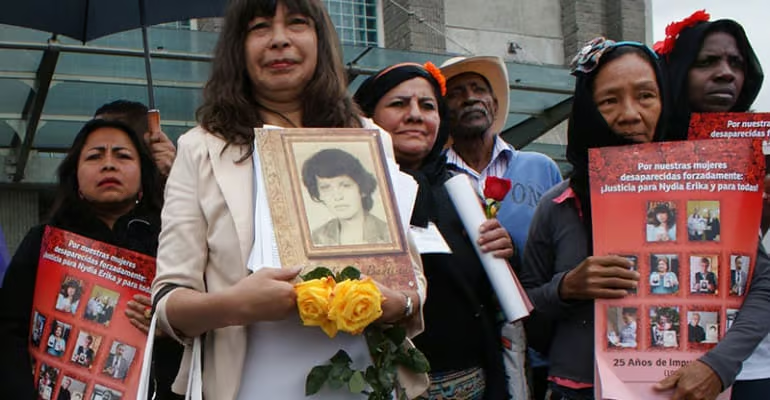
Colombia:
Nydia Erika Bautista Foundation & Women Searchers
More than 150,000 people were subjected to enforced disappearance during Colombia’s half-century armed conflict. One of them was Nydia Erika Bautista.
On August 30, 1987, Nydia Erika was forcibly disappeared in Bogotá by operatives later identified as members of Brigade XX, a Military Intelligence Brigade of the Colombian National Army. She was apprehended while her family celebrated her son’s and niece’s first communion and baptism.
A 30-year-old student activist and member of the M-19 movement, Nydia had long advocated for political change. A 1995 investigation concluded that Brigadier General Álvaro Velandia Hurtado, commander of Brigade XX, had full knowledge of the crime and failed to prevent it. The criminal case was closed in 2006, and Velandia, after legal appeals, was briefly reinstated before his dismissal was reconfirmed.
August 30 of this year will mark 38 years since Nydia Erika Bautista was disappeared. Despite years of advocacy, justice remains out of reach. To this day, Nydia Erika’s family leads the Fundación Nydia Erika Bautista (FNEB) and continues to advocate for protection and accountability.
In 2024, Colombia made history with Law 2364, the first global legislation aimed at safeguarding women who search for victims of enforced disappearance. Yet, a year later, implementation is still pending. Without action, the law’s promises will go unrealized. The time to activate the law is now.
Watch a video about Nydia Erika. Learn more about the #SearchingWithoutFear Campaign.
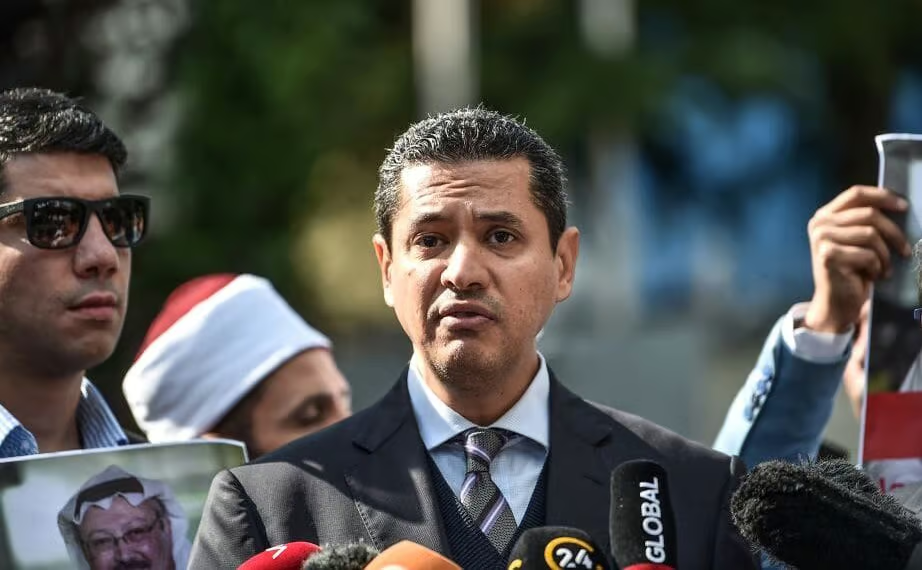
Egypt / United Arab Emirates:
Abdul Rahman Al-Qaradawi
On January 8, 2025, poet and political activist Abdul Rahman Al-Qaradawi was forcibly extradited from Lebanon to the United Arab Emirates. He had been arrested at the Lebanese–Syrian border just days earlier, reportedly for criticizing regional governments online.
Since his extradition, he has been held incommunicado, with no access to his family, lawyers, or consular support.
Abdul Rahman is the son of the late Islamic scholar Yusuf Al-Qaradawi. While living in exile, he had used his voice to speak out against repression in the Gulf. His disappearance has drawn concern from international human rights groups, who fear he may face torture or an unfair trial if handed over to Egyptian authorities.
Send a message to UAE authorities demanding that Abdul Rahman’s location be disclosed and that he be granted immediate access to his family, lawyers, and consular officials. Take action.
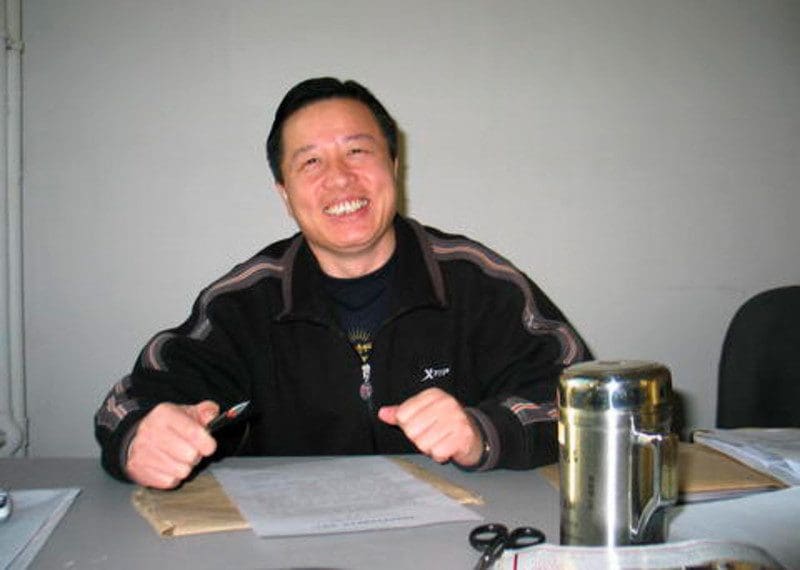
China:
Gao Zhisheng
Gao Zhisheng is one of the most respected human rights lawyers in China, with the Ministry of Justice naming him “one of the nation’s top 10 lawyers” in 2001 for his pro bono work on public interest cases.
Despite this, Gao has been subjected to enforced disappearance, torture, illegal house arrest and detention as a result of his work, which includes representing human rights activists and working on other politically sensitive cases.
On August 13, 2017, Gao Zhisheng’s wife, Geng He, who fled to the United States in 2009 after repeated instances of harassment and abuse by Chinese authorities, posted on Twitter that Gao was not answering his phone. The family subsequently learned that he had been taken to Beijing, but they have not received any further information about his whereabouts or condition. The manner in which Gao Zhisheng vanished without a trace and was subsequently found to be held under incommunicado detention is characteristic of a larger pattern in which Chinese authorities round up outspoken or dissenting voices.
Gao’s disappearance is emblematic of the broader human rights crisis in China, where authorities continue to detain critics in secret, deny contact with lawyers and family, and use isolation as punishment.
Send a message to Chinese authorities calling for Gao Zhisheng’s immediate release or, at minimum, confirmation of his condition and access to his family and legal counsel. Take action.
Sri Lanka:
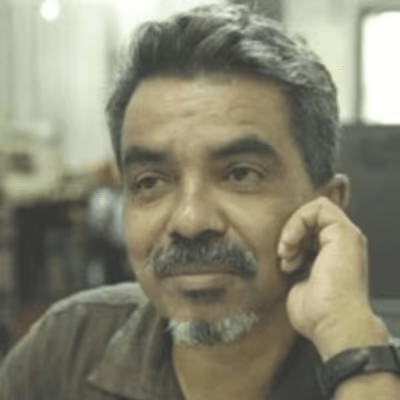
Prageeth Eknaligoda
Sri Lanka has one of the world’s highest numbers of enforced disappearances, with between 60,000 and 100,000 people disappeared since the late 1980s.
One emblematic case is the disappeared journalist Prageeth Eknaligoda. He went missing after leaving work on January 24, 2010. Two days earlier, he had published an article critical of then-President Mahinda Rajapaksa. Despite years of police investigations, the Sri Lankan government has not accounted for his fate.
A 2024 UN report on Sri Lanka highlighted Prageeth’s case as emblematic of the Sri Lankan government’s failure to provide accountability for past human rights violations. While a court case against members of military intelligence accused of involvement in his enforced disappearance has been proceeding for the past several years, it has been subjected to repeated and lengthy delays. One indication of the problems facing the prosecution in this court case is the arrest this past June of one of the main suspects on charges of witness intimidation. This investigation can’t wait any longer.
Please call on the Sri Lankan government to conduct an effective investigation and hold accountable those responsible for Prageeth’s disappearance. Take action.
Make a Difference
These five stories represent just a small part of a much larger crisis. Around the world, thousands of families are still searching for answers — some after weeks, others after decades. Many do so with no official support, no clear path forward, and no protection from threats or retaliation.
But history has shown that justice is possible. In countries like Guatemala, Argentina, and Sri Lanka, long years of advocacy have led to convictions, truth commissions, and the return of remains. Families of the disappeared continue to organize, build networks, and demand change.
By taking action today — reading these stories, signing a petition, or simply sharing a name — you help keep the disappeared visible. You show families that they are not alone — and help pressure governments to tell the truth.