
June 2, 2026
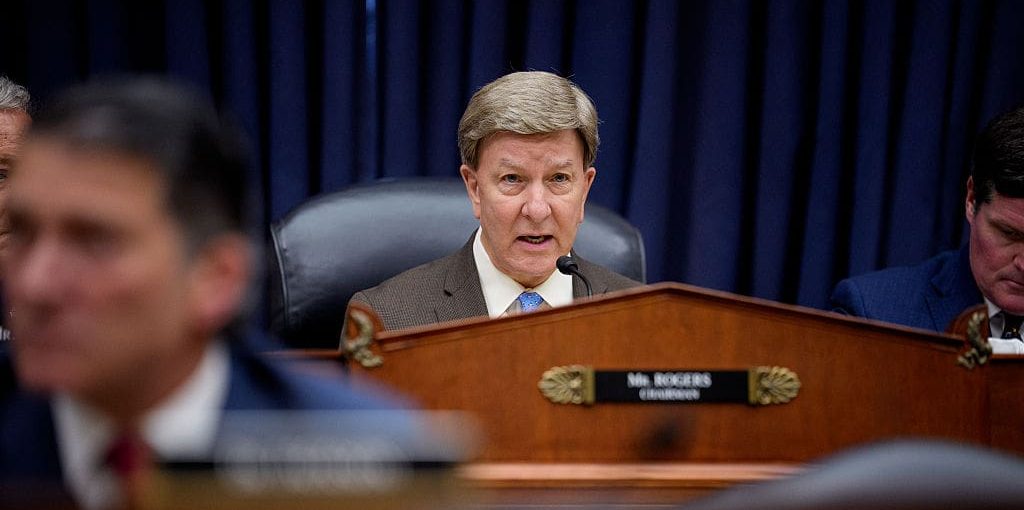
Chairman Rogers, Ranking Member Smith, and Members of the Committee
House Committee on Armed Services
2216 Rayburn House Office Building
Washington, DC 20515
United States
Dear Chairman Rogers, Ranking Member Smith, and Members of the Committee,
I am writing on behalf of Amnesty International USA to respectfully offer recommendations for consideration as the House Armed Services Committee prepares to mark up the Fiscal Year (FY) 2027 National Defense Authorization Act (NDAA).
The NDAA plays a critical role in shaping U.S. defense policy and ensuring that the U.S.’s national security priorities align with its stated values, strategic interests, and global commitments. We ask the Committee to demonstrate leadership and diligence to advance legislation that supports the human rights of people in the United States and abroad, strengthens civilian protection, and upholds accountability. For that reason, we would like to highlight a number of concerns we have related to violations of international law and ask that the Committee ensure no funding is approved that would contribute to further violations.
I. Violations of the UN Charter and Erosion of International Law
A. Venezuela
Amnesty International concluded that the January 3, 2026, U.S. military operation in Venezuela constituted an unlawful use of force and a violation of the UN Charter.1 Absent self-defense or UN Security Council authorization, the operation meets the definition of aggression under longstanding international legal standards.
Article 2(4) of the UN Charter prohibits the threat or use of force against the territorial integrity or political independence of any state; Article 2(3) requires peaceful settlement of disputes. The Friendly Relations Declaration (UNGA 2625) codifies the ban on armed intervention. And UNGA Resolution 3314 defines aggression, noting that a state’s first use of armed force in violation of the Charter is prima facie evidence of an act of aggression, including bombardment or attacks on another state’s armed forces. The January 3 operation involved precisely those modalities.
The U.S. government carried out the capture of Nicolás Maduro under the pretext of fighting drug trafficking, only to reveal with no ambiguity its real motivation: the control of Venezuela’s natural resources. But beyond the ever-changing official justification given, the facts are unequivocal and constitute grave violations of international law. Even if the U.S. government’s claims of countering drug trafficking were accepted, it would still be unlawful to exercise enforcement jurisdiction on the territory of another state without its consent, a violation of sovereignty long recognized in international law. Drug trafficking allegations are not an “armed attack” that can trigger self-defense under Article 51 of the Charter. Likewise, the Organization of Americas States (OAS), Inter-Americas Juridical Committee has determined that the only exception to the prohibition of the use of force are self-defense and UN Security Council authorization, with the objective to safeguard peace and human rights in the region.
Such actions undermine the prohibition on the use of force, and risk further global instability by reinforcing and normalizing a “might-makes-right” approach to foreign affairs that undermines the objectives of the rules-based international system the United States helped to build and designed to protect civilians and prevent conflict. Since attacking Venezuela, President Trump threatened to use military force against Colombia, Cuba, Greenland, and Mexico, and proceeded with operations in Iran. Meanwhile, China continues to engage in threatening actions against Taiwan and its neighbors, and Russia continues its aggression against Ukraine and has engaged in overflights into NATO airspace.
Amnesty International unequivocally condemns the multiple crimes by the Venezuelan authorities against the people of Venezuela. Denouncing the United States’ illegal military action in no way overshadows the urgent need for accountability and reparations for the Venezuelan government’s litany of grave human rights violations and crimes against humanity. All those arbitrarily detained for political reasons must be released immediately and unconditionally.
B. Iran and Regional Escalation in the Middle East
The February 28 U.S.-Israeli strikes in Iran similarly violated the UN Charter and triggered cascading regional conflict.2 Thousands of civilians have been killed or injured across Iran, Lebanon, Israel, and neighboring states, with widespread destruction of civilian infrastructure.
Amnesty International analysis finds that the U.S.-Israeli attacks on Iran were unlawful, violating the UN Charter’s prohibition on the use of force, and they triggered unlawful acts by Iranian authorities in retaliation. Since then, more than 5,000 people have been killed, and millions of civilians across the Middle East have had their lives upended as interrelated conflicts have escalated across the region and civilians and civilian infrastructure have come under attack. All parties including the United States, Israel, Iran and Hezbollah have launched unlawful attacks displaying a chilling disregard for human life. In April, President Trump issued threats to commit war crimes, threatening to wipe out ‘a whole civilization’ in Iran.
Amnesty International remains concerned about the ongoing dual risks faced by the people of Iran, who are trapped between armed conflict and deadly repression. Protesters, dissidents, and others advocating for political change remain at grave risk of further atrocities by Iranian authorities. Since the U.S.-Israeli attacks, Iranian authorities have ramped up their crackdown on any actual or perceived opposition amid the longest state-imposed internet shutdown on record in Iran.
II. Unlawful U.S. “Boat Strikes” and Extrajudicial Killings
Since September 2, 2025, the United States military has conducted multiple air strikes against alleged drug-trafficking vessels in the Caribbean and eastern Pacific, killing nearly 200 people as of this letter.3 These operations appear to constitute extrajudicial executions under international human rights law.4 The buildup of U.S. naval assets in the Caribbean and declared intent to use force against criminal groups further blurred the line between law enforcement and war, feeding fears of regional escalation.
Administration officials have claimed the U.S. is “at war” with drug cartels, suggesting the administration believes the laws of war, which permit killing enemy combatants on the battlefield, apply to the Caribbean and Pacific. It has further tried to justify its actions by claiming—without presenting any evidence—that the targets in the vessels were drug-smuggling “narco-terrorists.”
The U.S. is not party to any armed conflict in the Caribbean or Latin America. No one, including drug traffickers, has attacked the U.S. in any way that would justify a military response. Further, Congress has not authorized using military force against cartels. However, even if Congress does so, these air strikes remain illegal under international human rights law. Stopping suspected drug boats is a law enforcement operation, subject to international human rights law, which holds that all people have the rights to life and a fair trial and only allows states to use lethal force when an imminent threat to life exists and less extreme means, like capture or interdiction, are insufficient.
A state intentionally killing someone outside those circumstances is committing an extrajudicial killing, a form of murder, no matter any alleged crime the victim might have committed.
In the case of these bombings, the Trump administration has not provided any proof that its victims posed imminent threats to human life. Even if the boats or individuals were smuggling narcotics, carrying such drugs alone is not an imminent threat to life that could possibly justify using lethal force.
Administration officials have also not shown that they could not have stopped and boarded the vessels, as the U.S. Coast Guard does regularly. In fact, Secretary of State Marco Rubio confirmed the U.S. could have intercepted the first boat they struck but chose to bomb it instead.
III. Civilian Harm from U.S. and Partner Operations
A. Regional Civilian Harm (Iran and Beyond)
The U.S. and Israel’s joint military operation in Iran included thousands of strikes across the country. The Iranian authorities have launched retaliatory attacks across the region. The armed conflict rapidly expanded into regional hostilities across the Middle East and has resulted in significant loss of civilian life and destruction of civilian infrastructure. Israel has also escalated its attacks on Lebanon in response to Hezbollah’s attacks.5
As of late April, according to reports, at least 1,255 people have been killed in Iran; over 773 in Lebanon; at least 12 killed in Israel; and at least 17 killed across other countries in the region.
Civilians in Israel and the Occupied Palestinian Territory have come under fire from both Iranian missiles and Hezbollah rocket fire. In Israel, at least 34 people were killed – 21 civilians in Israel and 13 soldiers in combat operations in southern Lebanon in 2026. In one unlawful attack, Amnesty International found that a wildly inaccurate Iranian ballistic missile was used to carry out an attack that struck a synagogue in Beit Shemesh, killing nine Israeli civilians. The Huthi armed group in Yemen has also repeatedly fired missiles at Israel, including in March 2026. Four Palestinians were also killed in the occupied West Bank due to Iranian missile attacks. During the 2024 escalation, Amnesty International documented Hezbollah’s use of inherently inaccurate weapons to launch unlawful rocket attacks that killed and injured civilians in Israel in violation of international humanitarian law.
Iranian strikes on the UAE, Qatar, Kuwait, Saudi Arabia, Bahrain and Oman have escalated risks to civilians, with attacks extending beyond U.S. military bases and damaging energy infrastructure, airports, desalination plants and residential neighborhoods. Iranian officials openly declared their intention to cause economic harm and attack US economic interests.
B. Direct Attacks Against Civilians in U.S. Operations
Recent U.S. operations demonstrate serious compliance failures with obligations under international humanitarian law. ‘Operation Rough Rider,’ in which President Trump bypassed Congress completely to launch a barrage of air strikes in spring of 2025 against the Huthi armed group in Yemen, reportedly led to hundreds of civilian casualties and cost U.S. taxpayers more than $1 billion.6 One strike in that campaign targeting a migrant detention center resulted in dozens of civilian casualties with one of the worst civilian death tolls from a U.S. air strike that Amnesty International had documented in years.7
Just eleven months later, another unlawful U.S. air strike killed 156 people, including 120 children, at the Minab school in Iran. An Amnesty International investigation found that the U.S. military committed a grave breach of international humanitarian law by failing to take all feasible precautions to avoid civilian harm in the attack.8
Evidence gathered by the organization indicates that the school building was directly struck, alongside 12 other structures in an adjacent Islamic Revolutionary Guard Corps (IRGC) compound, with guided weapons. This points to a failure by U.S. forces to take feasible precautions to avoid civilian harm in carrying out the attack, which is a serious breach of international humanitarian law. The fact that the school building was directly targeted and was previously part of the IRGC compound raises concerns that U.S. forces may have relied on outdated intelligence and failed in their obligation to do everything feasible to verify that the intended target was a military objective.9
Video footage, satellite imagery, and interviews with three independent sources with direct information about the situation in Minab indicate that an air strike hit Shajareh Tayyebeh Elementary School on the morning of 28 February 2026, killing and injuring civilians, including children, parents, and teachers, and causing extensive damage and destruction.
Amnesty International’s analysis of audiovisual evidence of missile strikes on the adjacent IRGC compound and of missile remnants published by state media in Iran indicate that a U.S.-manufactured Tomahawk missile was likely used for the attack. Tomahawk missiles are used exclusively by U.S. forces in this conflict and are precision-guided missiles.
The school was individually struck as part of an attack on 12 other structures in the adjacent IRGC compound raising serious concerns that it may have been targeted based on outdated intelligence. The New York Times reported on March 11, 2026, that a preliminary investigation by the U.S. military has found that the strike on the school was the result of reliance on outdated data. Also on March 11, 2026, U.S. Central Command (CENTCOM) Commander Brad Cooper confirmed that the USA was using advanced artificial intelligence tools to process large amounts of data related to the operations.
Any current or future use of artificial intelligence magnifies the risk of such breaches.
The United States’ apparent reliance on outdated intelligence, which failed to reflect the long-standing status of Shajareh Tayyebeh Elementary School as a civilian object, would constitute a serious violation of the principle of precaution, particularly the obligation to do everything feasible to verify that an intended target is a military objective. In the aftermath of the attack, media and other organizations were able to promptly verify that the building hosting the school had been separated from the rest of the compound since at least 2016. This indicates that parties to the conflict, with much more advanced intelligence-gathering capabilities and technologies, were undoubtedly in a position to collect and verify this same information, which should have led to the decision not to attack the school.
In the aftermath of the attack, Iranian authorities exploited the suffering of victims’ families and surviving children for propaganda purposes.
IV. Civilian Harm Mitigation and Oversight Failures
Existing U.S. frameworks for civilian harm mitigation have been significantly weakened, including reportedly through defunding and downsizing of civilian harm mitigation programs, rollback of operational safeguards, and dismissal of key legal oversight personnel.10 These actions undermine both U.S. law and international obligations, increasing the likelihood of civilian casualties.
In May, the Department of Defense inspector general’s report confirmed what Amnesty International has raised, that critical systems put in place in recent years building on work started under the first Trump Administration to reduce and better respond to civilian harm caused by U.S. lethal actions abroad have been gutted by the current Trump Administration.11 More civilians will likely die as a result.
V. Inherently Indiscriminate Weapons and Humanitarian Demining
Customary international humanitarian law prohibits the use of inherently indiscriminate weapons. A Department of Defense memo, reported on in December, detailed the Pentagon’s decision to lift the United States’ prohibition on the use of anti-personnel landmines.12 According to Landmine Monitor, at least 6,279 casualties of landmines were recorded in 2024.13 Civilians made up 90 percent of all recorded casualties, where the military or civilian status was known. Children accounted for 46 percent of civilian casualties, where the age group was recorded.
In the face of the Trump Administration’s regrettable decision to reverse the United States’ ban on the use of anti-personnel landmines and reported purchase of new cluster munitions, the Committee should restrict funding for the use, stockpiling, production, or transfer of anti-personnel landmines and cluster munitions, as well as for their purchase. The NDAA should authorize full funding to U.S.-supported humanitarian demining programs, which are critical to mitigating civilian casualties from unexploded ordnance during armed conflicts and for years after a conflict ends. Such programs are critical in countries around the world that continue to demine land contaminated in past conflicts, and are essential for sustainable peace in Ukraine, the most heavily mined country in the world.
VI. Human Rights Risks of Generative AI in Military and Security Contexts
Amnesty International is also concerned that the rapid deployment of generative artificial intelligence in military and national security contexts raises serious human rights concerns, including use of AI in target selection and operational decision-making, lack of transparency, accountability, and human oversight, and bias, automation errors, and unreliable training data obtained via abusive design.14 The increasing speed of development is leading to widescale deployment of generative AI in all domains, all while AI regulation and safeguards lag behind and are largely unimplemented. Reports, including by CENTCOM,15 indicate that AI systems have already been used in military operations, including target identification. Many systems rely on mass data collection practices that raise privacy and human rights concerns.
While there are generative AI models that do not rely on invasive, mass collection of data – for example, small-language models (SLMs) – many popular and publicly available generative AI tools do. Most commercially available large generative AI systems (such as LLMs and other multi-modal models) cannot function without web scraping for training data, which renders aspects of the design of generative AI systems fundamentally at odds with international human rights law (IHRL). Where companies developing generative AI products have policies to protect privacy, these often do not comply with data protection laws and principles and expressly allow unhindered web-scraping for the purposes of generative AI model development.
In January 2025, Google dropped its commitment to not pursue the development of AI for weaponry, surveillance and other aspects that contravene international law. Similarly, Meta announced in November 2024 that it would allow U.S. national security agencies and defense contractors to use its LLaMa model, in spite of previous principles published by the company outlining its prohibitions against such uses. In February 2026, reports emerged that the U.S. military had used Anthropic’s AI model, Claude, as part of its joint strikes on Iran with Israel. This came after the U.S. government ignored contractual limitations instated by Anthropic on the use of its product for “mass domestic surveillance” and “fully autonomous weapons […] without oversight.” Anthropic’s products have been used by the US government and military since 2024, and reportedly is the first “advanced AI company” with products deployed across government agencies engaged in classified work. Anthropic was labelled a “Supply Chain Risk” by the Pentagon on 6 March 2026, following their refusal to amend these limitations.
The renewed “hype” and subsequent adoption of AI, especially generative AI, by governments risks putting systems built on problematic design principles at the heart of various public sector functions, as well as in the military domain. The Committee must ensure that its funding does not contribute to perpetuating unlawful privacy violations.
Conclusion
Across these issues, a consistent pattern emerges of the Department of Defense under President Trump and Secretary Hegseth. There has been an erosion of commitment to international law, legal safeguards, expansion of unlawful uses of force, and increasing risks to civilians.
Therefore, we urge the Committee to not appropriate any funds that will contribute to violations of domestic or international law. We also encourage the Committee to use the FY27 NDAA to take all available steps to reaffirm the U.S. commitment to the UN Charter and international law, strengthen oversight of military operations and its use of force, ensure accountability for violations of international law, and protect civilians and uphold human rights, including prohibiting the use of standalone generative AI that is based on invasive mass data collection that raise significant privacy concerns for people in the United States.
Sincerely,
Amanda Klasing
National Director, Government Relations & Advocacy
Amnesty International USA
Read the full letter.
1 Amnesty International USA, “USA: Act of Aggression Against Venezuela Further Weakens Rules-Based International Order and Leaves Venezuelans Still Waiting for Justice,” press release, February 3, 2026, https://www.amnestyusa.org/press-releases/usa-act-of-aggression-against-venezuela-further-weakens-rules-based-international-order-and-leaves-venezuelans-still-waiting-for-justice/
2 Amnesty International USA, “Middle East: World Leaders Must Center Protection of Civilians and Agree on Enduring and Sustainable Ceasefire,” press release, April 28, 2026, https://www.amnestyusa.org/press-releases/middle-east-world-leaders-must-center-protection-of-civilians-and-agree-on-enduring-and-sustainable-ceasefire/.
3 Amnesty International USA, “USA: Death Toll in Campaign of Extrajudicial Killings at Sea Nears 200,” press release, May 27, 2026, https://www.amnestyusa.org/press-releases/usa-death-toll-in-campaign-of-extrajudicial-killings-at-sea-nears-200/
4 Amnesty International, “U.S. Airstrikes in Latin America and the Caribbean Are Murder: Congress Must Stop Them Now,” press release, October 29, 2025, https://www.amnesty.org/en/latest/news/2025/10/u-s-airstrikes-in-latin-america-and-the-caribbean-are-murder-congress-must-stop-them-now/
5 Amnesty International USA, “Middle East: World Leaders Must Center Protection of Civilians and Agree on Enduring and Sustainable Ceasefire.”
6 Amnesty International USA, “Yemen: US Air Strike That Has Left Dozens of Migrants Dead Must Be Investigated,” press release, May 19, 2025, https://www.amnestyusa.org/press-releases/yemen-us-air-strike-that-has-left-dozens-of-migrants-dead-must-be-investigated/.
7 Amnesty International USA, “Yemen: One Year On, Impunity for Detention Center Strike Exposes US Failures on Accountability and Civilian Harm Prevention,” press release, April 28, 2026, https://www.amnestyusa.org/press-releases/yemen-one-year-on-impunity-for-detention-center-strike-exposes-us-failures-on-accountability-and-civilian-harm-prevention/. See also, Amnesty International, “Yemen: ‘It Is a Miracle We Survived’: U.S. Air Strike on Civilians Held in Sa’ada Migrant Detention Centre,” October 29, 2025, https://www.amnestyusa.org/reports/yemen-it-is-a-miracle-we-survived-u-s-air-strike-on-civilians-held-in-saada-migrant-detention-centre/.
8 Amnesty International USA, “USA/Iran: Those Responsible for Deadly and Unlawful U.S. Strike on School That Killed Over 100 Children Must Be Held Accountable,” March 16, 2026, https://www.amnestyusa.org/press-releases/usa-iran-those-responsible-for-deadly-and-unlawful-u-s-strike-on-school-that-killed-over-100-children-must-be-held-accountable/.
9 Ibid.
10 See, e.g., Amnesty International USA, “Yemen: One Year On, Impunity for Detention Center Strike Exposes US Failures on Accountability and Civilian Harm Prevention.”
11 Amnesty International USA, “Inspector General’s Report Finds Pentagon Is Violating U.S. Law by Failing to Prevent Civilian Harm,” May 15, 2026, https://www.amnestyusa.org/press-releases/inspector-generals-report-finds-pentagon-is-violating-u-s-law-by-failing-to-prevent-civilian-harm/.
12 See, Amnesty International USA, “Reversal of U.S. Landmine Ban Endangers Civilians and Undermines Human Rights Globally,” December 23, 2025, https://www.amnestyusa.org/press-releases/reversal-of-u-s-landmine-ban-endangers-civilians-and-undermines-human-rights-globally/.
13 International Campaign to Ban Landmines–Cluster Munition Coalition, Landmine Monitor 2025, December 1, 2025, https://the-monitor.org/reports/landmine-monitor-2025.
14 Amnesty International USA,“Violations in the Shell: Exposing the Human Rights Costs of Generative AI,” May 27, 2026, https://www.amnestyusa.org/reports/violations-in-the-shell-exposing-the-human-rights-costs-of-generative-ai/, 22-24.
15 Amnesty International USA, “USA/Iran: Those Responsible for Deadly and Unlawful U.S. Strike on School That Killed Over 100 Children Must Be Held Accountable.”