
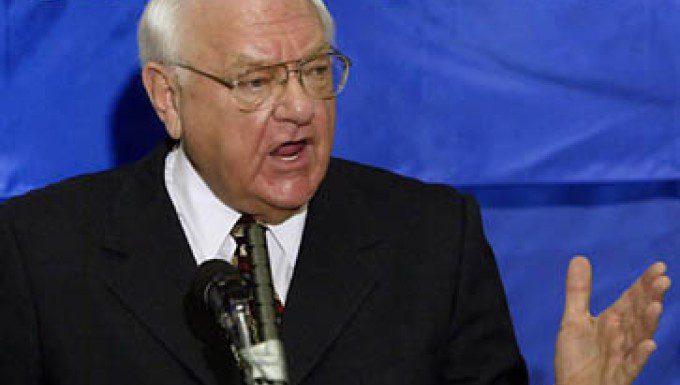
I cannot support a system which, in its administration, has proven so fraught with error and has come so close to the ultimate nightmare, the state’s taking of innocent life… Until I can be sure that everyone sentenced to death in Illinois is truly guilty, until I can be sure with moral certainty that no innocent man or woman is facing a lethal injection, no one will meet that fate.
Examples of wrongful convictions
North Carolina: Henry McCollum and Leon Brown, charges dismissed in 2014
The two brothers were 19 and 15 and both men were intellectually disabled when they confessed to rape and murder. They maintained their innocence since trial, saying they did not know they were signing a confession. In 2010 Brown contacted the North Carolina Innocence Inquiry Commission, which discovered DNA evidence that implicated another person. Both men were freed in 2014 based on the DNA.
Alabama: Daniel Wade Moore, acquitted in 2009
When Moore was originally found guilty for murder and sexual assault of Karen Tipton in 2002 he was sentenced to death by the judge overruling the jury’s original consensus. However, he was acquitted in 2009 when 256 pages of withheld evidence were finally revealed.
Texas: Anthony Graves, charges dismissed in 2010
Graves was convicted in 1994 of assisting Robert Carter in multiple murders in 1992. There was no physical evidence linking Graves to the crimes, and his conviction relied on Carter’s testimony that Graves was his accomplice, a claim Carter later recanted. In 2006 it was found that prosecutors elicited false statements and withheld testimony that could have influenced the jurors. A special prosecutor hired to re-examine the case said “we found not one piece of credible evidence that links Anthony Graves to the commission of this capital murder. He is an innocent man.”
Florida: Seth Penalver, acquitted in 2012
Penalver was arrested in 1994 for the brutal murder of three individuals. There was no physical evidence linking him to the murder; the only “evidence” police had was a poor-quality video in which the murderer’s face could not be seen. He remained in custody until 2012 when the jury at his most recent trial acquitted him of all charges.
Factors leading to wrongful convictions
- Inadequate legal representation
- Police and prosecutorial misconduct
- Perjured testimony and mistaken eyewitness testimony
- Racial prejudice
- Jailhouse “snitch” testimony
- Suppression and/or misinterpretation of mitigating evidence
- Community/political pressure to solve a case