The following information is based on the Amnesty International Report 2021/22. This report documented the human rights situation in 149 countries in 2021, as well as providing global and regional analysis. It presents Amnesty International’s concerns and calls for action to governments and others.
ZIMBABWE 2021
The human rights situation continued to deteriorate, with the government demonstrating hostility to human rights defenders, protesters, political activists and journalists. They were harassed, arrested, prosecuted and subjected to prolonged pretrial detention; one activist was killed allegedly by supporters of ZANU-PF, the ruling party. The state weaponized Covid-19 lockdowns to restrict political activity. Security forces carried out unlawful killings. The Supreme Court quashed a 20-year prison sentence against two opposition supporters. Thousands were forcibly evicted from their land. Public hospitals remained underfunded and poor healthcare infrastructure put women’s and girls’ health at risk. Many people were at risk of becoming stateless.Background
The government enacted two constitutional amendments which were heavily criticized for undermining the judiciary’s independence. In April, parliament passed Constitution Amendment 1 of 2017 allowing the president to appoint the Chief Justice, Deputy Chief Justice and High Court Judge President without open selection processes. In May, it passed Amendment 2 enabling the president to appoint sitting judges to vacancies in the higher courts, without open selection processes. The cost of living increased and the government failed to meet its target to provide 1 million people with social protection and discontinued its Covid-19 social welfare package during the third wave from June to August.Freedom of expression
The authorities were increasingly hostile towards people who expressed dissenting views. In October, Spenser Chiteera, a police officer in Mount Darwin, underwent disciplinary action for his online endorsing of Nelson Chamisa, president of the opposition Movement for Democratic Change-Alliance (MDC-A), with the campaign slogan “Ngaapinde Hake Mukomana” (“let the lad lead”). In the same month, police arrested Maxwell Guvava, also a police officer, for insulting or undermining the president’s authority after he told ZANU-PF supporters that “the country is rotten” (“nyika yaora”). In August, the Cybersecurity and Data Protection Bill was reintroduced to parliament after errors were identified in its text. The Bill was substantively different from the gazetted version which had been presented to citizens during public hearings; the government was criticized for disregarding the public consultation process in formulating the legislation.Journalists and media workers
At least 15 journalists were detained, arrested or assaulted by security forces while carrying out their work. In January, Michael Magoronga was arrested in Kwekwe for using an expired accreditation card issued by the Zimbabwe Media Commission. Samuel Takawira of 263Chat online media forum was assaulted in April by anti-riot police while he was covering the sentencing at the Magistrates Court of Makomborero Haruzivishe, an MDC-A youth activist (see below, Arbitrary arrests and detentions). Freelance journalist Jeffrey Moyo was arrested on 26 May for violating the Immigration Act by helping two New York Times journalists to obtain media accreditations. He was denied bail but released on 15 June. In September, nine journalists were arrested for covering an MDC-A demonstration at the Zimbabwe Electoral Commission offices. Following legal intervention, they were released without charge. Also in September, Gilbert Munetsi was arrested and detained for violating a Covid-19 curfew when he was on his way home from work. He was released the next day after his lawyer intervened. The same month, two journalists were detained when they were covering the MDC-A anniversary commemorations in Bulawayo. Eight community radio stations were granted operating licences in September.Arbitrary arrests and detentions
The authorities curtailed the right to protest by weaponizing Covid-19 regulations to target political activists, human rights defenders and other people holding dissenting views. On 2 February, MDC-A activists Cecilia Chimbiri and Joanah Mamombe were arrested and detained at Chikurubi Maximum Security Prison, accused of undermining police authority during a national lockdown under Section 11 of Statutory Instrument 83 of 2020. They were granted bail on 8 February. Makomborero Haruzivishe was arrested on 17 February after plain-clothed men shot at him. He was accused of inciting public violence for blowing a whistle during a protest in February 2020 outside the Zimbabwe Electoral Commission in the capital, Harare. In April, he was sentenced to 36 months in prison of which 16 were suspended. He appealed against the sentence and in July was given bail, which was promptly revoked by a magistrate who ordered that he remain in detention pending other charges against him. After Joanah Mamombe and Cecilia Chimbiri addressed a press conference in solidarity with him, they were re-arrested on 6 March. They were arrested at a police station where they had gone as part of their bail reporting conditions and accused of violating Covid-19 regulations. They were denied bail but released on 5 May. In March, police raided the house of civil society activist Prosper Tiringindi in Masvingo in search of evidence of his involvement in spraying graffiti messages calling for a reversal of the 500% increase in inflation. He was arrested and later released without charge. On 6 April, four armed security agents raided his house again in search of him. Nine Masvingo Residents Forum members were arrested on 23 April for protesting about the two-month water shortage affecting Masvingo. They were charged under Section 37 of the Criminal Law Codification with participating in an unlawful gathering with the intent to promote public violence and acquitted on 24 September. Alice Kuvheya, director of Chitrest, a residents’ trust, was arrested on 14 June and charged with “inciting participation in a gathering with intent to promote public violence” and “incitement to commit public violence”, after she had accused the local authority of colluding with the police to evict informal traders. Shortly before this, she had won a court case which blocked the demolition of premises belonging to informal traders. A court dismissed the charges on 28 June and in November, respectively. Forty war veterans, arrested on 26 October in Harare for protesting about meagre monthly pensions of less than US$100, were charged with breaching the peace. They were released on bail four days later.Freedom of association
On 30 June, the Provincial Development Coordinator for Harare metropolitan province issued a directive requiring NGOs to submit work plans prior to carrying out activities in Harare. On 3 August, the High Court ruled that the directive was unconstitutional. On 5 November, an amendment to the Private Voluntary Organizations Act regulations was published in the official gazette, allowing for the closure of organizations suspected of funding of or campaigning for politicians during elections. After the Covid-19 restrictions were lifted in September, Nelson Chamisa (see above, Freedom of expression) began his meet-the-people tour in October. In Masvingo province and other places, ZANU-PF supporters disrupted the tour, damaging vehicles and beating villagers who came out to support him. They forced his supporters, including older people, to publicly denounce him. On 20 October, his car was shot at in Manicaland province.Unlawful killings
On 16 January, six soldiers shot at four villagers on the outskirts of Gweru, killing one and injuring others after the locals confronted them for assaulting villagers during a search for copper cable thieves. The six soldiers were arrested, charged with murder and remanded on bail pending trial. MDC-A supporter Nyasha Mawere died in November after being beaten in Gutu by suspected ZANU-PF supporters in October. His wife and other relatives were charged with defamation after they accused ZANU-PF members of being responsible. No one was arrested for the killing.Right to a fair trial
On 4 June the Supreme Court acquitted and ordered the immediate release of two MDC-A supporters Last Tamai Maengahama and Tungamirai Madzokere from Chikurubi Maximum Security Prison. They had been sentenced to 20 years in prison in 2016 for the murder of a Zimbabwe Republic Police officer.Right to housing
Thousands were made homeless as a result of the authorities’ demolitions of homes built on what the government termed “illegal settlements”. In rural areas many communities were threatened with forced eviction or evicted for resisting “economic investment” initiatives. For example, thousands of villagers were driven off their land in Chisumbanje in Manicaland province and their crops destroyed to make way for a fuel company to expand its sugar cane plantation. In March, the government published Statutory Instrument 72A of 2021, withdrawing its plans for the imminent evictions of 12,000 residents from their land in Chilonga to make way for a company to produce lucerne grass (alfalfa). It was introduced one day before the High Court was due to hear the community’s challenge to the evictions. The government submitted opposing papers to the court acknowledging it had not properly consulted with the community and that it would not carry out evictions until it had found ways to compensate them and provide them with alternative land.Right to health
In January, the Zimbabwe chapter of the Media Institute of Southern Africa took the government to court over its failure to disseminate comprehensive Covid-19 information on private and public testing, isolation measures and treatment. The vaccine shortage arising from the global shortfall continued. Although 35,000 Covaxin doses were donated by India, ongoing shortages prevented some people from receiving a second jab. In June, as the third wave began, the authorities wrote to Afreximbank, refusing receipt of three million doses of Johnson and Johnson vaccines, citing concerns about possible side effects and storage problems. Meanwhile, the authorities implemented a home-based care policy arguing that the majority of people with Covid-19 did not require hospitalization. Consequently, public hospitals turned away people with Covid-19 symptoms and treatment was increasingly privatized. Private hospitals charged between US$2,000 and US$5,000 for necessary care, an average of US$3,500 for each admission, far above the average monthly income of US$130-US$300. By August, 78 health workers had died after contracting Covid-19. In September, the government instituted a “Jabs for Jobs” policy. A month later, it issued a circular barring unvaccinated government workers from reporting to their place of work. They could face disciplinary action and no pay if they flouted the directive.Women’s and girls’ rights
In March, the government announced that in the first two months of the year, 4,959 girls had become pregnant, and that at least 1,774 girls got married before they reached 18. In July, a 14-year-old girl died after she gave birth at a church shrine in Manicaland province. Following a public outcry, her husband and father were arrested and charged with rape and obstructing justice, respectively. Pregnant women and girls remained at risk of life-changing childbirth-related injuries, including obstetric fistula, as many avoided public healthcare facilities in favour of home deliveries, due to inadequate health infrastructure, cultural practices and high hospital costs.Right to a nationality
Hundreds of thousands of Zimbabweans were at risk of becoming stateless. They waited months to receive national registration documents from the Registrar General’s Office, due to a huge backlog of applications.Relevant Links
The Latest
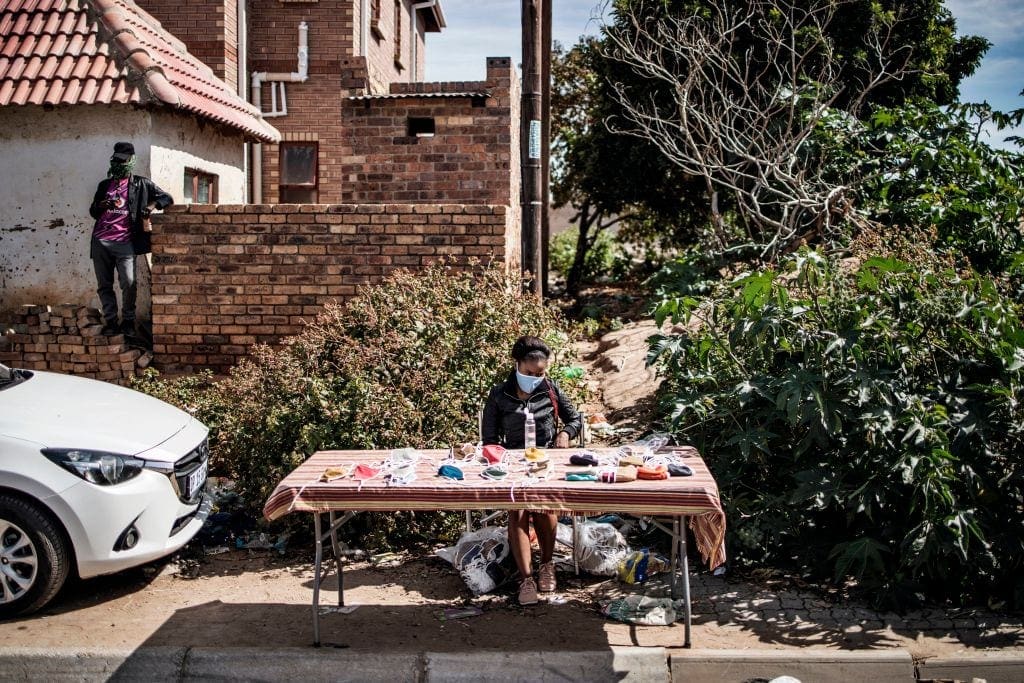
TOPSHOT – A woman sells masks to residents of the Olievenhoutbosch township in Centurion, while they queue on May 2, 2020 during a food distribution organised by the South African non profit charity Mahlasedi Foundation. – 30 000 households in the township have been provided with 2200 tons of dry food, sanitisers and masks. (Photo by MARCO LONGARI / AFP) (Photo by MARCO LONGARI/AFP via Getty Images)
Press Release
Governments in Southern Africa must move beyond politics in distribution of COVID-19 food aid
May 6, 2020 – Aid
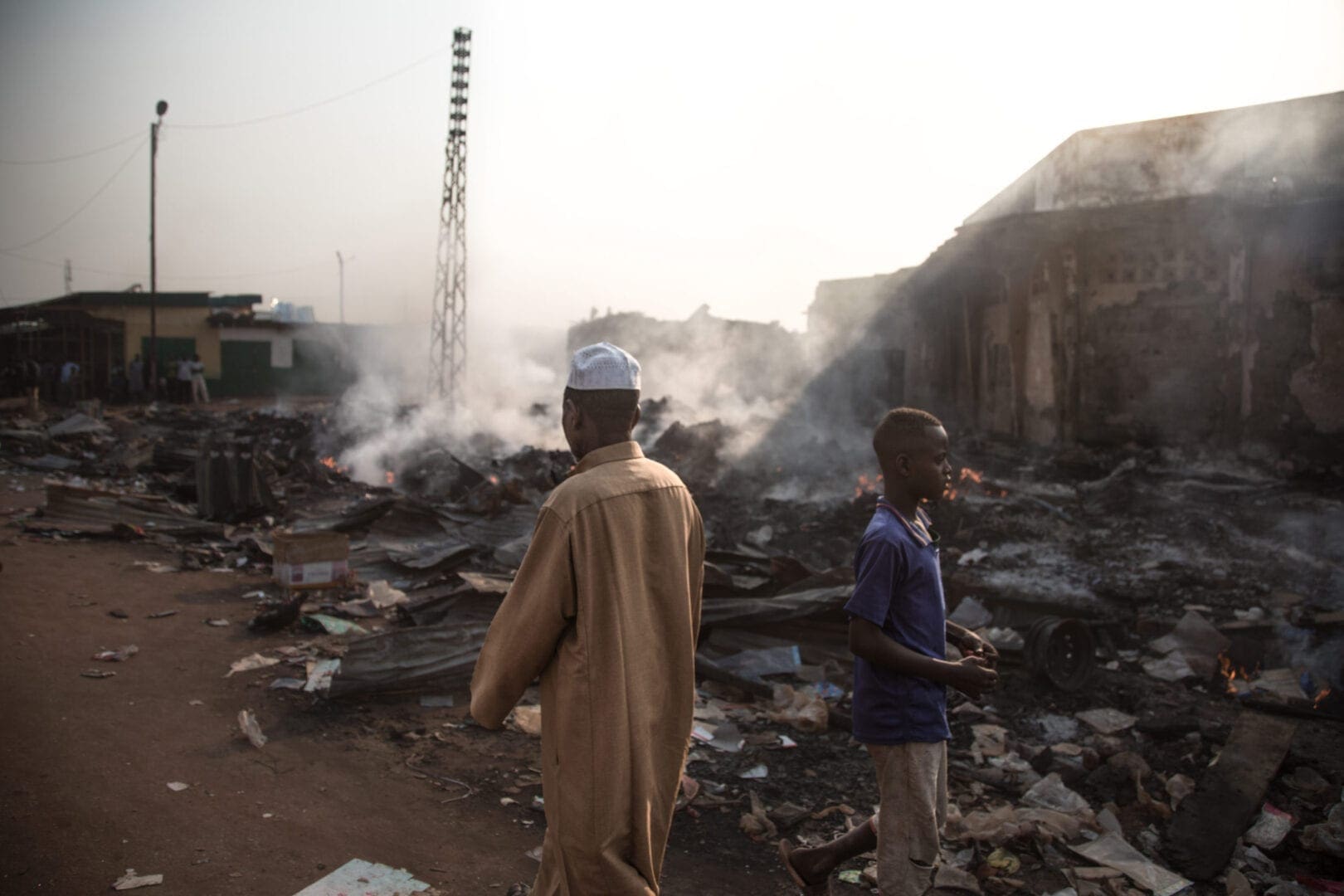
Two people walk among the burning rubbles in the Koudoukou market, in the PK5 district in Bangui on December 26, 2019, after clashes erupted when traders took up arms to oppose taxes levied by militia groups. – At least 11 people were killed in fighting between militiamen and traders in a restive district of Bangui, the capital of the Central African Republic, two security officials and an imam said on December 26, 2019. The security sources said between 11 and 14 people died after clashes erupted late on December 25, 2019, while the imam, Awad Al Karim, said “16 bodies” had been brought to the local Ali Babolo mosque. (Photo by FLORENT VERGNES / AFP) (Photo by FLORENT VERGNES/AFP via Getty Images)
Press Release
Armed conflicts and state repression in Africa fuel cocktail of human rights violations
April 7, 2020 – abuses by armed groups
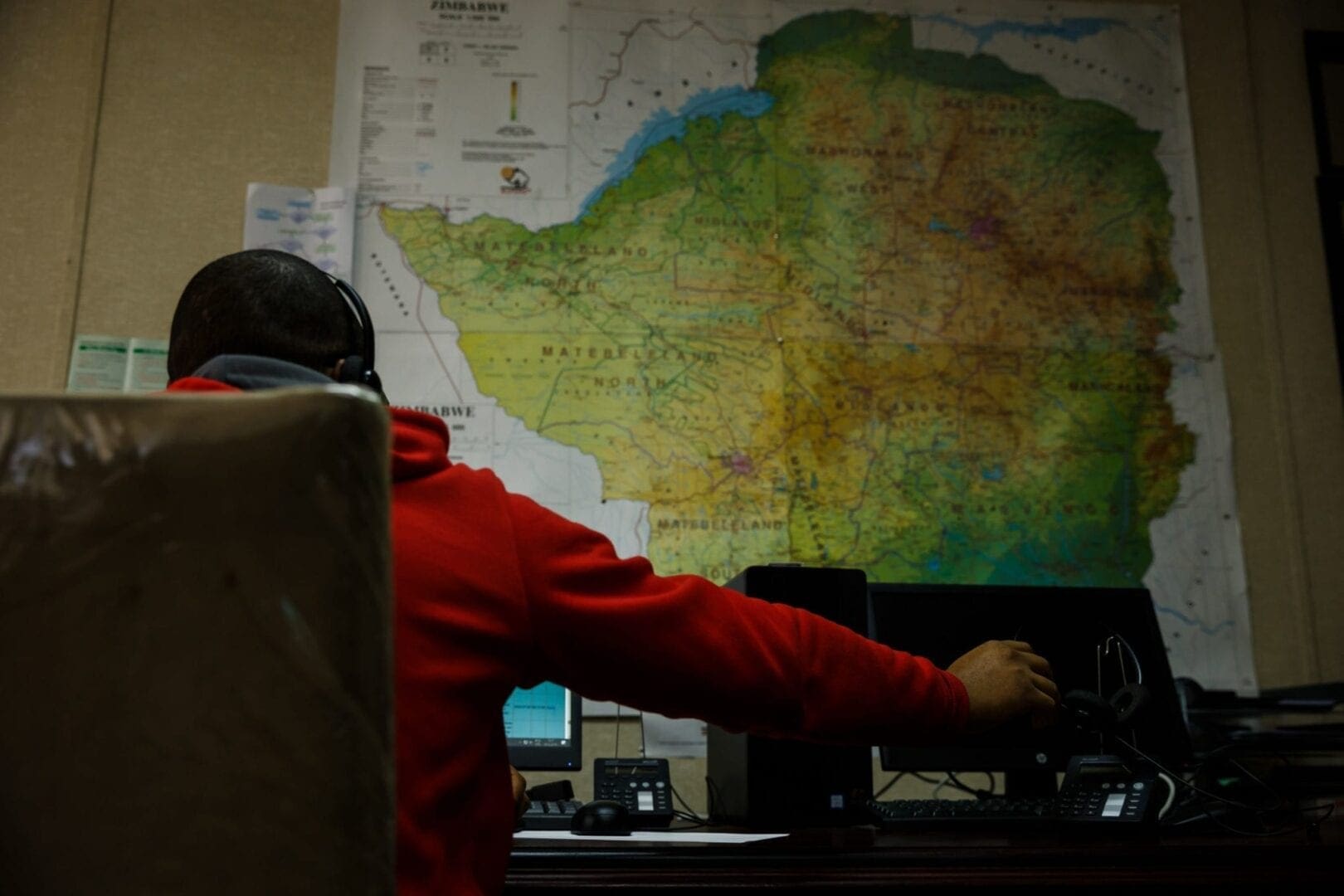
An employee answers calls of political violence and distress in a call centre from hotspots through out Zimbabwe at a Counselling Services Unit (CSU) ahead of the July 30 Presidential elections in Harare, on July 6, 2018. (Photo by STRINGER / AFP) (Photo credit should read STRINGER/AFP/Getty Images)
Report
Zimbabwe: Elections offer a chance to break with decades of gross human rights violations
July 9, 2018 – Disappearances
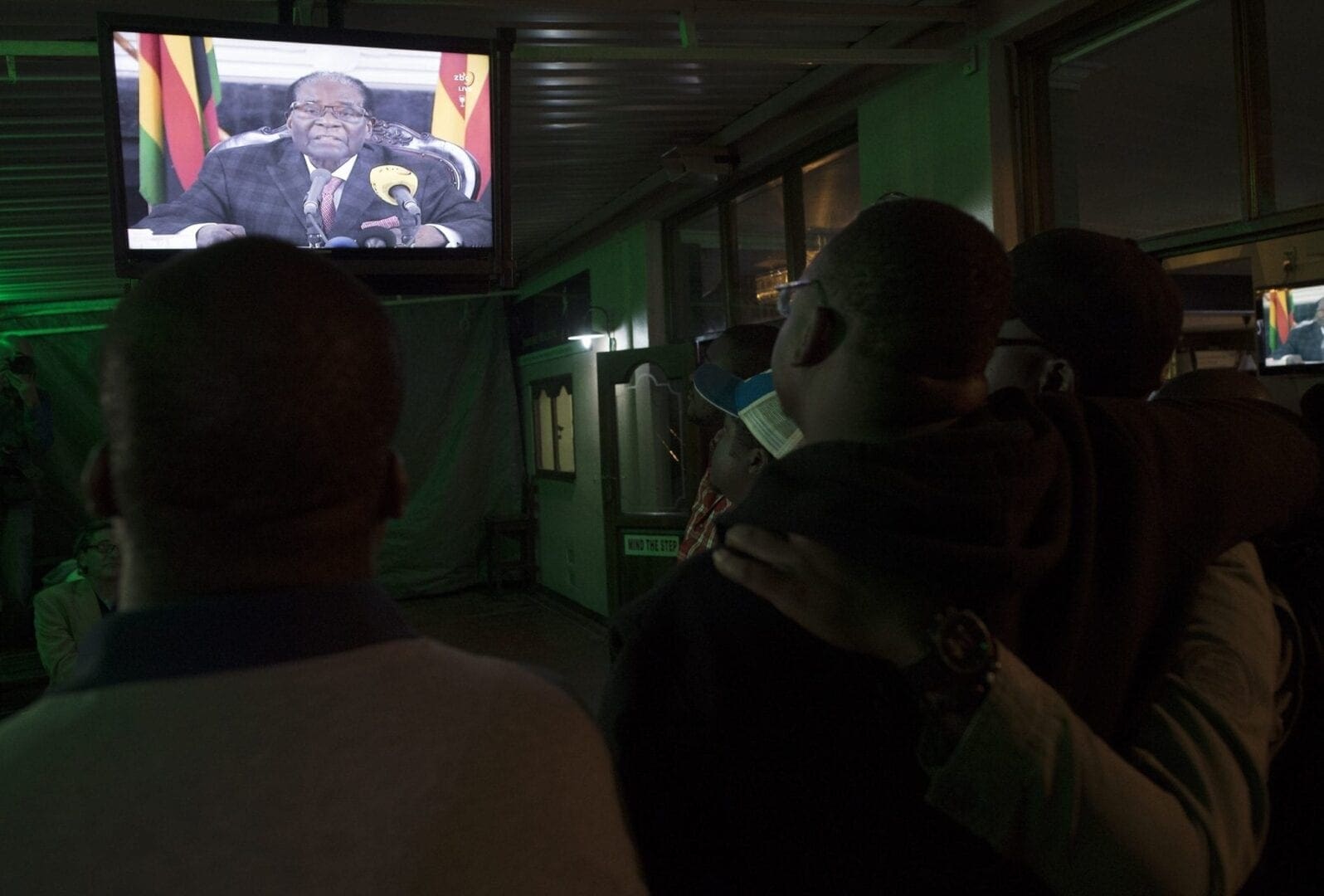
Zimbabweans watch a television broadcasting an address by President Robert Mugabe at Harare Sports Club in Harare on November 19, 2017, following a meeting with army chiefs who have seized power in Zimbabwe..
Zimbabwean President Robert Mugabe, in a much-expected TV address, stressed he was still in power after his authoritarian 37-year reign was rocked by a military takeover. Many Zimbabweans expected Mugabe to resign after the army seized power last week. But Mugabe delivered his speech alongside the uniformed generals who were behind the military intervention. In his address, Mugabe made no reference to the clamour for him to resign. / AFP PHOTO / STR (Photo credit should read STR/AFP/Getty Images)
Press Release
Zimbabwe: Post-Mugabe government must open new chapter of respect for rights
November 21, 2017 – mugabe
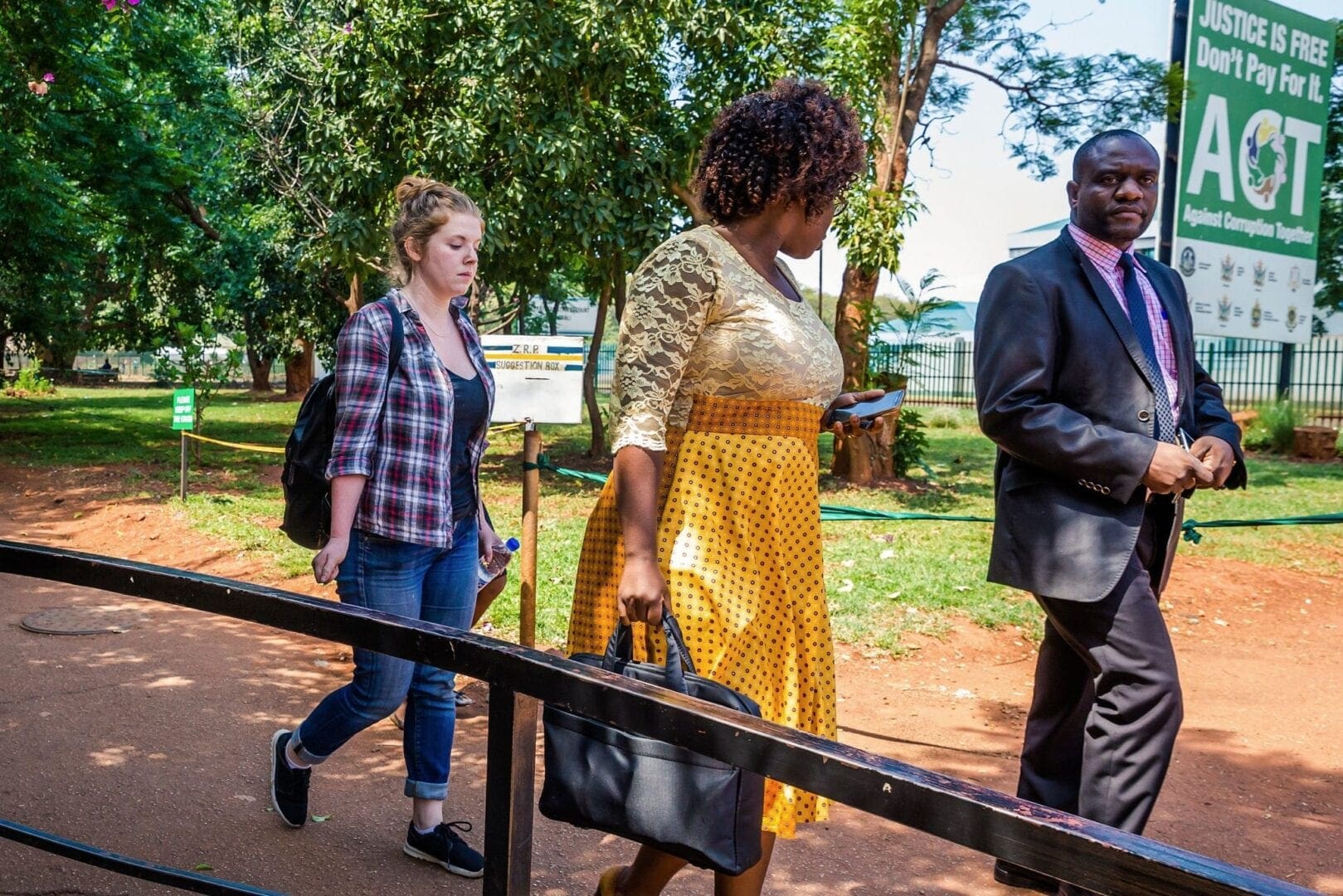
US citizen, Martha O’Donovan (L), who was arrested for undermining the authority of Zimbabwe President Robert Mugabe on Twitter, arrives at Harare Magistrate’s Court in Harare November 4, 2017.
Zimbabwean police arrested a US citizen on November 3, for allegedly tweeting that President Robert Mugabe is a “goblin whose wife and step-son bought a Rolls-Royce,” lawyers said. Zimbabwe Lawyers for Human Rights (ZLHR) said officers detained Martha O’Donovan in a dawn raid at her home just weeks after Mugabe appointed a cyber security minister charged with policing social media. / AFP PHOTO / Jekesai NJIKIZANA (Photo credit should read JEKESAI NJIKIZANA/AFP/Getty Images)
Press Release
Zimbabwe must drop absurd charges over Mugabe tweet
November 9, 2017 – Martha O’Donovan
Press Release
Amnesty International statement ahead of court appearance of Zimbabwean activist Evan Mawarire
April 19, 2017
Press Release
Zimbabwe: Investigate fate and whereabouts of disappeared pro-democracy activist
August 26, 2016
Press Release
Zimbabwe: Deplorable attack on brother of missing activist must be urgently investigated
April 19, 2016
Press Release
Amnesty International’s Annual State of the World Report Slams Governments, Including the U.S., for Global Assault on Freedoms
February 22, 2016 – Child Marriage