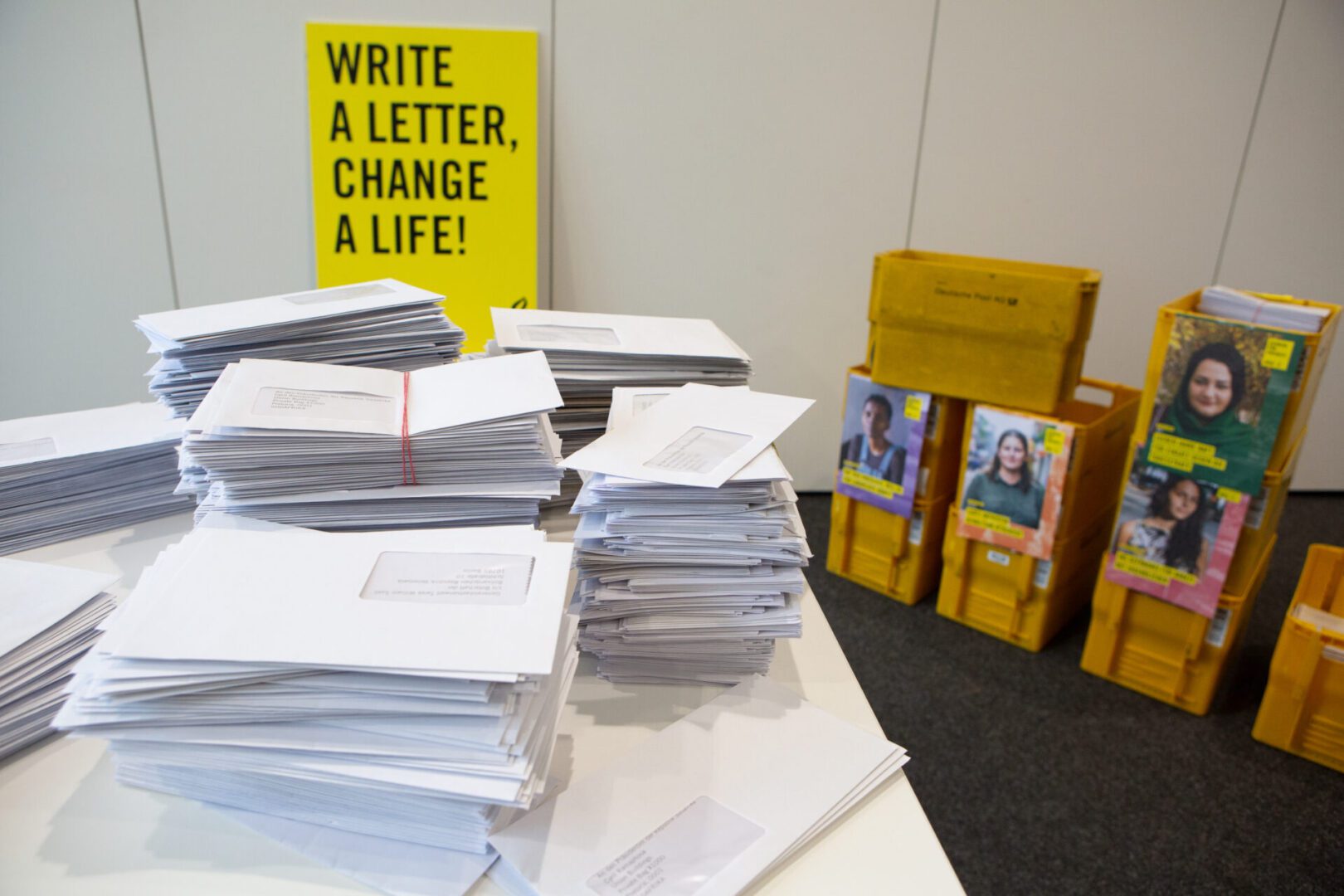

How to Write Letters
Amnesty International began in 1961 when one man wrote a letter that sparked an international movement. Writing letters to government officials and other authoritative figures is a main activity of Amnesty International groups and members. Your single letter gains its greatest power from being combined with those from AI members around the world. Often governments relent when a flood of letters indicates that the world cares about a particular prisoner or issue.
Some things to remember
- Letters do not need to be long or beautifully composed. All they need do is express your concern and make a simple request.
- Letters should be brief and to the point. They should not fill more than one printed page.
- Use professional or personal letterhead when available.
- For Urgent Action Appeals, write as soon as you can.
- Post, email, fax or cable your letter as soon as it is written.
When writing your letter
- Identify yourself by profession and nationality to emphasize that all kinds of individuals everywhere are concerned about human rights in the recipient's country.
- Always include the date and your mailing address.
- If you have studied in the country or have done business there, mention it (as long as you have considered potential negative consequences).
- Follow AIUSA's action recommendations. AIUSA always indicates for what and to whom appeals should be made; follow these directions and use the designated titles of officials.
- Stay within AI's mission. Don’t ask for release if the appeal says AI's concern is commutation of a death sentence.
- Assume governments are reasonable and that the government official to whom you are writing is unaware of the specific incident. Assume he or she is on your side and wants to remedy the situation.
- Show respect for the government’s constitution and judicial procedures.
- Be polite.
- Don’t discuss ideology or politics.
- Ask for a response.
- Make sure the letter is legible. It is best to type it or print it clearly.
Write in English unless you know the appropriate language well or have a translator.
Important Note: In order to maintain the movement’s impartiality, citizens are not permitted by AI to write to their own governments about individual cases in that country. For example, a Haitian refugee should not write to the Haitian government. There are some instances where it is appropriate for U.S. citizens to work on cases in the United States.
Examples of greetings to use in your letters
Your Majesty — To Kings, Queens, and other monarchs.
Your Excellency — For all heads of state, cabinet-level ministers, prime ministers, ambassadors, and governors.
Your Honor — For judges and procurators.
Dear Sir or Madam — For local authorities, prison commanders, and police chiefs.
Dear Admiral, General, Captain, etc. — For military officers.
Examples of closings to use in your letters:
Respectfully
Yours
Respectfully Yours
Sincerely
Yours Sincerely
Yours Sincerely and Respectfully
Very Truly Yours