
How to Lobby Your Member of Congress
"Members of Congress every day hear from the monied side of the issue, and they must have this counterbalance by hearing from the grassroots. Amnesty International has a great reputation, great constituency, and my message to that constituency is "know thy power". You are right on the issues; there is nothing more eloquent to a member of Congress than the voice of his/her constituent."
- U.S. Representative Nancy Pelosi
Lobbying elected officials is a mainstay of Amnesty International's advocacy work. Through coordinated legislative advocacy, AIUSA activists gain the power to influence important human rights legislation.
All groups are asked to participate in at least one of AIUSA's coordinated lobbying efforts each year. You can also check AIUSA's website and events calendar for info on upcoming mobilizations. Your legislative coordinator (LC) can fill you in on current lobbying efforts in your state, background on your legislators, and tips to maximize your efforts. To obtain your LC's contact info, call your regional office toll free at 1-866-A-Region (1-866-219-4466).
The key to influencing the people who represent you is proving to them that you are a well-informed, committed and persistent constituent. Whether you send an email or letter, make a telephone call or meet with your representative, your communication has an impact proportional to the amount of effort that you put into it. It is important to take time to prepare your thoughts, familiarize yourself with AIUSA's strategy, and follow up as many times as it takes.
Once you have joined an AIUSA legislative effort, here are some tips to make your lobbying successful.
Methods of Contacting your Legislators
Remember that all contact is good! Start small, and then increase your activism as your group gains experience.
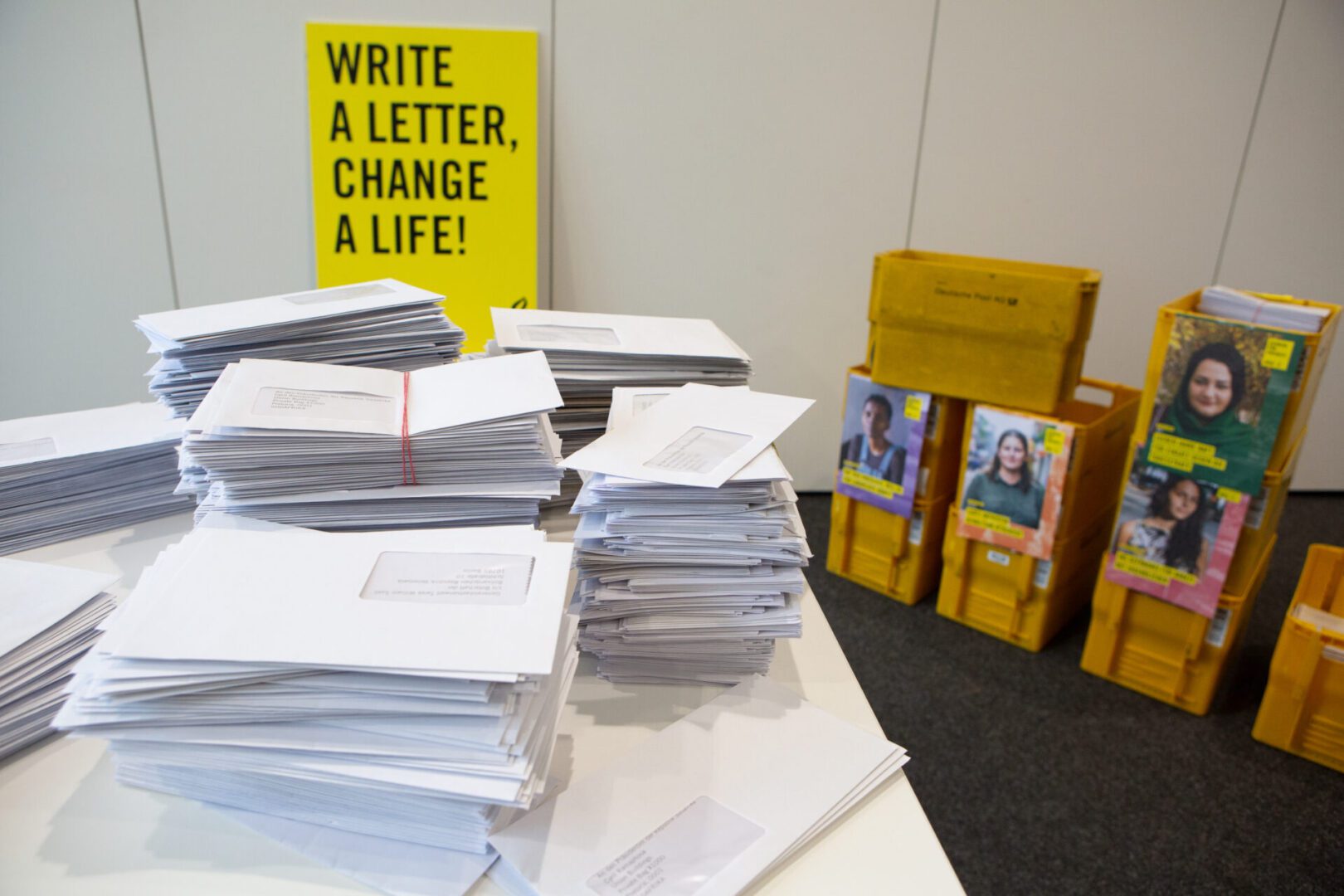
Write a letter. Letters are an important and effective way to introduce yourself and your purpose. Short handwritten letters are best, and always remember to be specific about the action you want your member of Congress to take. Make sure to include your full address so that they know you live in their district. Avoid petitions, as they are not as effective. (See Sample Letter to Legislator)
Make a Phone Call. You can all your U.S. senator or representative by contacting the Capitol Hill switchboard at 1-202-224-3121. Once you are connected to the right office, ask to speak to the staff member who handles human rights. Clearly have in mind a specific request of your representative. If you are planning a visit, this is also the time to set up a meeting to discuss your request. (See Sample Call to Legislator)
Meet with your Member of Congress. This is the most effective method of lobbying. Your group can organize a meeting with your member of Congress on an AI concern or join an AIUSA lobbying delegation either in Washington, D.C., or at a district office in your state. Contact your regional office or check the AIUSA website to be a part of the latest lobbying efforts.
Officials often host town hall meetings open to the public where you can ask questions about specific issues. Call your member's district office (check the blue section of the telephone book) to see if any are scheduled.
However you make contact, be specific about what action you want (for instance, "Please co-sponsor HR 2534").
Preparing for your meeting
Meeting with your representative is a very effective way to lobby. Even if you can't visit Washington, you can still meet your members of Congress. Your member has a district office near you that they visit several times each month. Wherever or whomever you meet, always prepare thoroughly for your conversation.
Make an effort to gauge your Representative's interest and to match your requests to their initial level of interest.
Brush up on your skills. (See How to Become an Effective Advocate)
Re-familiarize yourself with AIUSA's legislative agenda. You may want to write down talking points to hit on core messages. (See Core Messages in the members section)
Go to the AIUSA website and download issue briefs, one-page summaries of issues before Congress and the Administration that you can fax to your legislator's office.
Practice what you are going to say so you sound natural to the staff person and not like you are reading straight from a script. Practicing will build your confidence and add to your effectiveness. Your Legislative Coordinator can assist with practice or organize a complete training session for your group.
Call your Legislative Coordinator, or if there is not one in your state, call the Government Action Network staff in Washington, DC. By making this connection you can find out what your members of Congress have done recently with AIUSA, get more detailed background on your legislators, and get tips to maximize the outcome of your meeting.
If you are interested in asking your Senator or Representative to initiate a joint letter in the Congress, call the Government Action Network staff in Washington, DC first to develop a strategy for optimum success.
Be accurate. To build a working relationship and get action, you need to be a credible source of information. If you don't know something, just say so. Tell them you will find out and get back to them. Call Amnesty's Government Relations Program for help finding the answers.
Be brief. Members of Congress and their staffs are incredibly busy and so are you. Most members of Congress represent over 600,000 people. They appreciate it when you get to the point and respect their time. Because your meeting or call might be interrupted, get to your request in the first few minutes.
Be courteous. Always, always be courteous. A "How are you?" after the initial hello works wonders! On the other hand, being abrasive is almost always counterproductive, and it provides a good excuse to ignore your request.
Be specific. Make a point to mention the bill by number, give reasons why you support the bill, and let them know that you are a constituent.
Be persistent. If you find that the staff people you need to speak with are out of the office, leave a message for them with your name and number. If they don't return your call within two to three days, then call again. Keep track of your calls, but remember that they are very busy.
After meeting with a member of Congress or an aide from his or her office, it's important to continue to assert yourself and stay on top of the situation. Follow these tips to maintain contact.
Thank your representatives for listening to your concerns, especially if they take action. Commend them publicly, including letters to the editor or items in newsletters. (Be sure to share them with their staff.)
Get the name of the staff person you speak to and try to deal with the same person each time. Remember that if your representatives are helpful and you praise them publicly, next time they may help even more. The ultimate goal is to build a positive, long-term relationship.
Provide information as needed. Expect to fax or email a lot of information to your representative's office. Offer to fax or email information as many times as necessary, because they get many requests each day. If you do fax something, call immediately to make sure that they have received it.
Help AIUSA stay connected and coordinated by completing a contact report. It only takes a minute and increases AIUSA's effectiveness exponentially.
Learn
Watch the "Raise the Roof!" video, which has tips from members of Congress and Amnesty members regarding ways to maximize the effectiveness of your lobbying. You can order a "Raise the Roof!" video from the website or your regional office.
Familiarize yourself with AIUSA's legislative agenda. You can get legislative materials on the website or by calling your state's Legislative Coordinator or the Government Action Network staff in Washington DC. Read through the materials carefully and get answers to any questions you have.
Do background research on the issues you are tracking, and find out more about your government representatives.
Organize
Work with other AIUSA groups in your district (or throughout your state if you are contacting a Senate office) and with other non-governmental organizations. Work on issues that are priorities for AIUSA.
Connect with your Legislative Coordinator to find out what your members of Congress have done recently with AIUSA, get more detailed background on your legislators, and get tips to maximize your efforts.
Coordinate with the Government Action Network staff in Washington, DC to develop strategy.
Execute
Follow the steps above to plan and prepare for a meeting, represent your group properly, and follow up persistently.
Keep records of all your communications.
Focus on the specific outcome you want, and commit yourself to that end.
At the meeting
Following Up
_______________________________________________________________
How to Become an Effective Advocate
AIUSA members are natural advocates because they are dedicated and well informed. By following a few simple rules, you can achieve great results, just as thousands of other AIUSA members like you have. But make no mistake, to change U.S. policy - to do battle with the bureaucracy and the high-priced lobbyists of foreign governments - is hard work. Don't be intimidated or discouraged.
Test your knowledge of this section!
TAKE OUR QUIZ