
Issues


SONY DSC
Climate Justice


(SEAN GLADWELL/Getty Images)
Technology and Human Rights
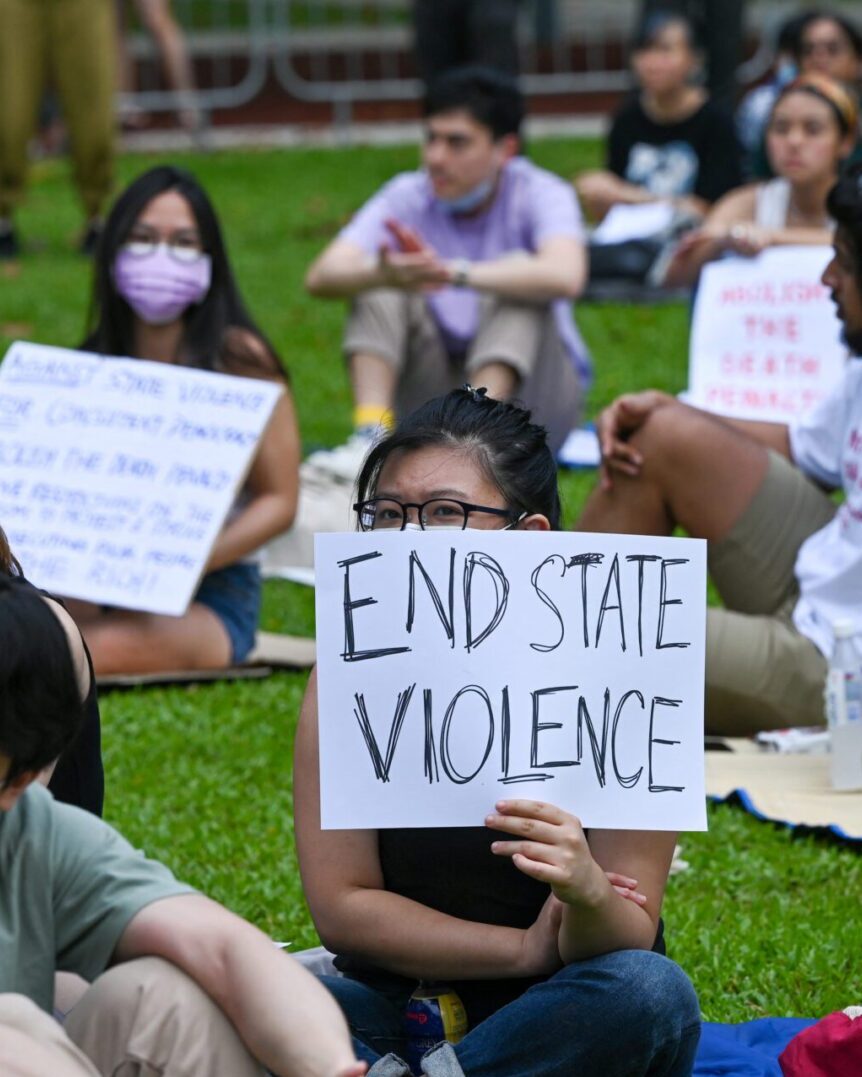
Attendees hold signs during a protest against the death penalty at Speakers’ Corner in Singapore on April 3, 2022. (Photo by ROSLAN RAHMAN/AFP via Getty Images)
Death Penalty
(Photo by JOHANNES EISELE/AFP via Getty Images)
Racial Justice
Our work
Over many decades, we have been recognized worldwide as the premier grassroots organization demanding human rights for every person and tackling the most pressing challenges to human rights. Amnesty International believes that every individual has the power and responsibility to take action and defend the inalienable and indivisible human rights of all people.
We have changed laws in dozens of countries regarding refugee rights, reproductive justice, LGBTQI+ equality, free speech, the death penalty, and other critical human rights issues.
How does this change happen? Amnesty International has a uniquely effective strategy for protecting human rights that uses a three-pronged approach across all issue areas:
- We conduct research to uncover human rights abuses and document patterns;
- We use this research to educate the public and equip activists to demand change;
- We mobilize grassroots activists to advocate for human rights in the U.S. and around the world.