spacer spacer Amnesty International USA spacer spacer spacer
spacer spacer
donatetake actionjoin usshopen espanol
spacer spacer
spacer spacer spacer spacer
spacer spacer spacer spacer spacer spacer
shadow spacer shadow
spacer
spacer
curve
spacer spacer Home > Our Priorities > All Countries > Myanmar (Burma) Human Rights spacer
print this page
spacer
spacer rule spacer
spacer

Myanmar (Burma) Human Rights

Take Action: Ask the Government of Myanmar to Release Aung San Suu Kyi from Insein Prison

On May 14, 2009, Aung San Suu Kyi and two of her assistants, Khin Khin Win and Khin Khin Win’s daughter, were taken from Daw Suu Kyi’s home to Insein Prison. Insein Prison is known to be a harsh facility with substandard conditions of detention including poor food and poor medical care. Reliable reports beginning in early May confirm that while still confined in her Yangon home Aung San Suu Kyi had been suffering from dehydration, low blood pressure and weight loss. Her medical condition makes her transfer to Insein Prison at this time doubly serious.

Her physician, Tin Myo Win has reportedly been detained as well.

Please write to the Myanmar head of state to help us renew our years-long call for adequate medical attention for Aung San Suu Kyi, which is now needed more than ever, and, of course, for her immediate and unconditional release.

» Letter to Senior General Than Shwe (PDF)
» Take Action Online Now!

Immediate and Unconditional Release of Aung San Suu Kyi
On May 14, 2009, Aung San Suu Kyi, leader of the National League for Democracy, and two of her assistants were taken from her home to Insein Prison following an incident in which an American man allegedly swam across a lake to her house and stayed there for two days. Suu Kyi was subsequently put on trial for breaching the terms of her house arrest, and was sentenced to an additional 18 months under house arrest. » More actions

Amnesty International issued a press release on May 14th demanding that the UN Security Council, notably China and Japan, and ASEAN countries, urgently intervene to secure Daw Aung San Suu Kyi's release from Insein prison, because they are best placed to bring the necessary pressure to bear on the Myanmar government. AI stated that "in the absence of a unified international voice, the Myanmar government will continue to act in utter disregard for human rights. Now more than ever, the Security Council and ASEAN member states must send an unequivocal signal to the generals that they can no longer act with impunity."

Crimes Against Humanity in Eastern Myanmar

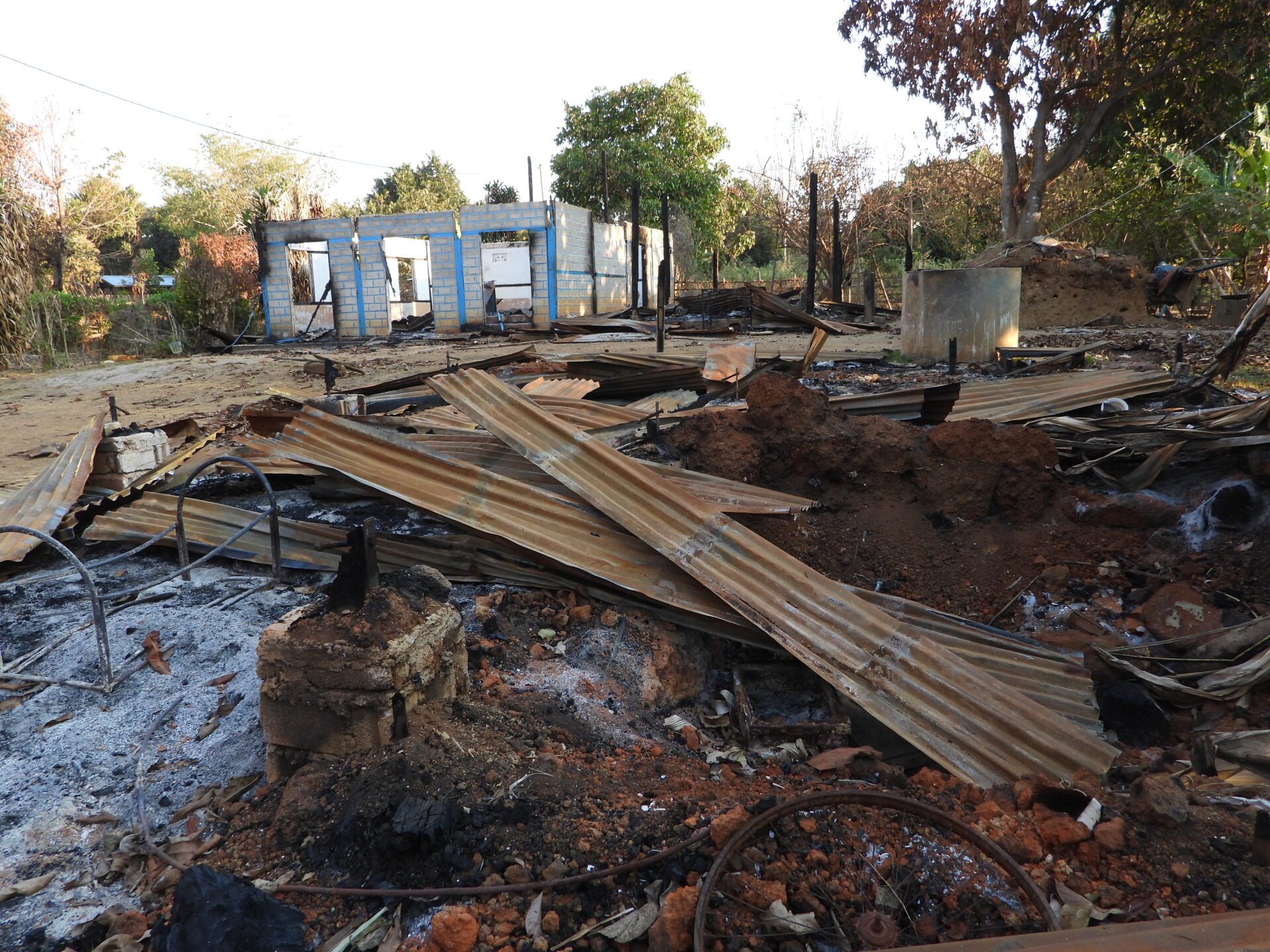
"Before the soldiers left the village, they planted landmines, one of them in front of the church. An old man, maybe 70 years-old, stepped on a landmine and was killed -- I lost everything -- kitchen, furniture, rice stocks -- not a single piece of paper was left. The same happened to the other 19 families whose houses were burned."
--Female rice farmer from Tantabin township

In the past nine months, Myanmar has witnessed three pivotal moments in the country's turbulent recent history: the brutal crackdown following mass demonstrations in September 2007; a constitutional referendum in which both the substantive content and procedural aspects have been deeply flawed; and a humanitarian and human rights disaster in the wake of Cyclone Nargis.

At the same time, another human rights emergency is going on in eastern Myanmar. For two and a half years, a military offensive by the Myanmar army, known as the tatmadaw, has been waged against ethnic Karen civilians in Kayin (Karen) State and Bago (Pegu) Division, involving a widespread and systematic violation of international human rights and humanitarian law. These violations constitute crimes against humanity.

Unlike previous counter-insurgency campaigns against the Karen National Union (KNU) and its armed wing (the Karen National Liberation Army, KNLA) for nearly 60 years, the current offensive has civilians as the primary targets. The current operation is the largest in a decade and is unique in that, unlike previous seasonal operations that have generally ended at the start of the yearly rains between May and October, this offensive has continued through two consecutive rainy seasons and shows no signs of stopping as a third season is underway.

An estimated 147,800 people are reported to have been, and remain, internally displaced in Kayin State and eastern Bago Division. Many of them have also been subjected to other widespread and systematic violations of international human rights and humanitarian law, including unlawful killings; torture and other ill-treatment; enforced disappearances and arbitrary arrests; the imposition of forced labour, including portering; the destruction of homes and whole villages; and the destruction or confiscation of crops and food-stocks and other forms of collective punishment.

Civilian Karen villagers told Amnesty International of living in fear for their lives, dignity, and property, after having been subjected to or witnessed torture, extrajudicial executions, forced labour and destruction of homes. Such violations were described as directed at civilians, simply on account of their Karen ethnicity or location in Karen majority areas, or retribution for activities by the KNLA.

Amnesty International has documented how these violations of international human rights and humanitarian law have been preceded or accompanied by consistent threats and warnings by the tatmadaw that they would take place, and by statements by Myanmar government officials. The organization is thus concerned that the violations are the result of official State Peace and Development Council (SPDC, the Myanmar government) and tatmadaw policy. Moreover, the tatmadaw apparently enjoys impunity for violations committed against Karen civilians. The prevailing impunity for such crimes, with a lack of avenues for redress for victims, has contributed to Myanmar's ongoing human rights crisis.

Crimes against humanity are certain acts that, committed in times of war or peace, form part of a widespread or systematic attack directed against a civilian population. According to Article 7 of the Rome Statute of the International Criminal Court, acts--including murder, enslavement, deportation or forcible transfer of population, imprisonment or other severe deprivation of physical liberty in violation of fundamental rules of international law, torture, persecution, enforced disappearance, and other inhumane acts--may constitute crimes against humanity "when committed as part of a widespread or systematic attack directed against any civilian population, with knowledge of the attack." This definition reflects customary international law binding on all states, regardless of whether or not they are parties to the Statute.

Recommendations
Based on the findings presented in the report Crimes against humanity in eastern Myanmar, Amnesty International makes the following recommendations:

1. Put an immediate halt to all violations of international human rights and humanitarian law by government forces and aligned militias, including the targeting of civilians, indiscriminate attacks, extrajudicial executions and other unlawful killings, enforced disappearances, torture and other ill-treatment, destruction of houses and crops, and forced labour;

2. Ensure that all acts violating international human rights and humanitarian law are subject to prompt, independent, and impartial investigations, and that suspected perpetrators, including those suspected of ordering these acts, regardless of rank, are brought to justice;

3. Ensure that victims of violations of international human rights and humanitarian law are provided with full reparation, including restitution, compensation, rehabilitation, satisfaction, and guarantees of non-repetition.

To armed opposition groups
Armed opposition groups should publicly undertake to observe the provisions of Common Article 3 of the Geneva Conventions and other provisions of international humanitarian law applicable to non-international armed conflicts.

To the UN
1. The Security Council should demand that the SPDC immediately halt all violations of international human rights and humanitarian law by government forces and aligned militias, including in the ongoing offensive in eastern Myanmar;

2. The Security Council should consider visiting Myanmar, including its eastern parts, to obtain first hand information on the situation on the ground;

3. The Security Council should request the Secretary-General to provide a specific report on the situation in eastern Myanmar;

4. The Security Council should impose a comprehensive mandatory arms embargo on Myanmar, which should cover the direct and indirect supply of military and security equipment and munitions and expertise, including transfers claimed to be "non-lethal."

5. The Secretary-General should continue to closely monitor and regularly report on the human rights and humanitarian situation in Myanmar, and use his "good offices" mandate to further encourage the SPDC to halt all violations of international human rights and humanitarian law by government forces and aligned militias in Kayin Sate and Bago Division, to end impunity for such violations, and to ensure safe and unhindered access for humanitarian organizations;

6. The General Assembly should follow up on its recommendation in Resolution 61/232 (2006) that the SPDC "take urgent measures to put an end to the military operations targeting civilians in ethnic areas and the associated violations of human rights and humanitarian law against persons belonging to ethnic nationalities, including widespread rape and other forms of sexual violence persistently carried out by members of the armed forces, and to facilitate a fact-finding mission comprising representatives of relevant United Nations agencies to help to identify measures to alleviate the humanitarian and human rights consequences of the conflict in Karen State";

7. The Human Rights Council should include in its deliberations and actions on the situation in Myanmar, a specific focus on the human rights and humanitarian situation in Kayin State and Bago Division. The Human Rights Council should also continue to urge the SPDC to cooperate fully with the Special Rapporteur on the situation of human rights in Myanmar and other UN bodies.

To UN member states
1. Exercise universal jurisdiction over persons suspected of involvement in crimes against humanity in Myanmar;

2. Immediately suspend the supply to Myanmar of all direct and indirect transfers of military and security equipment and munitions and expertise, including transfers claimed to be "non-lethal."

To Association of Southeast Asian Nations (ASEAN)
Urge the SPDC, both in the ASEAN framework and as individual member states, to immediately halt all violations of international human rights and humanitarian law in Kayin State and Bago Division, and to comply with their international legal obligations, including core obligations under the ASEAN Charter.

Cyclone Nargis

On Saturday, May 3, 2008, the southern portion of Myanmar was devastated by Cyclone Nargis. The hardest hit areas were the Irawaddy Delta and the former capital of Yangon. The death toll from this horrific storm has reached the tens of thousands, and the numbers of displaced and homeless persons are countless. Members of AIUSA are deeply concerned for the people of Myanmar. Many of our volunteers have been working for several years on behalf of prisoners of conscience in Myanmar, and feel a special connection to the people of Myanmar. Our hearts go out to the victims of this terrible tragedy.

Amnesty International is concerned with human rights abuses. Providing humanitarian aid and relief is beyond the scope of our work; but calling for the redress of human rights violations committed in the course of providing that relief is not.

» Read our press release on Cyclone Nargis

Human Rights Concerns

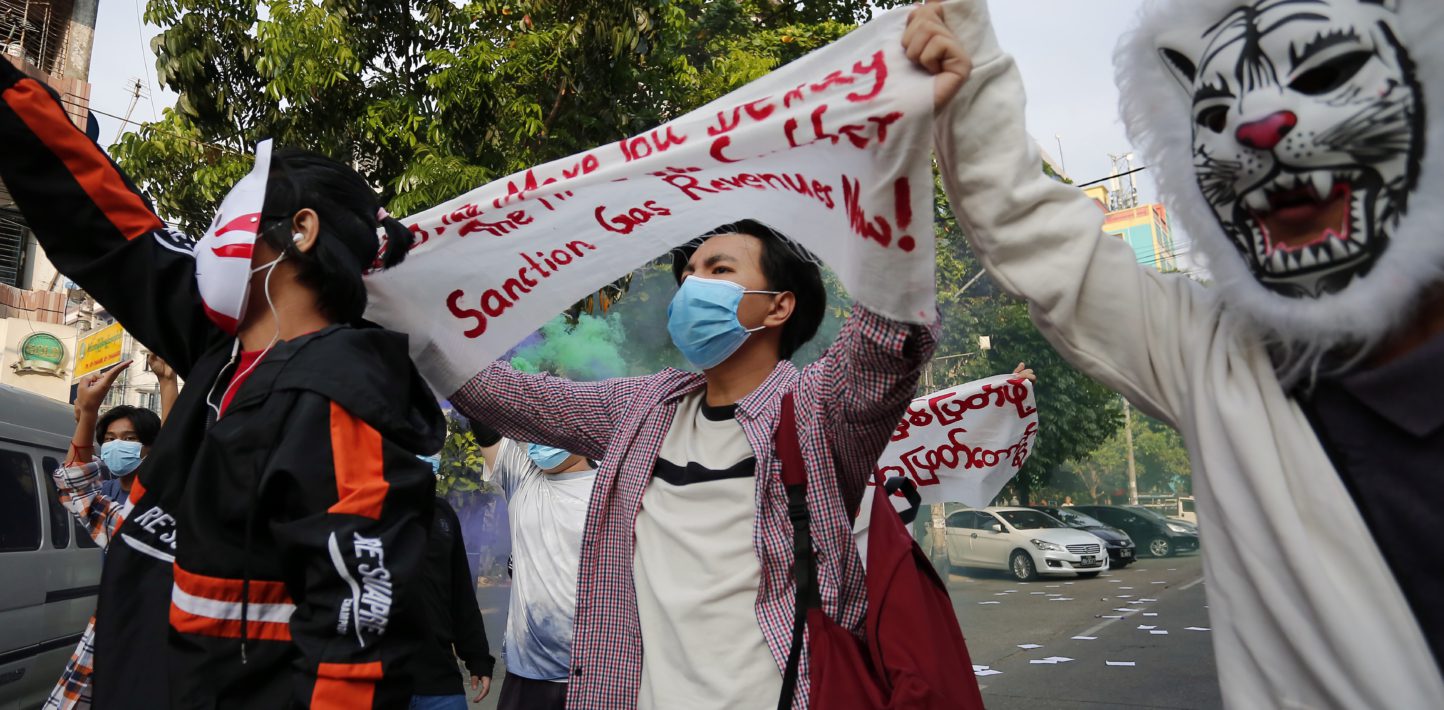
On August 19, 2007 protesters of the 88 generation took to the streets of Yangon, Myanmar's capital city, to peacefully protest overnight increases in gasoline prices by 66%, and compressed natural gas prices up five-fold. The huge rises in oil and gas prices have exacerbated living expenses, placing obstacles for many in the nation.

On August 21 and 22, demonstrators that were involved in organizing and participating in the August 19 protests were detained by government security forces, and had their homes searched without arrest or search warrants. In the past two weeks, in cities and townships nationwide, demonstrators who have peacefully assembled, to express their dissent have been continually and violently dispersed, beaten, and detained by both government security forces and its closely linked civilian organizations—Union Solidarity and Development Association (USDA) and Swan Arrshin.

It is believed that the demonstrators will be charged under Law 5/96, which allows up to 20-year prison sentences for anyone who is found guilty of expressing opinions which disrupt the stability of the state, or "undermine, belittle and make people misunderstand the functions being carried out by the National Convention." Further, on September 7, individuals detained for other peaceful dissent not related to the one just mentioned, were tried in prison and handed life sentences. By no means were these trials held to international legal norms. It is feared that the same methods of trying individuals will be used in the latest crackdown and arrests.

Amnesty International is concerned that the vague and sweeping provisions of Law 5/96 criminalize the peaceful expression of political beliefs, and has called for its repeal. AI has called upon the government of Myanmar to uphold universal human rights standards enshrined in the Universal Declaration of Human Rights, especially those of freedom of expression, peaceful assembly, freedom from torture and ill-treatment, and fair trial. AI is also concerned that torture and other forms of ill treatment have been used to extract ficticious confessions that will be presented as evidence against the detainees. Detainees often do not receive immediate medical treatment, access to lawyers, family, and the courts. Myanmar currently has at least 1,158 political prisoners detained—one of the highest of such populations worldwide.

Constitutional Referendum

The government of Myanmar held a national constitutional referendum for Saturday, May 10, 2008. The vote in the areas hardest hit by Cyclone Nargis was held on Saturday, May 24th. The vote on the constitution is part of the "road map to democracy."

Text of the Constitution

Chapter I—State Fundamental Principles

Chapter II—The State Structure

Chapter III—The Head of State

Chapter IV—Legislature

Chapter V—Executive

Chapter VI—Judiciary

Chapter VII—The Tatmadaw

Chapter VIII—Citizenship; Fundamental Rights and Duties of Citizens

Chapter IX—Elections

AIUSA Activists "Get on the Bus"

On April 11th, AIUSA volunteers, led by Group 133 of Somerville, Massachusetts, got "on the bus" and brought their concerns to the United Nations. The people of New York heard 1200-1300 Amnesty voices rise up in support of the rights of prisoners or conscience in Myanmar.

Click here to see the YouTube video: http://www.youtube.com/watch?v=fdeH32daCs8

Crackdown on Protests in 2007
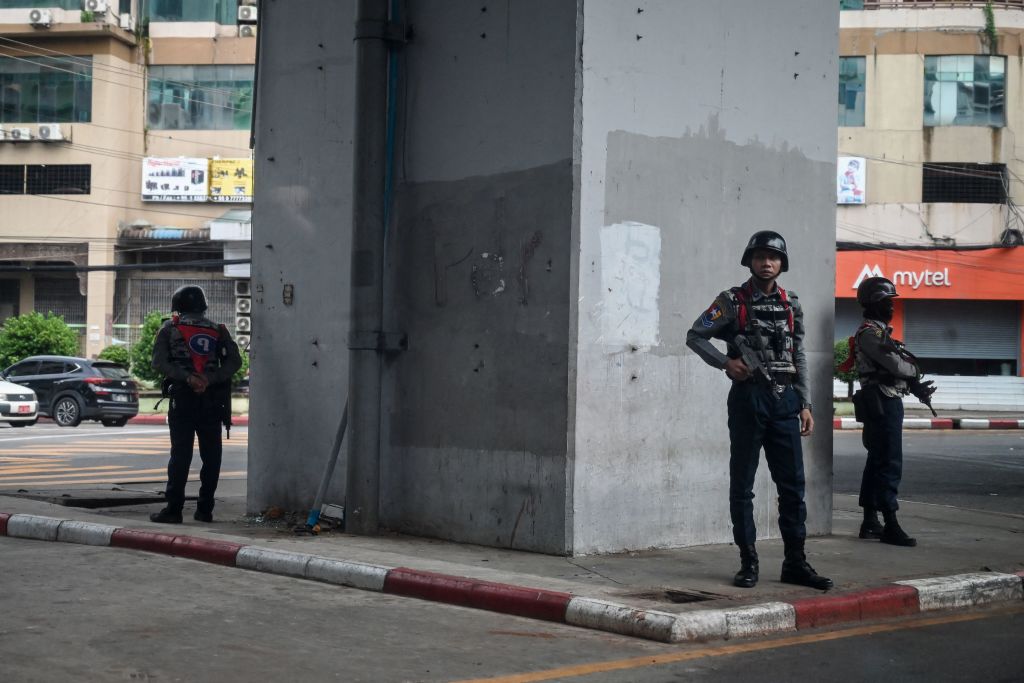
In response to over 100,000 people engaging in peaceful demonstrations in August and September 2007, security forces began a violent crackdown on the protests, which were led by 30,000 monks. The military government's forces clubbed and tear-gassed protesters, fired shots into the air, and arrested hundreds of the monks. Several people were reportedly shot to death.
» Read Amnesty's letter to the UN Security Council

Help Free Ma Khin Khin LehMa Khin Khin Leh


Amnesty International welcomed the news of the release of Ma Khin Khin Leh.

While planning a peaceful demonstration in Myanmar, Ma Khin Khin Leh (pronounced "Mah Kin Kin Lay") was arrested and sentenced to life imprisonment.

Immediate and Unconditional Release of Aung San Suu Kyi
On May 14, 2009, Aung San Suu Kyi, leader of the National League for Democracy, and two of her assistants were taken from her home to Insein Prison following an incident in which an American man allegedly swam across a lake to her house and stayed there for two days. Suu Kyi was subsequently put on trial for breaching the terms of her house arrest, and was sentenced to an additional 18 months under house arrest. » More actions

Latest News

USA: Amnesty International Urges Obama to Not Ignore Human Rights During his Meeting with ASEAN Leaders
November 12, 2009

Myanmar: Amnesty International Urges Secretary Clinton to Act on Behalf of U.S. Citizen Arrested and Tortured in Burma
September 25, 2009

Myanmar:Amnesty International Calls Suu Kyi's New Sentence "Shameful"
August 11, 2009

Daw Aung San Suu Kyi named Amnesty International's Ambassador of Conscience
July 28, 2009

Daw Aung San Suu Kyi is Amnesty International's
July 27, 2009

Opposition leader's detention keeps spotlight on Myanmar
June 01, 2009

Latest Reports

Crimes against humanity in eastern Myanmar
June 05, 2008

Vital UN human rights work under threat
May 09, 2007

Myanmar: Travesties of Justice: Continued misuse of the legal system
December 12, 2005

Myanmar: Leaving Home
September 08, 2005


spacer spacer spacer
spacer
spacer
bottom